
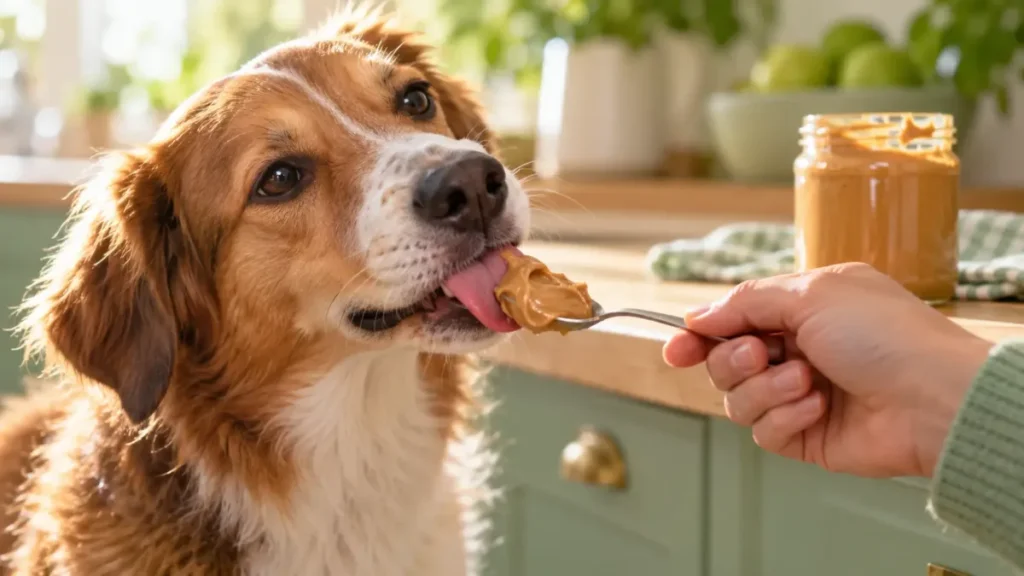

It’s the go-to trick for hiding pills, filling chew toys and keeping a dog busy during bath time. But can dogs eat peanut butter every time you reach for the jar? Most of the time, yes. Plain peanut butter isn’t toxic to dogs. One ingredient found in a small number of brands, though, can be deadly. Here’s how to spot it in seconds, which types are safest, how much to give by size, and the smartest ways to use it.
Yes, as long as it’s xylitol-free and served in small amounts. Unsalted, unsweetened peanut butter is the best pick. Always read the ingredient list for xylitol, also called birch sugar. Peanut butter is very high in fat and calories, so think teaspoons, not spoonfuls.
Table of Contents
Start Here: The Xylitol Check
Xylitol is a sugar substitute used in sugar-free gum, candy, toothpaste and some “low sugar” or high-protein nut butters. In people, it’s harmless. In dogs, the FDA explains that it can trigger a powerful insulin release, sending blood sugar crashing within 10 to 60 minutes. Some effects may not appear for 12 to 24 hours.
Checking takes about five seconds:
- Read the ingredient list, not just the front of the jar.
- Look for other names: the FDA notes xylitol may be listed as “birch sugar” or “wood sugar.”
- Be extra careful with “sugar-free,” “no sugar added,” “keto” and protein-boosted spreads.
- Re-check when you switch brands or a familiar brand changes its recipe.
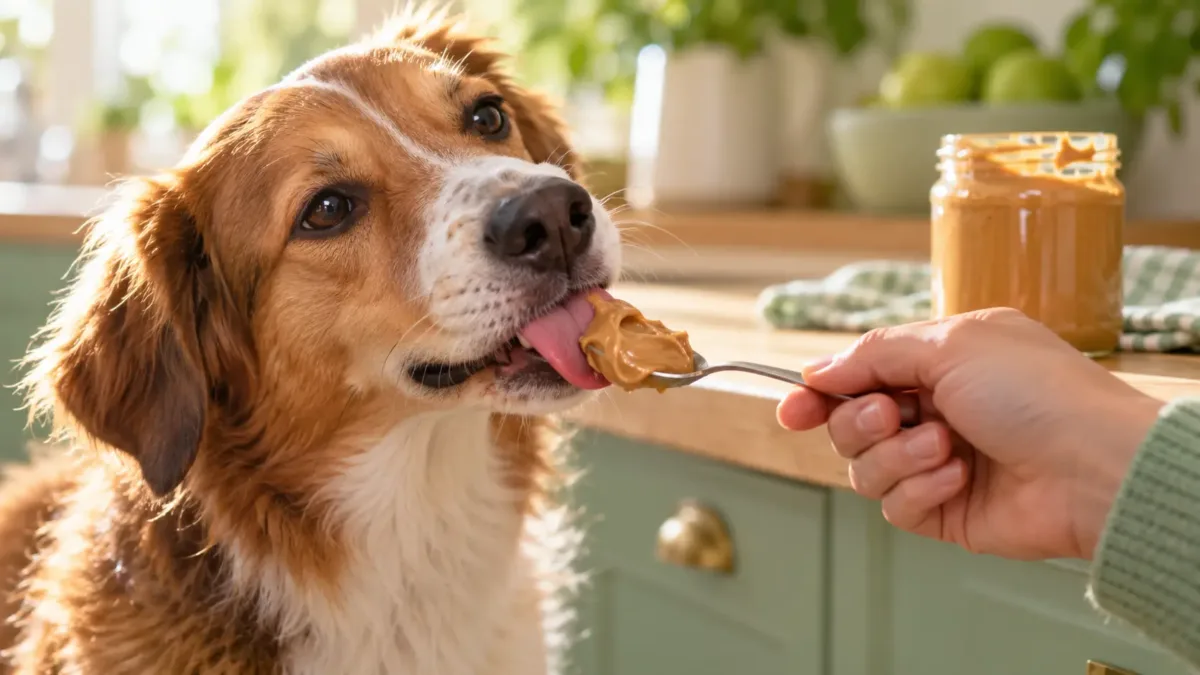
What Peanut Butters Are Safe for Dogs?
The American Kennel Club says the healthiest options are unsalted, dog-specific or homemade peanut butter. Here’s how common types compare:
| Type | Okay for Dogs? | What to Watch For |
|---|---|---|
| Natural, unsalted (peanuts only) | Best choice | Still high in fat; stir in the oil |
| Regular supermarket brands | Okay in small amounts | Added salt, sugar and oils |
| Dog-specific peanut butter | Good option | Check calories per serving |
| Sugar-free, keto or high-protein | Only if xylitol-free | Highest risk of xylitol |
| Chocolate or flavored spreads | No | Chocolate, sweeteners, extra sugar |
Smooth and crunchy are both fine. Crunchy just has small peanut pieces, which most medium and large dogs handle without trouble.
Peanut Butter Nutrition, Spoon by Spoon
Peanut butter offers protein, vitamin E and niacin, but it’s one of the most calorie-dense foods in your kitchen. Here’s what you’re giving, based on USDA data for unsalted smooth peanut butter:
| Amount | Calories | Fat | Protein |
|---|---|---|---|
| ½ teaspoon (~2.7 g) | ~16 kcal | ~1.4 g | ~0.6 g |
| 1 teaspoon (~5.3 g) | ~32 kcal | ~2.7 g | ~1.2 g |
| 1 tablespoon (~16 g) | ~96 kcal | ~8.2 g | ~3.6 g |
Approximate USDA FoodData Central values. Salted brands carry the same calories plus extra sodium.
For perspective, a single tablespoon can equal a quarter to a third of a toy breed’s entire daily calorie needs.
Natural peanut butter often separates, with a layer of oil on top. Stir it back in rather than pouring it off and serving the thick paste at the bottom, or your dog gets uneven doses of fat. Store opened natural jars in the fridge.
How Much Peanut Butter Can a Dog Have?
| Dog Size | Weight | Maximum Per Day | Approx. Calories |
|---|---|---|---|
| Toy | Under 10 lb | ½ teaspoon | ~16 kcal |
| Small | 10–25 lb | ½–1 teaspoon | 16–32 kcal |
| Medium | 25–50 lb | 1–1½ teaspoons | 32–48 kcal |
| Large | 50–90 lb | 2 teaspoons | ~64 kcal |
| Giant | 90+ lb | Up to 1 tablespoon | ~96 kcal |
For healthy adult dogs, counted toward the treat budget of roughly 10% of daily calories. Cut other treats on peanut butter days.

If your dog ate peanut butter with xylitol, call your vet or an animal poison control center right away, even if they seem fine. Signs can include:
- Vomiting
- Weakness, staggering or wobbliness
- Collapse or seizures
Bring the jar or a photo of the label so your vet knows exactly what was eaten.
Smart Ways to Use Peanut Butter
- Pill hider: a pea-sized dab around a tablet works for many dogs. Ask your vet first, since some medicines should be given on an empty stomach.
- Lick mat or chew toy: spread a thin layer and freeze it for longer-lasting enrichment.
- Frozen treats: mix a little with mashed banana and freeze in small molds.
- Homemade biscuits: a spoonful goes a long way in our homemade treat recipes.
Skip peanut butter for dogs with a history of pancreatitis or those on a low-fat diet. Peanut allergies are uncommon in dogs, but itching, hives or an upset stomach after a first taste are reasons to stop.
Other Peanut Snacks to Keep Away
Plain peanut butter is one thing. These peanut-based treats are another:
- Peanut butter cups and candy bars: chocolate is toxic to dogs, and some sugar-free versions add xylitol.
- Peanut butter cookies and baked goods: high in sugar and fat, and some recipes use sugar substitutes.
- Trail mix: often includes raisins or chocolate chips.
- Salted or honey-roasted peanuts: too much salt and sugar. Peanuts still in the shell are also hard to digest and a choking risk for small dogs.
Peanut Butter for Dogs: Quick Safety Guide
Do
- Check the label for xylitol or "birch sugar"
- Pick plain, unsalted, natural peanut butter
- Use a thin layer in a toy or lick mat
- Keep it an occasional treat
Don't
- Any product containing xylitol
- Chocolate or hazelnut spreads
- Salted, sweetened or honey-roasted kinds
- Big daily spoonfuls (high in fat)
Every dog is different. Check with your veterinarian first if your dog has a health condition or a sensitive stomach.
Frequently Asked Questions
Can dogs eat peanut butter every day?
A small daily amount can work for some healthy dogs if it fits within their treat calories. For most, a few times a week is easier on the waistline. Dogs prone to weight gain or stomach upset do better with lower-fat treats.
Is a little Jif peanut butter safe for dogs?
According to Jif’s own FAQ, its peanut butter products don’t contain xylitol. A small amount is generally fine for a healthy dog, though regular Jif does contain added salt, sugar and oils.
What brand of peanut butter is safest for dogs?
Any brand whose ingredients are just peanuts, or peanuts and a little salt, is a solid choice. Brand recipes change, so the label matters more than the name.
Can puppies have peanut butter?
Yes, a tiny lick of xylitol-free peanut butter is fine for puppies on solid food. Keep it very small so it doesn’t upset their stomach or crowd out puppy food.
Why can’t dogs eat rotisserie chicken?
Plain chicken meat is fine, but store-bought rotisserie chicken is usually seasoned with salt, garlic and onion, and the skin is fatty. Cooked bones can splinter. If you share, pull off a little plain white meat with no skin or bones.
Can I give my dog McDonald’s fries?
It’s best not to. Fast-food fries are fried in oil and heavily salted. A single dropped fry won’t usually cause harm, but they make a poor treat.
Wondering about other foods? Our A-Z guide to what dogs can eat sorts them into safe, moderation and avoid.
The Bottom Line
Can dogs eat peanut butter? Yes, and most dogs love it. Check every label for xylitol or birch sugar, choose unsalted when you can, and measure in teaspoons. Used wisely, it’s a handy tool for training, enrichment and medicine time. Browse more food safety guides in our Can Dogs Eat…? section. This article is general information, not veterinary advice; see our Veterinary Disclaimer.
References & Sources
Written by CPD Nutrition Desk using the sources below. We are not affiliated with these organizations, and this guide is not a substitute for advice from your veterinarian.
- U.S. Food and Drug Administration — Paws xylitol its dangerous dogs
- American Kennel Club (AKC) — Can dogs eat peanut butter
- jif.com — Jif's own FAQ