


Dog itchy skin is most often caused by fleas, allergies (to the environment or, less often, to food) or a skin infection. Where your dog scratches, when it started and whether other pets itch too are strong clues. Some relief can start at home, but itching that lasts more than a week or two, breaks the skin or keeps your dog up at night needs a vet.
Rule out fleas first, even if you can’t see any. Note where and when your dog itches, since the pattern points to the cause. Gentle baths and flea control are safe first steps, but open sores, hair loss, smelly skin or constant scratching need a vet exam.
Table of Contents
Why Is My Dog So Itchy?
The Merck Veterinary Manual lists parasites, infections and allergies as the most common causes of itching in dogs, and vets usually rule out parasites first. The main culprits:
- Fleas and flea allergy: a single bite can set off intense itching in an allergic dog.
- Environmental allergies (atopic dermatitis): reactions to pollen, dust mites or mold, often seasonal at first.
- Food allergy: less common than flea or environmental allergy, and itchy all year round.
- Mites (mange): sarcoptic mange is intensely itchy and can spread to other pets and people.
- Bacterial or yeast infections, which often develop on top of allergies and make the itch worse.
- Dry skin from frequent bathing, harsh shampoos or dry indoor air.
- Contact irritation from new cleaning products, grass or a new bed.

Where Your Dog Itches: What It Can Mean
The location of the itch is one of the most useful clues you can give your vet:
| Where Your Dog Scratches or Licks | Common Causes |
|---|---|
| Lower back, tail base, back of thighs | Flea allergy |
| Paws, face, armpits, belly, groin | Environmental or food allergy |
| Ears (scratching, head shaking) | Allergies, ear yeast or bacterial infection, ear mites |
| Ear edges, elbows, hocks | Sarcoptic mange |
| Rear end, scooting | Anal gland problems, allergies, worms |
| One red, wet, raw patch | Hot spot (acute moist dermatitis) |
| Greasy, smelly skin, dark patches | Yeast infection, often from an allergy |
Patterns overlap, and many itchy dogs have more than one cause. Use this to describe the problem, not to self-diagnose.
Rule Out Fleas First
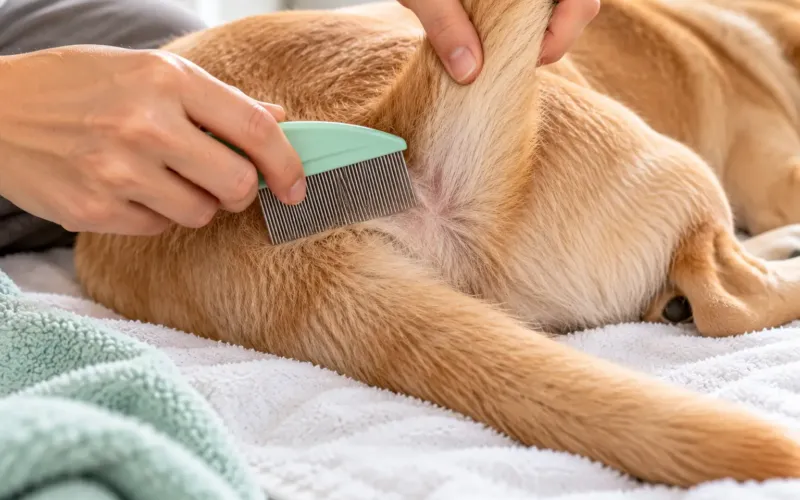
“No fleas” is the most common thing owners say, and fleas are still often the cause. Allergic dogs groom so much that they remove the evidence. To check:
- Part the fur at the base of the tail and along the lower back.
- Run a fine flea comb through these areas over a white paper towel.
- Dampen any black specks. Flea dirt turns reddish brown.
Even if you find nothing, keep every pet in the home on a vet-recommended flea preventive year-round. Treating one pet isn’t enough.
Home Relief for an Itchy Dog
For mild dog itchy skin, or while you wait for a vet visit, these steps are safe for most dogs:
- Gentle baths with a soap-free oatmeal or vet-recommended shampoo and lukewarm water, no more than about once a week unless your vet advises otherwise.
- Wipe paws with a damp cloth after walks during pollen season.
- Wash bedding weekly in hot water.
- Stop the scratching cycle with a soft cone or a light T-shirt so the skin can heal.
- Ask about omega-3s. Fish oil can support skin in some allergic dogs; see our fish oil for dogs guide before you start.
What not to put on itchy skin
| Avoid | Why |
|---|---|
| Tea tree oil and other essential oils | Can be toxic to dogs on the skin or if licked, per the ASPCA |
| Human creams and hydrocortisone | Dogs lick them off; only use what your vet approves |
| Apple cider vinegar on raw skin | Stings and can worsen open sores |
| Garlic “for fleas” | Garlic is toxic to dogs |
| Frequent human shampoo baths | Strips natural oils and dries the skin |
How Vets Treat Itchy Skin
Your vet will look for the cause, which may mean skin scrapings for mites, tape or swab tests for yeast and bacteria, or a food trial. Treatment for dog itchy skin depends on what they find and may include:
- Parasite control for fleas or mites.
- Antibiotics or antifungals for skin and ear infections, by mouth or as medicated shampoos and sprays.
- Anti-itch medications such as oclacitinib tablets, lokivetmab injections or a short course of steroids to calm a flare.
- An elimination diet of at least eight weeks if food allergy is suspected. Our dog food allergies and limited ingredient dog food guides explain how it works.
- Allergy testing and immunotherapy for dogs with long-term environmental allergies.
Many allergic dogs need ongoing management rather than a one-time cure, so expect a few rechecks to find what works.
Keep an Itch Diary
Allergies, infections and fleas can look alike, and it’s easy to forget how bad last month was. A simple daily score from 0 (no itch) to 10 (scratching nonstop, even waking at night) helps your vet see patterns and judge whether treatment is working:
| Write Down | Why It Helps |
|---|---|
| Itch score 0-10, once a day | Shows whether things are improving |
| Where your dog scratches or licks | Points to fleas, allergies or mites |
| Season, walks, new products | Reveals environmental triggers |
| Food, treats and chews | Needed if a food trial is considered |
| Photos of the skin each week | Tracks redness, hair loss and healing |

Itchy Puppy Skin
Some light scratching is normal in puppies, especially while their coat is changing or after a bath. Itchy puppy skin that doesn’t settle is often caused by fleas, mites (including “walking dandruff” from Cheyletiella), worms or a mild skin infection called puppy pyoderma, which shows as small pimples on the belly. Allergies are less likely in very young puppies but can appear later in the first year. Because mites can spread to people and other pets, have your vet check any puppy with constant scratching, flaky skin or bald patches, and use only flea products labeled for your puppy’s age and weight.
What is the most common cause you see? Flea allergy and environmental allergies, often with a skin or ear infection on top.
What should owners try first? Strict flea prevention for every pet in the house and gentle baths. If it lasts more than a week or two, come in.
How common is food allergy? Less common than people think. It needs an 8-week elimination diet to confirm, not frequent food switching.
— Dr. Sarah Miller, DVM
Dog Itchy Skin: Quick Guide
✓ What helps
- Keep all pets on flea prevention
- Use gentle, soap-free baths
- Track where and when your dog itches
- See a vet if itching lasts or breaks skin
✕ Don’t
- Use tea tree or other essential oils
- Apply human creams without vet advice
- Bathe with human shampoo
- Change food again and again without a plan
Every dog is different. Puppies and dogs with ongoing skin or ear problems should be examined by a vet.
Frequently Asked Questions
Why is my dog itching so much but has no fleas?
Fleas can be hard to find on itchy dogs, so they’re still possible. Other common causes are environmental allergies, food allergy, skin infections and mites. A vet exam can narrow it down.
What can I give my dog for itchy skin at home?
Gentle oatmeal or vet-recommended baths, good flea control, washing bedding and wiping paws after walks are safe starts. Don’t give human medicines without asking your vet first.
Can food cause itchy skin in dogs?
Yes, but it’s less common than flea or environmental allergies. Food allergy usually causes year-round itching of the paws, face, ears and rear end. An eight-week elimination diet is the way to confirm it.
Why is my dog itching and losing hair?
Hair loss with itching often means constant scratching or licking, mites, or a skin infection. It should be checked by a vet, especially if the patches are spreading.
Is dog itching contagious to humans?
Most causes aren’t, but sarcoptic mange and some fungal infections like ringworm can spread to people. If you develop itchy red bumps, contact your vet and your own doctor.
Do probiotics or fish oil help an itchy dog?
Fish oil may help some allergic dogs over several weeks. Evidence for probiotics is still limited. Ask your vet before adding supplements, and see our probiotics for dogs guide.
Browse every topic, from tummy trouble to supplements, in our dog nutrition and health guide.
The Bottom Line
An itchy dog is uncomfortable, and itching rarely fixes itself. Start by ruling out fleas, note where and when your dog has itchy skin, and use gentle home care for mild cases. If the itch lasts, breaks the skin or comes back again and again, see your vet to find the cause, since the right treatment depends on it. For more health guides, browse our Nutrition & Health section. This article is general information, not veterinary advice; see our Veterinary Disclaimer.
References & Sources
Written by CPD Nutrition Desk using the sources below. We are not affiliated with these organizations, and this guide is not a substitute for advice from your veterinarian.
- Merck Veterinary Manual — Itching pruritus in dogs
- ASPCA — Tea tree