


Blueberries are about the size of a typical training treat, they come with zero prep, and many dogs gobble them up. So, can dogs eat blueberries? Yes. They’re one of the easiest fruits to share, and the American Kennel Club lists them among its recommended dog-safe fruits. Below, we’ll cover why they work so well as rewards, how many to give, the “xylitol in blueberries” worry, and which berries should never end up in your dog’s mouth.
Yes, plain fresh or frozen blueberries are safe for most dogs. They’re low in calories and rich in fiber, vitamin C and antioxidants. Wash them, feed a handful rather than a bowlful, and watch small dogs with frozen berries. Skip blueberry muffins, pies, jams and sweetened yogurts.
Table of Contents
Why Blueberries Make Great Training Treats
A single blueberry has well under one calorie. Compare that with many commercial training treats, which can carry several calories each, and you can see why trainers like them. You can reward a dog dozens of times during a session without blowing their daily calorie budget.
- No prep: rinse and serve. They’re small enough that most dogs don’t need them cut up.
- Easy to carry: a small container fits in a pocket on walks.
- Fun frozen: on hot days, frozen berries become a crunchy, cooling snack.
- Great for scatter games: toss a few on the lawn and let your dog sniff them out.

Blueberry Nutrition Compared With Other Berries
According to the AKC, blueberries are low in calories and high in vitamin C, fiber and plant compounds called phytochemicals. Here’s how they compare with two other dog-safe berries per 100 grams, based on USDA data:
| Per 100 g (raw) | Blueberries | Strawberries | Raspberries |
|---|---|---|---|
| Calories | 57 kcal | 32 kcal | 52 kcal |
| Fiber | 2.4 g | 2.0 g | 6.5 g |
| Natural sugars | 9.9 g | 4.9 g | 4.4 g |
| Vitamin C | 9.7 mg | 58.8 mg | 26.2 mg |
Approximate USDA FoodData Central values. Dogs make their own vitamin C, so any extra from fruit is a bonus.
Blueberries are the sweetest of the three, which is one reason to keep portions modest. Their deep blue color comes from anthocyanins, a type of antioxidant. The AKC notes that studies suggest adding antioxidants to a dog’s diet may help reduce the effects of brain aging in senior dogs.
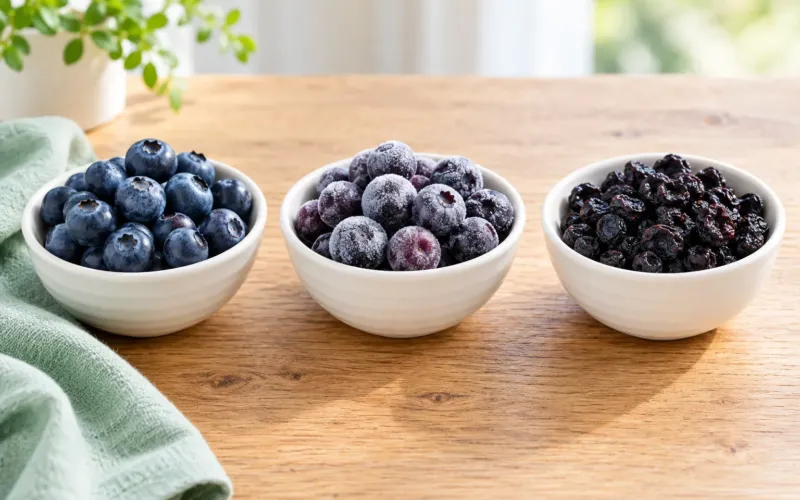
Fresh, Frozen, Dried or Baked?
Not every form of blueberry is equally dog-friendly. Here’s a quick guide:
- Fresh: the simplest choice. Rinse well to remove dirt and pesticide residue.
- Frozen, plain: great in summer. Choose bags with no added sugar or syrup.
- Dried: much more concentrated in sugar and calories, and some brands add sugar or oil. Offer only a few, if any.
- Baked goods, jams and pie filling: skip them. They’re loaded with sugar and fat and may contain sweeteners or spices.
- Blueberry yogurt: only plain yogurt with fresh berries stirred in. Flavored versions are often sweetened.
How Many Blueberries Can You Give a Dog?
Calories are rarely the problem here; natural sugar and fiber are. Too many at once can lead to an upset stomach or loose stool. These daily amounts are a sensible ceiling:
| Dog Size | Weight | Blueberries Per Day | Approx. Calories |
|---|---|---|---|
| Toy | Under 10 lb | 3–5 berries | Under 3 kcal |
| Small | 10–25 lb | 5–10 berries | 3–5 kcal |
| Medium | 25–50 lb | 10–15 berries | 5–8 kcal |
| Large | 50–90 lb | 15–20 berries | 8–10 kcal |
| Giant | 90+ lb | 20–25 berries | 10–13 kcal |
Based on an average berry weighing about 0.7 g. For healthy adult dogs; start with just a few the first time.
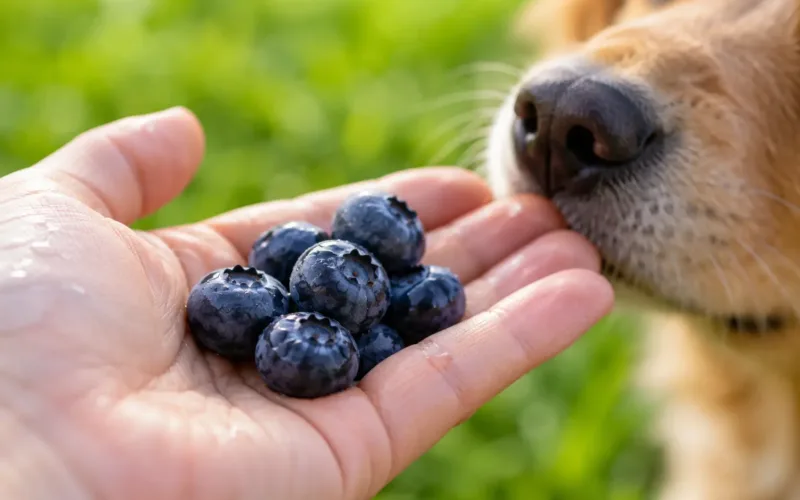
Choking caution: the AKC notes that blueberries can still pose a choking risk, especially for smaller dogs. Frozen berries are harder and slicker. For toy breeds and dogs that gulp, halve or lightly mash them, or let frozen berries thaw a little first.
Do Blueberries Have Xylitol?
This question pops up a lot, and it’s a fair one. Xylitol does occur naturally in tiny amounts in some fruits and vegetables, including berries. But the poisoning cases vets worry about involve products with xylitol added as a sweetener, such as sugar-free gum, candy and some baked goods. Plain blueberries are treated as safe by the AKC and veterinarians. The real risk is in sugar-free blueberry muffins, jams, syrups and “light” yogurts, so always check those labels.
If your dog eats a product with added xylitol, VCA Animal Hospitals lists signs such as vomiting, weakness, wobbliness, tremors and seizures. Call your vet immediately.
Do Blueberries Help Dogs With Itchy Skin?
There’s no good evidence that blueberries relieve itching. Antioxidants support general health, but itchy skin usually has a specific cause, such as fleas, allergies or a skin infection. A vet visit is the fastest way to real relief. Your vet may suggest a diet change or an omega-3 supplement if it fits your dog’s needs.
Berries and Fruits Dogs Should Avoid
- Grapes and raisins: the ASPCA warns they can cause kidney damage. Never share them, even one or two.
- Cherries: the flesh isn’t the issue, but the pits, stems and leaves contain cyanide compounds and are a choking risk.
- Yew berries: the ASPCA lists yew as toxic to dogs, with effects that can include tremors, seizures and heart failure.
- Holly and other wild berries: holly can cause vomiting and diarrhea. If you can’t identify a wild berry, don’t let your dog eat it.
Blueberries for Dogs: Quick Serving Guide
Do
- Serve fresh or frozen, plain
- Wash them before serving
- Give a few at a time as rewards
- Mash or halve them for tiny dogs
Don't
- Blueberry muffins, pies or pancakes
- Sweetened dried blueberries
- Sugar-free snacks that may contain xylitol
- Large handfuls at once
Every dog is different. Check with your veterinarian first if your dog has a health condition or a sensitive stomach.
Frequently Asked Questions
Can dogs eat blueberries every day?
Yes, a small daily handful is fine for most healthy dogs. Keep the amount steady and make sure their main food stays complete and balanced.
Are blueberries a laxative for dogs?
Not really, but the fiber and natural sugar can loosen stool if your dog eats too many. Stick to the amounts above and you’re unlikely to notice any change, aside from the occasional blue-tinged poop.
What is the healthiest fruit for dogs?
Blueberries are one of the top picks for their low calories and antioxidants. Apples (no core or seeds), bananas and seedless watermelon are other good options in small amounts.
Can puppies eat blueberries?
Yes, once they’re eating solid food. Start with one or two, and halve them for small breeds. Their main nutrition should still come from a complete puppy food.
Can dogs eat pineapple or watermelon?
Yes, in small pieces. Remove pineapple’s tough core and skin, and remove watermelon seeds and rind first.
Checking another food? See our What Can Dogs Eat? A-Z list of safe and unsafe foods.
The Bottom Line
Can dogs eat blueberries? Yes, and they’re one of the simplest, lowest-calorie treats you can offer. Wash them, keep portions to a handful, and halve them for tiny dogs. Steer clear of sugary blueberry baked goods and anything sweetened with xylitol. For more ideas, browse our homemade dog treats or the full Can Dogs Eat…? collection. This article is general information, not veterinary advice; see our Veterinary Disclaimer.
References & Sources
Written by CPD Nutrition Desk using the sources below. We are not affiliated with these organizations, and this guide is not a substitute for advice from your veterinarian.
- American Kennel Club (AKC) — Can dogs eat blueberries
- VCA Animal Hospitals — Xylitol toxicity in dogs
- ASPCA — People foods avoid feeding your pets
- ASPCA — ASPCA lists yew