
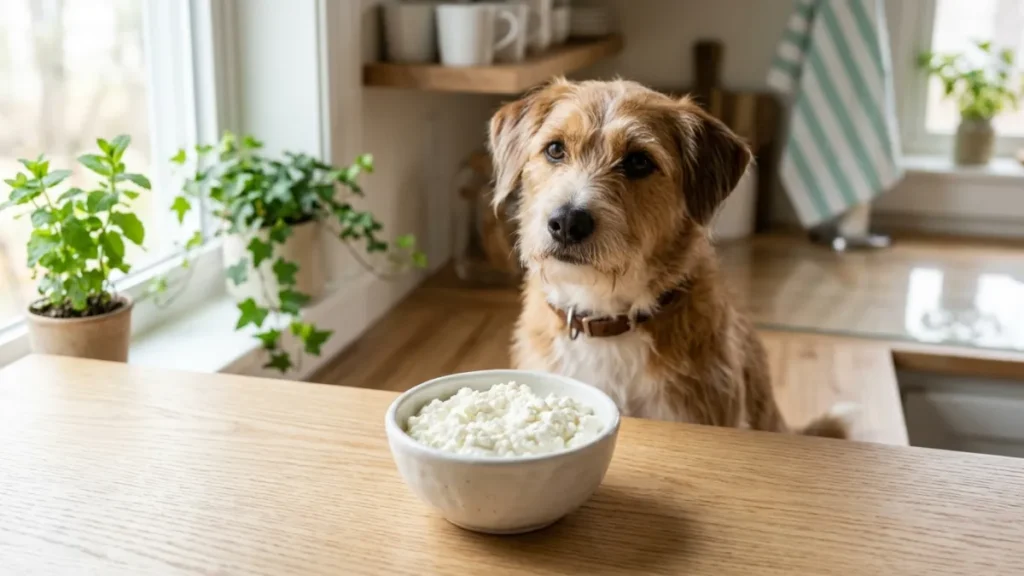

If your dog plants themselves at your feet whenever the cottage cheese tub comes out, you’re in good company. Can dogs eat cottage cheese? For most healthy adult dogs, a small spoonful of the plain, low-fat kind is fine. Below: why it sits better than milk, which tub to buy, portions by size, and when to skip it.
Yes, in moderation. Cottage cheese isn’t toxic, and plain, low-fat, low-sodium versions make a reasonable occasional treat or topper. Keep portions small, avoid flavored varieties, and skip it if your dog reacts badly to dairy.
Table of Contents
Why Cottage Cheese Is Often Gentler Than Milk
Adult dogs produce relatively little lactase, the enzyme that breaks down milk sugar. The ASPCA Animal Poison Control Center explains that this is why milk and other dairy products can lead to diarrhea or digestive upset in pets.
Cottage cheese has an edge here, and the American Kennel Club lists it among the lower-fat cheese choices. Much of the lactose drains off with the whey, leaving roughly 3 grams per half cup versus about 6 grams in milk (ballpark figures). Lower isn’t zero, so a truly lactose-intolerant dog can still get gassy or loose.

Nutrition Snapshot: What’s in a Spoonful
Cottage cheese is mostly water and protein. Here’s how common styles compare per 100 grams (about 7 tablespoons), based on USDA data:
| Type | Calories | Protein | Fat | Sodium |
|---|---|---|---|---|
| Low-fat (1%) | ~72 kcal | ~12 g | ~1 g | ~410 mg |
| Full-fat (4%) | ~98 kcal | ~11 g | ~4.3 g | ~365 mg |
| Low-fat (1%), no salt added | ~72 kcal | ~12 g | ~1 g | ~15 mg |
Approximate USDA averages. Brands differ, so always check the nutrition label.
Protein is the main draw: it’s lean, and the soft texture suits senior dogs with dental issues. Sodium is the hidden catch, so look for a no-salt-added tub. It’s not a great calcium source either (roughly 60 to 110 mg per 100 g, far less than hard cheeses).
What Kind of Cottage Cheese Can a Dog Eat?
In the dairy aisle, look for:
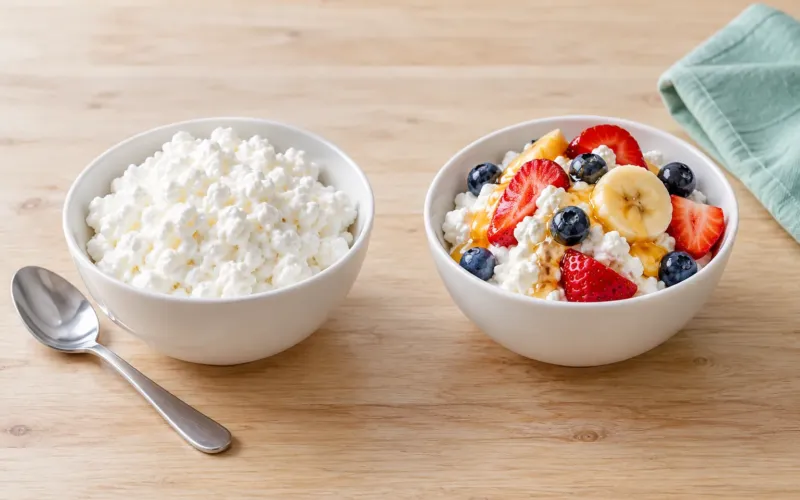
- Plain and unflavored: no chives, onion, garlic, herbs, pepper or fruit mix-ins.
- Low-fat or fat-free: 1% or 2% milkfat is easier on the stomach than 4% “classic” styles.
- Low or no added salt: compare sodium per serving across brands.
- No sweeteners: skip sweetened or dessert-style products, and make sure anything labeled “light” is free of xylitol, which the FDA warns is dangerous for dogs.
What about brands like Daisy? Daisy’s regular cottage cheese is just cultured skim milk, cream and salt, so no risky extras, but the low-fat version is still the better pick. Recipes change, so check the label.
How Much Cottage Cheese Can I Give My Dog?
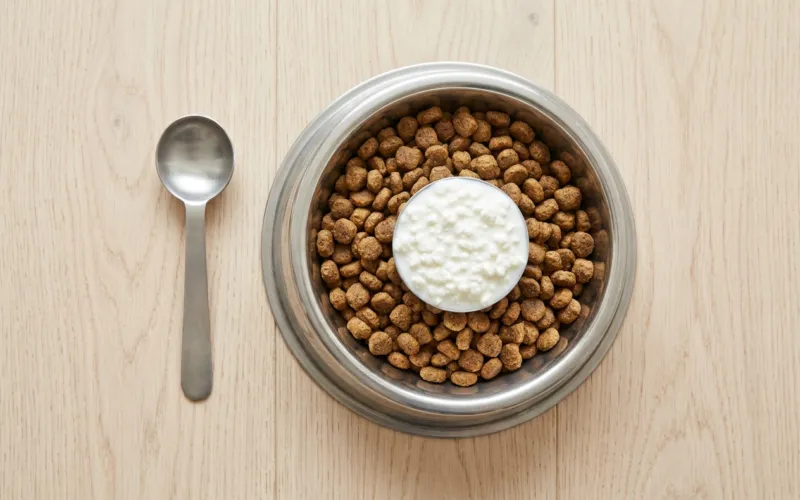
The World Small Animal Veterinary Association recommends keeping all treats, toppers and pill-hiders under 10% of a dog’s daily calories. Low-fat cottage cheese runs about 11 calories per tablespoon, so these starting points leave room for other treats in the day:
| Dog Size | Body Weight | Suggested Portion | Approx. Calories | How Often |
|---|---|---|---|---|
| Toy | Under 10 lb | 1–2 teaspoons | 4–7 kcal | 2–3 times a week |
| Small | 10–25 lb | 1 tablespoon | ~11 kcal | 2–3 times a week |
| Medium | 25–50 lb | 1–2 tablespoons | 11–22 kcal | 3–4 times a week |
| Large | 50–90 lb | 2–3 tablespoons | 22–33 kcal | 3–4 times a week |
| Giant | 90+ lb | Up to ¼ cup | ~40 kcal | 3–4 times a week |
General starting points for healthy adult dogs on a complete diet. Puppies, seniors and dogs with health conditions may need different amounts, so ask your vet.
The first time, offer just a teaspoon and watch for 24 hours. Soft stool, gas or vomiting is a sign that dairy probably isn’t a good match for your dog.
Risks and When to Skip It
Check with your veterinarian before offering cottage cheese if your dog:
- Has a history of pancreatitis or is on a low-fat diet, since rich, fatty foods are a common trigger for flare-ups.
- Has heart or kidney disease, where sodium intake is often carefully managed.
- Is overweight or on a weight-loss plan.
- Has a known dairy allergy or lactose intolerance.
- Is taking antibiotics. Calcium in dairy can reduce absorption of some antibiotics, such as tetracyclines, so ask before hiding pills in it.
Yogurt vs. Cottage Cheese: Which Is Better for Dogs?
Each has its strengths:
- Plain yogurt with live and active cultures is the pick if you’re interested in probiotics. Most cottage cheese isn’t sold with live cultures unless the label says so.
- Cottage cheese tends to be higher in protein and often lower in lactose than regular yogurt, which makes it a gentle, bland add-on for some dogs.
Whichever you pick, keep it plain and unsweetened. Regular cottage cheese usually carries more sodium than plain yogurt.
Cottage Cheese in a Bland Diet (and Other Mix-Ins)
Many vet clinics use low-fat cottage cheese in short-term bland diets, often mixed about one part to three parts plain cooked white rice. These diets aren’t complete and are meant for a few days only. Follow your vet’s instructions, and call them if symptoms last more than a day.
For everyday treats, cottage cheese pairs nicely with other dog-safe foods:
- A dollop on regular food to tempt a picky eater
- Stirred into plain canned pumpkin (not pie filling)
- Spread on a lick mat or stuffed in a puzzle toy, then frozen
- Topped with a few blueberries or a slice of banana
Cottage Cheese for Dogs: Quick Serving Guide
Do
- Choose plain, low-fat cottage cheese
- Offer a small spoonful as a food topper
- Introduce it slowly and watch the stool
- Pair it with plain rice for a bland meal (ask your vet)
Don't
- Flavored tubs with chives, onion or garlic
- Full-fat versions for pancreatitis-prone dogs
- Feeding it to dogs that react to dairy
- High-sodium or sweetened varieties
Every dog is different. Check with your veterinarian first if your dog has a health condition or a sensitive stomach.
Frequently Asked Questions
Can dogs eat cottage cheese every day?
It works better as an occasional extra. A small daily topper may be fine for some healthy dogs if it fits within their treat allowance, but the sodium adds up over time. Ask your vet before making it routine.
Can puppies have cottage cheese?
Weaned puppies can try a tiny taste, but their stomachs are sensitive and they need a complete puppy diet to grow properly. Check with your vet first.
Does cottage cheese affect dogs’ stomachs?
It can. Dogs that don’t handle lactose well may get gas, bloating or diarrhea within a few hours. If that happens, stop offering it.
Is full-fat cottage cheese bad for dogs?
It isn’t toxic, but the extra fat makes stomach upset more likely and adds calories. Low-fat is the safer default.
Wondering about other foods? Our A-Z guide to what dogs can eat sorts them into safe, moderation and avoid.
The Bottom Line
So, can dogs eat cottage cheese? Most can, as long as it’s plain, low-fat, ideally low-sodium, and served by the spoonful rather than the bowlful. Start small, watch how your dog responds, and loop in your vet if your dog has a health condition. Browse our Can Dogs Eat…? guides or our Nutrition & Health articles. This article is general information, not veterinary advice; see our Veterinary Disclaimer.
References & Sources
Written by CPD Nutrition Desk using the sources below. We are not affiliated with these organizations, and this guide is not a substitute for advice from your veterinarian.
- ASPCA — ASPCA Animal Poison Control Center
- American Kennel Club (AKC) — Human foods dogs can and cant eat
- U.S. Food and Drug Administration — Paws xylitol its dangerous dogs
- WSAVA — World Small Animal Veterinary Association