
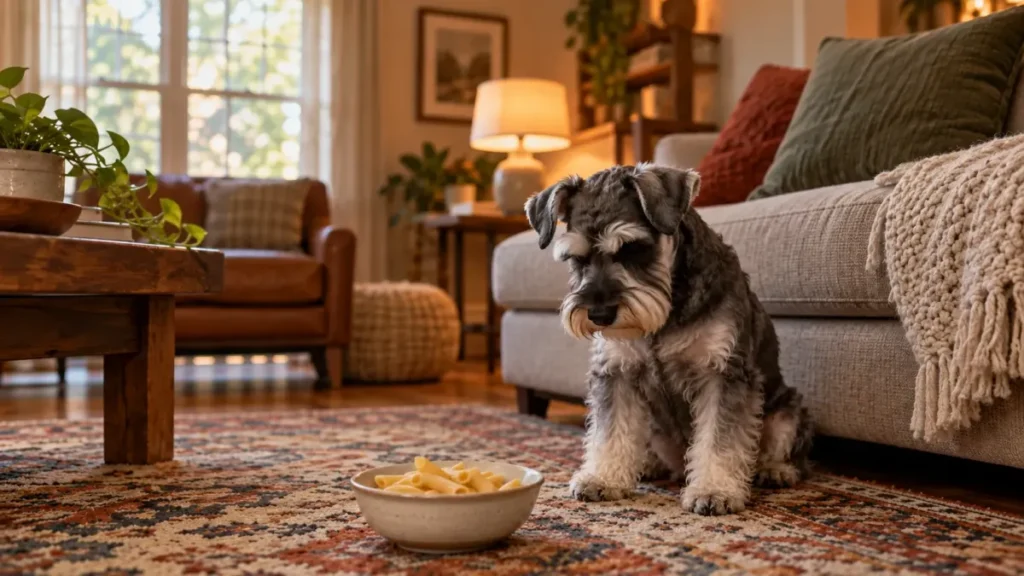

Can dogs eat pasta? Yes. Plain, cooked pasta made from flour, water and egg is safe for most dogs in small amounts. It's just not very useful: pasta is mostly starch and calories. The real problems are what goes on top. Tomato sauces, pesto and Alfredo usually contain garlic, onion, salt, cheese or butter, and those can upset or even poison a dog.
Plain pasta is fine as an occasional bite. Serve a small spoonful of plain, cooked pasta with nothing added. Skip sauces, buttery or cheesy pasta, pasta salad and anything made with garlic or onion. Count pasta as a treat, not a meal.
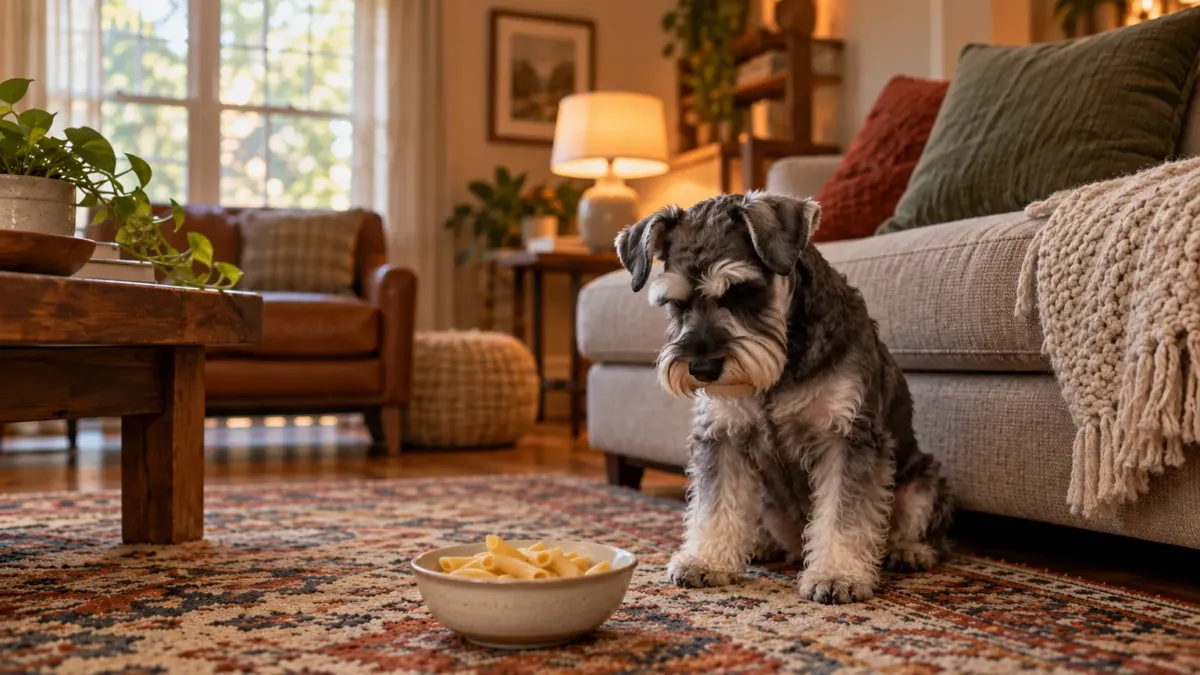
Table of Contents
Is Pasta Good for Dogs?
Pasta isn't harmful, but it isn't nutritious for dogs either. It's mainly refined carbohydrate with a little protein. A complete dog food already supplies the energy and nutrients your dog needs. Here's what a typical portion brings, based on USDA FoodData Central:
| Per ½ cup cooked | Calories | Protein | Fiber |
|---|---|---|---|
| White pasta | ~110 kcal | ~4 g | ~1 g |
| Whole wheat pasta | ~87 kcal | ~4 g | ~3 g |
| Egg noodles | ~110 kcal | ~4 g | ~1 g |
| Chickpea or lentil pasta | ~95 to 100 kcal | ~6 to 7 g | ~3 to 4 g |
Approximate values; brands vary. Half a cup of cooked pasta is about a third of a 10 lb dog's daily calories.
If your dog gets pasta often, those calories add up. Extra weight is one of the most common problems vets see, and our dog calorie calculator can help you set the daily budget.
Sauces and Toppings: The Real Risk
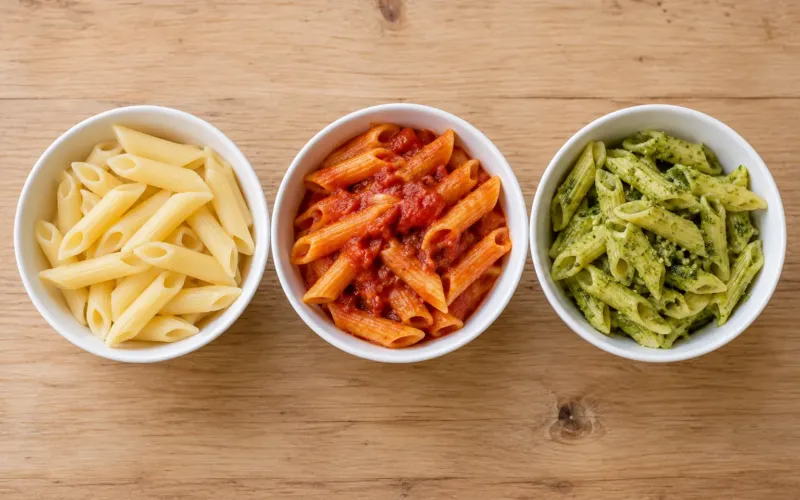
Garlic and onion hide in most pasta sauces. Marinara, bolognese, pesto and Alfredo usually contain garlic, onion or both, and these damage a dog's red blood cells, according to the ASPCA. Powders and cooked forms count. If your dog ate a large amount of sauced pasta, call your vet with what was in the dish and your dog's weight.
| Pasta dish | Verdict | Main concern |
|---|---|---|
| Plain, cooked pasta | OK in small amounts | Calories |
| Tomato or marinara sauce | Avoid | Garlic, onion, salt |
| Pesto | Avoid | Garlic, cheese, oil, sometimes nuts |
| Alfredo or carbonara | Avoid | Butter, cream, cheese, bacon |
| Mac and cheese | Avoid | Cheese, butter, salt |
| Pasta salad | Avoid | Onion, dressing, olives, cured meats |
| Lasagna | Avoid | Sauce, cheese, seasoned meat |
How Much Pasta Can a Dog Have?
| Dog's weight | Plain cooked pasta | Rough calories |
|---|---|---|
| Under 15 lb | 1 to 2 pieces of penne | ~5 to 10 kcal |
| 15 to 40 lb | 1 tablespoon | ~14 kcal |
| 40 to 70 lb | 2 tablespoons | ~28 kcal |
| Over 70 lb | ¼ cup | ~55 kcal |
Our estimates for healthy adults, occasionally. Treats should stay under about 10% of daily calories, a guideline from WSAVA.
How to Serve Pasta Safely
- Set aside a few pieces before adding sauce, salt or oil.
- Cook it soft. Undercooked pasta is harder to digest.
- Cut long noodles like spaghetti into short pieces so they're easier to swallow.
- Mix a spoonful into regular food or use pieces as an occasional reward.
Uncooked dry pasta isn't toxic, but it's hard and can be a choking risk for small dogs, so keep the box out of reach.
Pasta vs Rice for an Upset Stomach
Many vets suggest a short bland diet of plain boiled chicken and white rice for mild stomach upset. Plain, well-cooked pasta can stand in if that's what you have, but rice is the more common choice and easier to portion. Either way, a bland diet is for a few days only. See our rice guide and the dog upset stomach guide for when to call your vet.
Dogs That Should Skip Pasta
- Overweight dogs: pasta adds calories with little nutrition.
- Diabetic dogs: refined starch can affect blood sugar; ask your vet.
- Dogs with a wheat allergy: rare, but itchy skin or ear problems can point to it. See dog food allergies.
Is plain pasta OK as a regular treat? Occasionally, in small amounts. It's mostly calories, so it doesn't do much for a dog on a complete diet.
My dog ate pasta with tomato sauce. Should I worry? It depends on the amount and the garlic and onion in the sauce. A lick is usually fine; a plateful needs a call to your vet.
— Dr. Sarah Miller, DVM
Pasta for Dogs: Quick Serving Guide
✓ Do
- Set aside plain pasta before saucing
- Cook it soft and cut it short
- Keep it to a small spoonful
- Count it as a treat
✕ Don't
- Share pasta with sauce or pesto
- Add butter, cheese or salt
- Give mac and cheese or lasagna
- Use pasta as a main meal
Diabetic or overweight dogs should get a vet OK first.
Frequently Asked Questions
Can dogs eat spaghetti?
Plain cooked spaghetti, cut short, is fine in small amounts. Spaghetti with sauce or meatballs is not, because of garlic, onion and seasoning.
Can dogs eat pasta with butter or cheese?
A little plain cheese isn't toxic, but butter and cheese add fat and salt. Plain pasta is the safer habit.
Can dogs drink pasta water?
Plain, unsalted pasta water is fine in small amounts. Salted pasta water isn't a good idea for dogs.
Can dogs eat gluten-free pasta?
Yes, plain. Chickpea and lentil pastas are higher in protein but can cause gas in some dogs.
Can puppies eat pasta?
A tiny piece of plain pasta is OK, but puppies need their complete puppy food to grow well.
For more foods, browse the full what can dogs eat list.
The Bottom Line
Can dogs eat pasta? Yes, plain cooked pasta is safe as an occasional small bite, but it adds calories and little nutrition. Keep sauces, butter, cheese, pesto and anything with garlic or onion away from your dog. More answers in our Can Dogs Eat…? library or the Start Here guide.
References & Sources
Written by CPD Nutrition Desk using the sources below. We are not affiliated with these organizations, and this guide is not a substitute for advice from your veterinarian.
- USDA — USDA FoodData Central
- ASPCA — People foods avoid feeding your pets
- WSAVA — WSAVA guidetotreats dogs 251107