


Can dogs eat tuna? Yes, occasionally. A spoonful of plain canned light tuna packed in water, or a bit of fully cooked tuna steak, is safe for most dogs. Tuna is a great source of protein, but it also carries more mercury than many fish, so it works best as an occasional topper rather than a daily food.
Yes, in small, occasional portions. Choose canned light tuna in water with no added salt, drain it well, and serve it plain. Skip tuna salad, tuna in oil, raw tuna and heavily salted cans. Rotating with lower-mercury fish like salmon is a smarter long-term habit.

Table of Contents
Is Tuna Good or Bad for Dogs?
Both, depending on how much and which kind. On the plus side, tuna is lean, high in protein and brings omega-3 fatty acids, selenium and B vitamins. On the downside, tuna are large, long-lived fish that build up mercury over time. A dog eating tuna once in a while won't be harmed by that, but daily tuna for months is a different story.
Here's how common options compare, using USDA FoodData Central values for nutrition and FDA monitoring data for mercury:
| Tuna type (per 100 g) | Calories | Mercury level | For dogs |
|---|---|---|---|
| Canned light (skipjack), in water | ~116 kcal | Lower (~0.13 ppm) | Best choice |
| Canned albacore (white), in water | ~128 kcal | Higher (~0.35 ppm) | Smaller, rarer portions |
| Canned tuna in oil, drained | ~198 kcal | Varies | Skip, extra fat |
| Fresh yellowfin, cooked | ~130 kcal | Higher (~0.35 ppm) | Occasional, plain |
| Bigeye or ahi, sushi grade | ~130 kcal | Highest (~0.69 ppm) | Avoid |
Approximate values. Mercury averages come from FDA fish monitoring data; individual cans vary.
What Mercury Does to Dogs
Mercury builds up slowly in the body. Mercury poisoning in pet dogs is rare, but long-term heavy exposure can affect the nervous system and kidneys. Signs can include wobbliness, tremors, loss of coordination, vomiting or unusual behavior. If you've been feeding tuna daily and notice any of these, stop and call your vet. Small, occasional portions keep the risk very low.
How to Pick and Serve Canned Tuna
- Pick light tuna in water, ideally labeled “no salt added” or “low sodium.” Regular cans can carry around 250 to 350 mg of sodium per 100 g.
- Drain and rinse to remove extra salt.
- Flake it and mix a spoonful into regular food.
- Store leftovers covered in the fridge and use within 2 days.
Fresh tuna steak should be cooked through with no oil, garlic, soy sauce or seasoning. Raw tuna, including sushi and poke, can carry parasites and bacteria, so it's off the list.
How Much Tuna Can a Dog Eat?
Treat tuna like a topper, once or twice a week at most. These amounts sit well inside the 10% treat budget used by WSAVA:
| Dog's weight | Light tuna in water, drained | Frequency |
|---|---|---|
| Under 15 lb | 1 teaspoon | Once a week |
| 15 to 35 lb | 1 tablespoon | Once or twice a week |
| 35 to 70 lb | 2 tablespoons | Once or twice a week |
| Over 70 lb | Up to ¼ cup | Once or twice a week |
Our conservative estimates. A tablespoon of drained tuna is about 15 g and 17 calories. Albacore: halve these amounts.
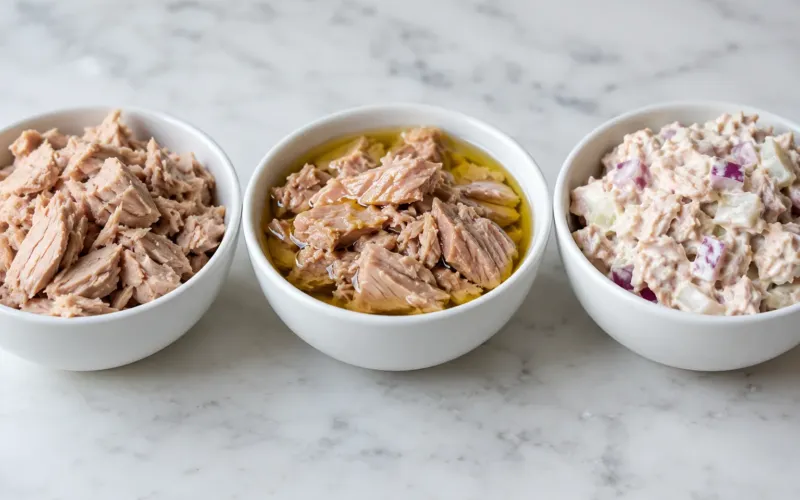
Tuna Dishes to Skip
Tuna salad and tuna casseroles are the usual trouble. Most recipes include mayonnaise, onion, garlic, pickles or celery salt. Onion and garlic damage a dog's red blood cells, according to the ASPCA. If your dog ate tuna salad with onion, call your vet with the amount and your dog's weight.
- Tuna in oil: extra fat that can upset the stomach or trigger pancreatitis.
- Flavored tuna pouches: lemon pepper, chili and garlic blends.
- Tuna melts and sandwiches: cheese, butter and bread add calories and salt.
- Cat food with tuna: fine as a stolen bite, but it isn't balanced for dogs and is rich in fat.
Better Fish for Regular Feeding
If your dog loves fish, rotate. Salmon, sardines packed in water and white fish like cod are lower in mercury and rich in omega-3s. See our salmon guide for safe prep, or our fish oil for dogs guide if you're after skin and coat benefits.
How often is tuna OK? Once or twice a week in small amounts is a reasonable limit for a healthy adult dog. Rotate with lower-mercury fish like salmon.
Light or albacore tuna? Light tuna in water. Albacore tends to carry more mercury, so if you use it, keep portions smaller and less frequent.
— Dr. Sarah Miller, DVM
Tuna for Dogs: Quick Serving Guide
✓ Do
- Choose light tuna in water
- Drain and rinse before serving
- Use a spoonful as a topper
- Rotate with other fish
✕ Don't
- Share tuna salad or casseroles
- Give tuna in oil or flavored pouches
- Feed raw tuna or sushi
- Serve tuna every day
Puppies, pregnant dogs and dogs with kidney issues should get a vet OK first.
Frequently Asked Questions
Can dogs eat tuna every day?
It's better not to. Daily tuna adds up in mercury and salt. Once or twice a week in small amounts is a safer habit.
Can dogs drink tuna juice?
A little water from a no-salt-added can is fine as a food topper. Skip the oil, and the brine from salted cans.
Can dogs eat tuna with mayo?
Plain mayo isn't toxic, but it's very fatty, and mayo-based tuna salads often include onion. It's best to skip.
Can puppies eat tuna?
A tiny taste is fine, but puppies are smaller and more sensitive to mercury. Stick to their puppy food.
Can tuna help a dog with an upset stomach?
Plain, drained tuna is bland and tempting for a picky dog, but boiled chicken is the usual choice. See our dog upset stomach guide.
Wondering about other foods? Our A-Z guide to what dogs can eat sorts them into safe, moderation and avoid.
The Bottom Line
Can dogs eat tuna? Yes, as an occasional topper. Choose canned light tuna in water with no added salt, drain it, serve it plain, and keep portions small because of mercury. Skip tuna salad, oil-packed tuna and raw tuna. For more fish answers, browse our Can Dogs Eat…? library.
References & Sources
Written by CPD Nutrition Desk using the sources below. We are not affiliated with these organizations, and this guide is not a substitute for advice from your veterinarian.
- USDA — USDA FoodData Central
- U.S. Food and Drug Administration — FDA fish monitoring data
- WSAVA — WSAVA guidetotreats dogs 251107
- ASPCA — People foods avoid feeding your pets