


This dog icing recipe comes in two styles: a yogurt icing that hardens on cookies and biscuits, and a soft cream cheese and peanut butter frosting for pupcakes and birthday cakes. Both skip sugar and use dog-safe ingredients. You'll also find natural ways to color icing, how much to use, and the ingredients to keep out.
Yogurt icing (hardens): 5 min prep, 4 to 12 hours to set, ices about 24 small cookies. Cream cheese frosting: 5 min prep, frosts a 6-inch cake or 12 pupcakes. Difficulty: Easy. Storage: iced cookies 1 week in the fridge; frosting 3 days in the fridge.

Table of Contents
Why Regular Icing Isn't for Dogs
Store-bought frosting is mostly sugar and fat, and some “sugar-free” icings use xylitol, which the FDA warns is dangerous for dogs. Chocolate frosting adds theobromine. Our version uses plain yogurt or plain cream cheese for the base and a starch to firm it up, so it looks festive without the sugar crash.
Recipe 1: Dog Treat Icing That Hardens
Dog Treat Icing That Hardens
Ingredients
Method
- Stir the yogurt and tapioca starch together until smooth.
- Add more starch a teaspoon at a time until the icing holds a ribbon when drizzled.
- Stir in natural coloring if using.
- Spoon into a piping bag or a zip-top bag with a small corner cut off.
- Pipe thin lines or dip the tops of cooled biscuits.
- Let set in the fridge for about 4 hours, or overnight on a rack in a cool room.
Notes
How to get it to harden
- Thickness matters: the icing should hold a ribbon when drizzled. Add starch a teaspoon at a time.
- Thin layers set faster: dip or pipe a thin coat, then let biscuits dry on a rack.
- Fridge or air-dry: it sets firm to the touch in about 4 hours in the fridge, or overnight on the counter in a cool room. It won't get as hard as royal icing.

Recipe 2: Cream Cheese and Peanut Butter Frosting
Dog-Safe Cream Cheese Peanut Butter Frosting
Ingredients
Method
- Beat the softened cream cheese until smooth.
- Add the peanut butter and mix until creamy.
- Add water a little at a time if it is too stiff to spread.
- Spread or pipe onto a cooled dog cake or pupcakes.
- Keep refrigerated until serving.
Notes
This soft frosting suits a dog cake or pupcakes. It doesn't harden, so keep frosted cakes in the fridge until serving.
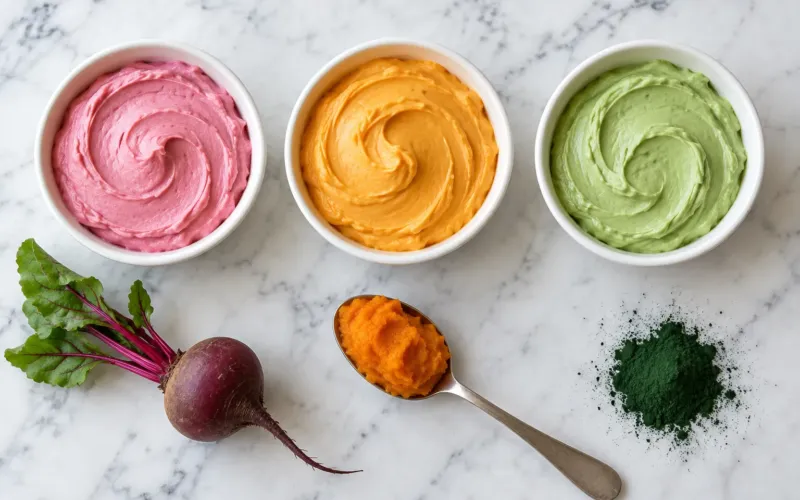
Natural Ways to Color Dog Icing
| Color | Dog-safe ingredient | How much |
|---|---|---|
| Pink or red | Beet powder or a little beet juice | ¼ to ½ tsp powder |
| Orange | Plain pumpkin puree or carrot juice | 1 to 2 tsp |
| Yellow | A pinch of turmeric | A pinch only |
| Purple or blue | Blueberry puree, strained | 1 to 2 tsp |
| Green | Spirulina powder | A pinch |
| Brown | Carob powder (not cocoa) | ½ to 1 tsp |
Wet colorings like fruit puree soften icing, so add a little extra starch. Skip artificial food dyes and never use cocoa or chocolate for brown.
How Much Icing Is OK?
Icing adds calories on top of the cookie or cake. A thin coat of yogurt icing adds roughly 5 calories per small cookie. The cream cheese frosting is richer, at roughly 45 to 50 calories per pupcake, so it's for celebrations, not everyday treats.
| Dog's weight | Iced cookies (small) | Frosted pupcake |
|---|---|---|
| Under 15 lb | 1 | ¼ pupcake |
| 15 to 40 lb | 1 to 2 | ½ pupcake |
| 40 to 70 lb | 2 to 3 | 1 pupcake |
| Over 70 lb | 3 | 1 pupcake |
Our estimates, including the cookie or cake underneath. Keep the day's treats under about 10% of daily calories, a guideline from WSAVA.
Leave these out of dog icing: sugar, powdered sugar, xylitol or “birch sugar,” chocolate or cocoa, sweetened or flavored yogurt, vanilla extract with alcohol, nutmeg and macadamia nuts. Use plain, unflavored cream cheese with no chives or garlic. If your dog has pancreatitis or a dairy allergy, ask your vet first. See our veterinary disclaimer.
Storage
- Iced cookies: once set, store in a single layer in the fridge up to 1 week, or freeze up to 2 months.
- Frosting: keep covered in the fridge up to 3 days. Frost cakes on the day you serve them.
Is homemade dog icing safe? Yes, when it's made from plain yogurt, plain cream cheese or xylitol-free peanut butter. Keep it for special occasions because it adds calories.
What's the biggest ingredient mistake owners make? Using flavored or sugar-free products. Always check yogurt, peanut butter and cream cheese labels for xylitol and flavorings like garlic or chocolate.
— Dr. Sarah Miller, DVM
Dog Icing: Quick Guide
✓ Do
- Use plain yogurt or cream cheese
- Thicken with tapioca starch
- Color with beet, pumpkin or spirulina
- Save frosted treats for special days
✕ Don't
- Use sugar or powdered sugar
- Add cocoa or chocolate
- Use flavored or sugar-free yogurt
- Use cream cheese with chives or garlic
Dogs with pancreatitis or dairy sensitivity should get a vet OK first.
Frequently Asked Questions
What is dog-safe icing made of?
Usually plain yogurt, plain cream cheese, mashed potato or xylitol-free peanut butter, thickened with a starch like tapioca.
Can I use cornstarch instead of tapioca starch?
Yes. Cornstarch works similarly. Arrowroot works too.
Is dog treat frosting safe every day?
It's best kept for special occasions. Even dog-safe frosting adds calories.
Can I make dog icing without dairy?
Yes. Mix plain mashed potato or sweet potato with a little water, or use xylitol-free peanut butter thinned with water.
Can I use this icing on store-bought dog biscuits?
Yes. Plain biscuits decorated with yogurt icing make easy party favors.
Find your next bake in our homemade dog treats guide, sorted into baked, frozen, meaty and holiday recipes.
The Bottom Line
This dog icing recipe gives you a yogurt icing that firms up on cookies and a creamy frosting for cakes, colored with beets, pumpkin or spirulina instead of dyes. Use plain, xylitol-free ingredients and save frosted treats for special days. Find more party recipes in our Homemade Treats collection.
References & Sources
Written by CPD Nutrition Desk using the sources below. We are not affiliated with these organizations, and this guide is not a substitute for advice from your veterinarian.
- U.S. Food and Drug Administration — Paws xylitol its dangerous dogs
- WSAVA — WSAVA guidetotreats dogs 251107