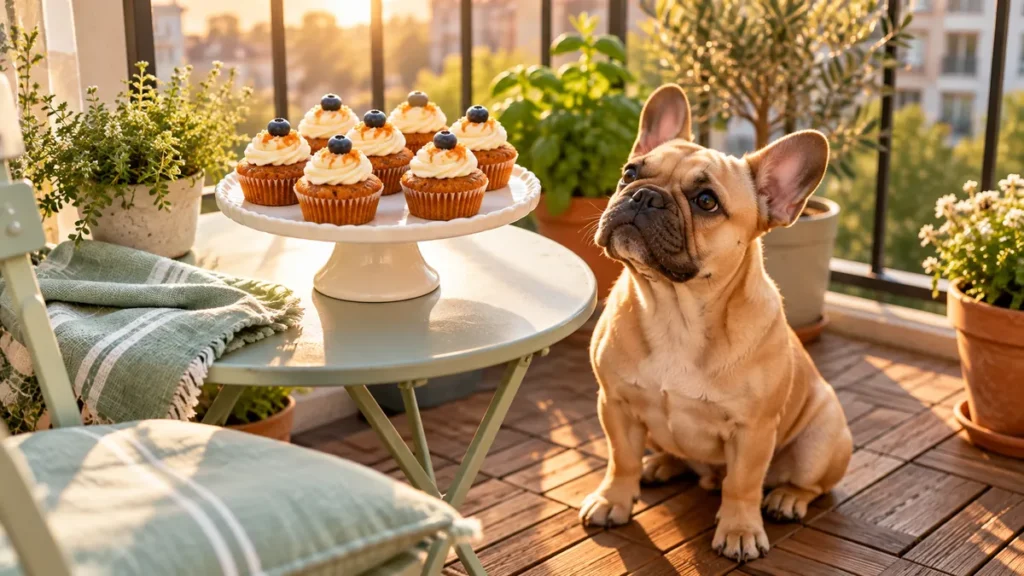

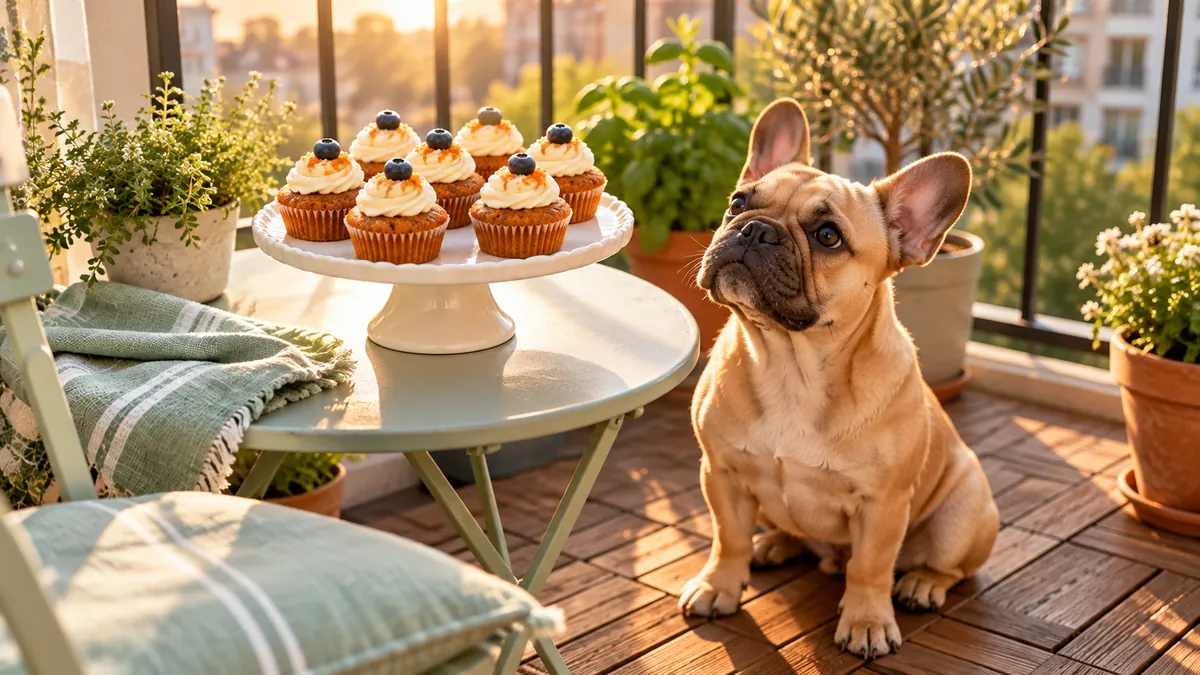
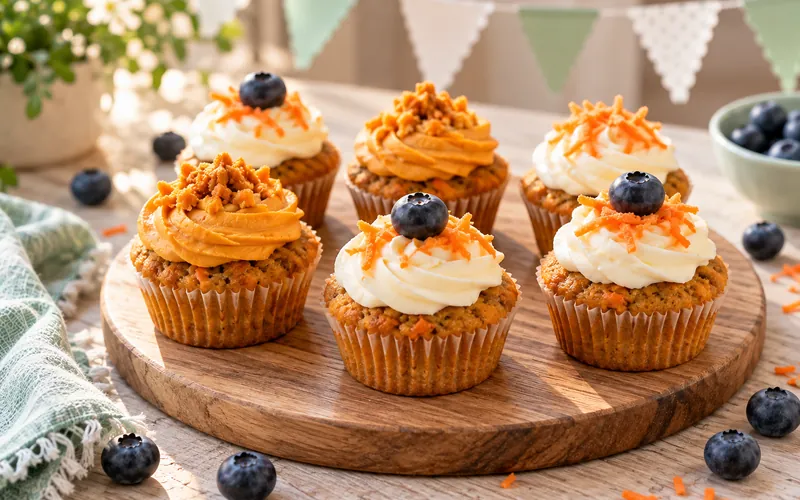
A whole cake is a lot for one dog. Pupcakes solve that: each guest gets their own, portions stay sensible, and leftovers freeze neatly. This dog cupcake recipe bakes 18 mini carrot and apple pupcakes topped with a light yogurt frosting, with no sugar, butter or chocolate. Below you’ll find the ingredients, the method, dog-safe decorating ideas, how many pupcakes each size of dog can have, and how to make them ahead for a party.
Prep: 20 minutes • Bake: 15–18 minutes at 350°F (175°C) • Yield: 18 mini pupcakes • Equipment: mini muffin tin • Storage: fridge 3–4 days once frosted, freezer 3 months unfrosted
Each frosted mini pupcake has roughly 52 calories, so small dogs get half of one.
Table of Contents
What Makes a Pupcake Different?
Pupcakes look like the real thing but skip everything that makes human cupcakes a poor choice for dogs:
- No added sugar: carrot and applesauce bring natural sweetness.
- No butter or oil: egg and applesauce keep them moist instead.
- No chocolate, raisins or nutmeg, all common in human bakes.
- Mini size: easy to portion and to share at a dog party.
Hosting just one guest of honor? Our dog cake recipe makes a small 6-inch cake instead.
Dog Cupcake Recipe: Ingredients
For the pupcakes:
- 1 cup (120 g) whole wheat flour
- 1 cup finely grated carrot (about 2 medium carrots). More on carrots for dogs.
- ½ cup unsweetened applesauce
- 1 large egg
- 2 tablespoons xylitol-free peanut butter
- ¼ cup water, as needed for a thick, spoonable batter
For the frosting:
- ½ cup plain, unsweetened nonfat Greek yogurt
- 2 tablespoons plain cream cheese, softened
How to Bake Pupcakes
Mini Carrot and Apple Pupcakes
Ingredients
Method
- Heat the oven to 350°F (175°C). Lightly grease a mini muffin tin or use paper liners.
- Whisk the egg, applesauce and peanut butter until smooth, then stir in the carrot.
- Add the flour and stir until just combined. Add water a spoonful at a time until the batter is thick but scoopable.
- Fill the cups about three-quarters full.
- Bake 15 to 18 minutes, until a toothpick in the center comes out clean.
- Cool completely before frosting.
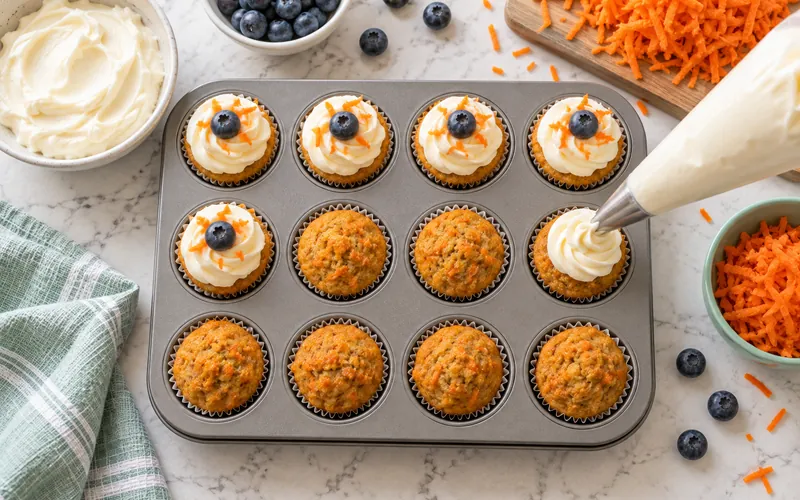
- Beat the yogurt and cream cheese until smooth, then pipe or spread a small swirl on each pupcake.
Notes
Frosting and Decorating Ideas
Most pupcake recipes online use a similar frosting base. A few swaps keep things interesting and suit different stomachs:
- Dairy-free frosting: plain mashed sweet potato or canned pumpkin. Milk products can upset some dogs, since the ASPCA notes pets have little of the enzyme needed to digest lactose.
- Toppers: a single blueberry, a pinch of grated carrot, or a broken piece of homemade biscuit.
- Color without dye: stir a spoonful of pumpkin into the frosting for orange, or mashed blueberries for purple.
Skip sprinkles, candy decorations and store-bought icing, and keep candles well away from curious noses.
How Many Pupcakes Can a Dog Have?
Based on USDA FoodData Central values, the batter comes to about 770 calories and the frosting about 170. Across 18 minis, that’s roughly 52 calories per frosted pupcake.
The WSAVA suggests treats stay under about 10% of daily calories. On party day, skip the usual biscuits and use these portions:
| Dog Size | Weight | Pupcakes | Approx. Calories |
|---|---|---|---|
| Toy | Under 10 lb | ½ mini pupcake | ~26 kcal |
| Small | 10–25 lb | ½–1 | 26–52 kcal |
| Medium | 25–50 lb | 1–2 | 52–104 kcal |
| Large | 50–90 lb | 2–3 | 104–156 kcal |
| Giant | 90+ lb | Up to 3 | ~156 kcal |
One-off party portions for healthy adult dogs. Ask your vet about puppies, overweight dogs or dogs on a special diet.
Storage and Make-Ahead Tips
- Frosted: refrigerate in a covered container and serve within 3–4 days.
- Unfrosted: freeze for up to 3 months, thaw overnight in the fridge, then frost on the day.
- Party timing: bake the day before and frost an hour or two before guests arrive.
Never add these to cupcake recipes for dogs: chocolate or cocoa, raisins, macadamia nuts, nutmeg, sugar-free sweeteners such as xylitol, and sweetened or flavored yogurt. If your dog eats something risky, call your vet or the ASPCA Animal Poison Control Center at (888) 426-4435.
Pupcakes for Dogs: Quick Serving Guide
Do
- Use xylitol-free peanut butter
- Cool before frosting
- Give small dogs half a pupcake
- Skip other treats on party day
Don't
- Chocolate, raisins or nutmeg
- Sprinkles or store-bought icing
- Sweetened or flavored yogurt
- Leave candles within reach
Every dog is different. Check with your veterinarian before sharing pupcakes if your dog has a dairy sensitivity or another health condition.
Frequently Asked Questions
Can dogs eat regular cupcakes?
It’s best not to. Human cupcakes are high in sugar and fat and often contain chocolate, raisins or sweeteners that are unsafe for dogs. A crumb of plain vanilla cake rarely causes more than an upset stomach, but chocolate cupcakes are worth a call to your vet.
Can I make this pupcake recipe without peanut butter?
Yes. Replace the peanut butter with 2 extra tablespoons of applesauce or plain canned pumpkin. The pupcakes will be slightly less rich.
What can I use instead of frosting?
Plain mashed sweet potato or pumpkin works well, or simply top each pupcake with a blueberry. Many dogs are just as happy with no frosting at all.
Can I make pupcakes without eggs?
Yes. Mix 1 tablespoon of ground flaxseed with 3 tablespoons of water, let it thicken for 5 minutes, and use it in place of the egg.
Can puppies eat pupcakes?
A small taste is fine for puppies eating solid food, as long as the ingredients agree with them. Try the dairy-free frosting first and keep it to a bite or two.
Find your next bake in our homemade dog treats guide, sorted into baked, frozen, meaty and holiday recipes.
The Bottom Line
This dog cupcake recipe turns carrot, applesauce and a spoonful of peanut butter into mini pupcakes that are easy to portion and fun to decorate. Keep the frosting light, skip anything sugary, and match the serving to your dog’s size. For more pupcake recipes and party ideas, browse our Homemade Treats collection, or check the jar first with our peanut butter treats guide. This article is general information, not veterinary advice; see our Veterinary Disclaimer.
References & Sources
Written by CPD Nutrition Desk using the sources below. We are not affiliated with these organizations, and this guide is not a substitute for advice from your veterinarian.