
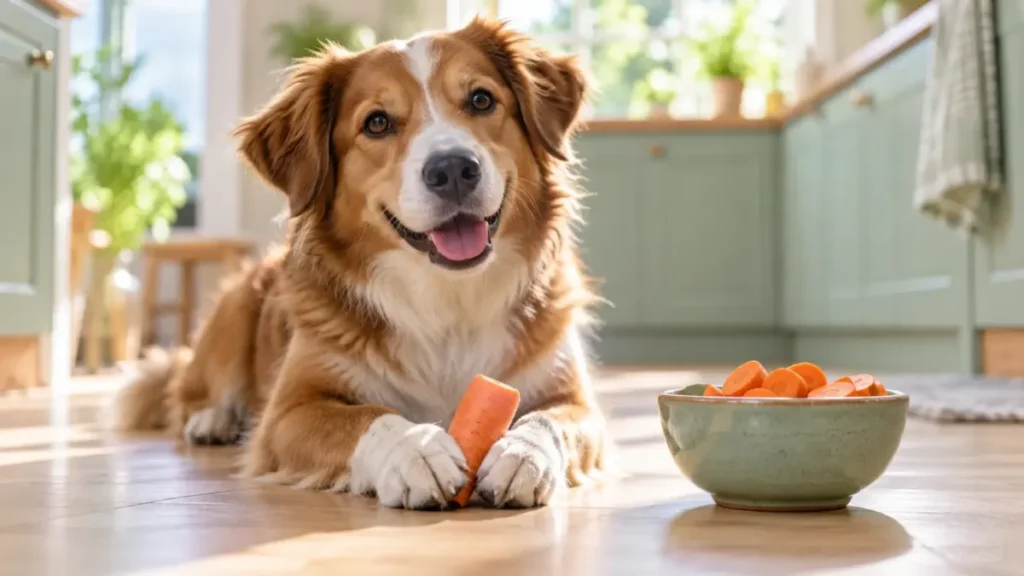

Some dogs come running at the sound of a carrot snapping in half. If yours is one of them, good news: this is one of the cheapest, simplest treats in the produce aisle. Can dogs eat carrots safely? Yes, raw or cooked, as long as they’re cut to a safe size. In this guide, you’ll learn how well dogs actually digest them, whether canned and frozen carrots are okay, how many to give, and which carrot dishes to keep off the menu.
Yes, carrots are a safe, low-calorie treat for most dogs. Serve them washed, plain and cut into bite-size pieces. Cooked carrots are easier to digest; raw ones give a satisfying crunch. Avoid glazed carrots, carrot cake and heavily salted canned carrots.
Table of Contents
Can Dogs Digest Carrots?
Mostly, yes, but not completely. Carrots have firm plant cell walls that dogs don’t break down very well, especially when the pieces are swallowed whole. That’s why you might spot little orange flecks in your dog’s poop after a carrot snack. It looks odd, but it’s normal and harmless.
If you want your dog to get more out of each bite, cook, grate or finely chop the carrots. Softening them breaks down those tough walls, and research in people shows that cooking carrots makes their beta-carotene easier to absorb. Your dog’s body turns beta-carotene into vitamin A as needed.
If carrots are new to your dog, start with two or three small pieces and see how their stomach handles it over the next day before offering more.
Carrot Nutrition: Raw vs. Cooked vs. Canned
Here’s how the three most common forms compare per 100 grams, using USDA data:
| Per 100 g | Raw | Boiled (no salt) | Canned (drained) |
|---|---|---|---|
| Calories | 41 kcal | 35 kcal | 25 kcal |
| Fiber | 2.8 g | 2.9 g | 1.5 g |
| Natural sugars | 4.8 g | 3.3 g | 2.5 g |
| Vitamin A (RAE) | 835 µg | 826 µg | 558 µg |
| Sodium | 69 mg | 56 mg | 242 mg |
USDA FoodData Central values. Canned figures are for a regular pack; “no salt added” cans are much lower in sodium.
The takeaway: fresh carrots, raw or plain boiled, are the best pick. Regular canned carrots lose some fiber and vitamin A and pick up more than three times the sodium.
Raw, Cooked, Canned or Frozen: Which Is Best?
- Raw: crunchy and filling. Cut into coins or small sticks sized for your dog’s mouth.
- Cooked: steamed or boiled with no butter or salt. A great choice for seniors, small dogs and dogs with dental problems.
- Canned: fine occasionally if the label says “no salt added.” Rinse them before serving.
- Frozen: according to the American Kennel Club, some vets suggest cold or frozen carrots to ease teething discomfort in puppies. Always supervise.
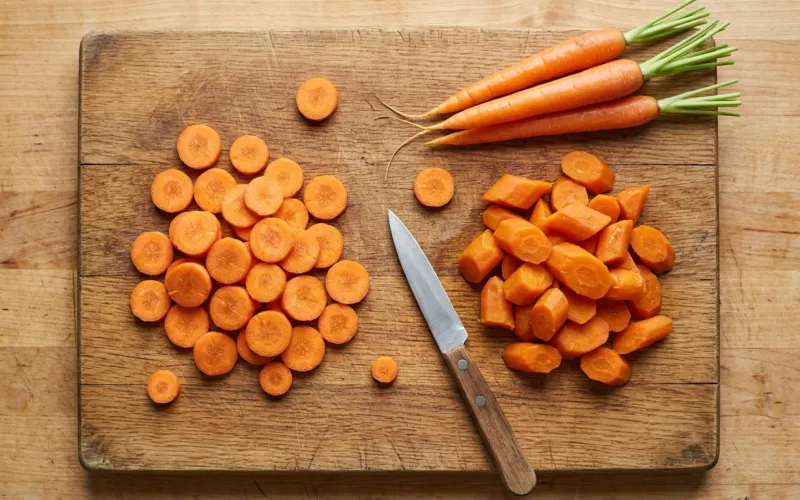
Watch the size. Whole carrots, thick sticks and even baby carrots can lodge in the throat of a dog that gulps. The AKC recommends cutting carrots into bite-size chunks. For small breeds, slice baby carrots into thin coins. If your dog gags, paws at their mouth or struggles to breathe, contact your vet immediately.
How Many Carrots Can a Dog Eat?
A baby carrot has only about 3 to 4 calories, so carrots fit easily into the daily treat allowance. Fiber is the limiting factor: too many at once can mean gas or a soft stool. Use these amounts as a guide:
| Dog Size | Weight | Daily Amount | Approx. Calories |
|---|---|---|---|
| Toy | Under 10 lb | 1 baby carrot, thinly sliced | ~4 kcal |
| Small | 10–25 lb | 2–3 baby carrots, cut up | 7–11 kcal |
| Medium | 25–50 lb | 3–5 baby carrots, or ½ medium carrot | 11–18 kcal |
| Large | 50–90 lb | 5–8 baby carrots, or 1 medium carrot | 18–28 kcal |
| Giant | 90+ lb | Up to 10 baby carrots | ~35 kcal |
For healthy adult dogs alongside a complete diet. Diabetic dogs should check with a vet, since carrots contain natural sugar.
Do Carrots Clean a Dog’s Teeth?
The AKC notes that chewing carrots can help with dental health. The gentle scraping action may clear a little debris. Still, carrots are no substitute for brushing or vet dental care, since they don’t reach under the gumline where most dental disease starts. Think of them as a bonus, not a toothbrush.
Carrot Dishes to Keep Away From Your Dog
- Carrot cake and muffins: high in sugar and fat, and they often contain raisins, nuts or sugar-free sweeteners like xylitol.
- Glazed or roasted carrots: usually coated in butter, honey, brown sugar or oil.
- Soups, stews and stir-fries: commonly cooked with onion, garlic and salt.
Veggies Dogs Shouldn’t Eat
Carrots are on the safe list, but these garden plants are not:
- The onion family: onions, garlic, leeks, chives and shallots, in any form.
- Green tomato and potato plant parts: the ASPCA lists the tomato plant as toxic because of solanine, though ripe tomato fruit is non-toxic.
- Rhubarb leaves and stalks, plus any mushroom you picked outdoors.
Carrots for Dogs: Quick Serving Guide
Do
- Serve raw coins or sticks sized for your dog
- Steam them for puppies and seniors
- Offer a frozen carrot as a supervised chew
- Wash and trim before serving
Don't
- Whole carrots for small dogs (choking)
- Glazed carrots with butter or sugar
- Carrot cake or muffins
- Carrots cooked with onion or garlic
Every dog is different. Check with your veterinarian first if your dog has a health condition or a sensitive stomach.
Frequently Asked Questions
Can dogs eat carrots every day?
Yes, a few pieces a day is fine for most healthy dogs, as long as they’re still eating their regular food and their stools stay firm.
Can dogs eat canned carrots?
Occasionally. Choose “no salt added” cans and rinse them. Regular canned carrots carry about 242 mg of sodium per 100 grams, more than three times that of fresh.
What is the healthiest vegetable for a dog?
No single vegetable wins. Carrots are a strong pick for vitamin A and crunch, while green beans and pumpkin are other popular low-calorie options. Variety, in small amounts, is the goal.
Can carrots help my dog lose weight?
They can help as a swap. Trading a few high-calorie biscuits for carrot pieces cuts calories while keeping the reward. Weight loss still depends on the right amount of your dog’s main food, so ask your vet for a target.
What human foods do dogs love most?
Most dogs go wild for meaty, savory smells, but plenty also enjoy crunchy or sweet foods like carrots, apple slices (no seeds or core) and plain cooked chicken. Keep any people food small and plain.
Can puppies eat carrots?
Yes, in small, soft pieces once they’re on solid food. Cold carrot pieces can soothe sore gums during teething, but cut them small and supervise closely.
Checking another food? See our What Can Dogs Eat? A-Z list of safe and unsafe foods.
The Bottom Line
Can dogs eat carrots? Absolutely. Wash them, cut them small, and serve them raw for crunch or steamed for easier digestion. Skip anything glazed, baked into cake or packed in salty brine. Want more simple snack ideas? See our guide to sharing bananas, try our homemade treats, or explore the Can Dogs Eat…? collection. This article is general information, not veterinary advice; see our Veterinary Disclaimer.
References & Sources
Written by CPD Nutrition Desk using the sources below. We are not affiliated with these organizations, and this guide is not a substitute for advice from your veterinarian.
- American Kennel Club (AKC) — Can dogs eat carrots
- ASPCA — Tomato plant