


Is grain free bad for dogs? Not automatically, but most dogs don’t need it, and it isn’t the healthier choice it’s often sold as. Since 2018, the FDA has been looking into reports of heart disease (DCM) in dogs eating certain diets, many of them grain-free and high in peas, lentils or potatoes. No cause has been proven, but many vets now suggest a grain-inclusive diet unless your dog has a specific reason to avoid grains.
Grains aren’t bad for dogs, and true grain allergies are uncommon. Grain-free diets aren’t proven to cause heart disease, but the open questions around legume-heavy recipes are a reason for caution. If your dog is on grain-free food, talk to your vet, especially for breeds at risk of DCM, and know the warning signs. Switching to a well-made grain-inclusive diet is a reasonable choice for most dogs.
Table of Contents
What Is Grain-Free Dog Food?
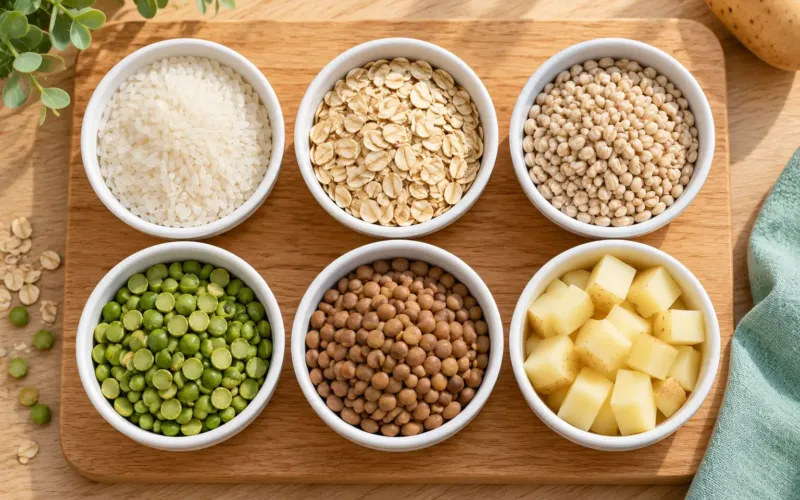
Grain-free dog food leaves out wheat, corn, rice, barley, oats and other cereal grains. To replace them, recipes use other carbohydrate sources, most often peas, lentils, chickpeas, potatoes and sweet potatoes. Grain-free foods are not low-carb or carb-free; they just get their carbs from different ingredients.
Grain-free became popular partly because of marketing that grains are “fillers” or common allergens. In reality, whole grains supply energy, fiber, B vitamins and some protein, and most dogs digest cooked grains well.

Grain-Free Dog Food and Heart Disease (DCM)
Dilated cardiomyopathy (DCM) is a disease in which the heart muscle weakens and the heart enlarges. It’s usually genetic and seen in breeds such as Dobermans, Boxers, Great Danes and Irish Wolfhounds. In July 2018, the FDA announced an investigation into reports of DCM in dogs eating certain pet foods, many labeled grain-free, that contained a high proportion of peas, lentils, other legumes and/or potatoes. Many of the dogs were breeds not known to be genetically prone to the disease.
What we know so far:
- No single cause has been confirmed. Researchers are looking at ingredients, how foods are formulated, and nutrients such as taurine.
- It isn’t simply about “no grains.” The concern centers on recipes heavy in legumes and potatoes, which some grain-inclusive foods also contain.
- Most dogs eating grain-free food don’t develop DCM, but the disease can be serious, so caution makes sense.
- Some affected dogs improved after a diet change along with medical treatment, according to reports from veterinary cardiologists.
Do Dogs Need Grain-Free for Allergies?
Usually not. Food allergies in dogs are most often caused by animal proteins. A 2016 review in BMC Veterinary Research found that the most commonly reported food allergens in dogs were beef, dairy, chicken and wheat, with corn, rice and other grains far less common. So a dog allergic to chicken won’t be helped by a chicken-based grain-free food.
The only reliable way to identify a food allergy is an elimination diet trial guided by your vet; see our dog food allergies guide.
Is Grain Free Good for Dogs? Pros and Cons
| Grain-Free | Grain-Inclusive | |
|---|---|---|
| Best for | Dogs with a confirmed grain allergy or a vet-directed diet | Most healthy dogs |
| Common carb sources | Peas, lentils, chickpeas, potatoes, sweet potatoes | Rice, oats, barley, corn, wheat |
| DCM question | Under investigation, especially for legume-heavy recipes | Not the focus of the FDA reports |
| Allergy benefit | Only if grains are the true trigger (uncommon) | Fine for most dogs with allergies to animal proteins |
| Price | Often higher | Usually lower |
| Research history | Many newer, “boutique” recipes | Longer track record with feeding trials |
How to Choose a Safe Dog Food (With or Without Grains)
- Check the AAFCO statement for “complete and balanced” and your dog’s life stage; see our AAFCO label guide.
- Look at the first ingredients: if several of the top ones are peas, lentils or potatoes, consider other options.
- Choose established manufacturers that employ qualified nutritionists and run feeding trials.
- Be wary of exotic proteins (kangaroo, bison, alligator) unless your vet suggests them for allergies.
- Judge by your dog: stable weight, good energy, healthy coat and firm stools.
Switching From Grain-Free to Grain-Inclusive Food
A gradual change over about a week keeps tummies happy:
| Day | Mix | Watch For |
|---|---|---|
| 1-2 | 1/4 new, 3/4 old | Stool quality, appetite |
| 3-4 | Half and half | Gas or soft stool; slow down if needed |
| 5-6 | 3/4 new, 1/4 old | Energy and interest in food |
| 7 onward | All new food | Weight over the next month |
Set portions from the calories on the new bag; our dog feeding chart can help. Dogs with sensitive stomachs may need a slower switch; see our sensitive stomach diet guide.
Do I recommend grain-free diets for most dogs? No. Most dogs do well with grains, and grain allergies are uncommon.
What should owners of dogs on grain-free food do? Talk to your vet, watch for signs like tiring easily or coughing, and consider a well-made grain-inclusive food.
Are some breeds more at risk? Yes, breeds prone to DCM like Dobermans and Boxers; their diet and heart health deserve extra attention.
— Dr. Sarah Miller, DVM
Grain-Free Dog Food: Quick Guide
✓ What helps
- Choose a complete food for your dog’s life stage
- Pick brands with qualified nutritionists
- Ask your vet before going grain-free
- Know the warning signs of heart disease
✕ Don’t
- Assume grain-free is healthier
- Go grain-free to treat allergies without a diet trial
- Ignore coughing, fainting or tiring easily
- Switch foods suddenly
Every dog is different. Breeds prone to DCM and dogs with heart murmurs should have diet choices reviewed by their vet.
Frequently Asked Questions
Is grain free bad for dogs’ hearts?
It hasn’t been proven, but certain grain-free, legume-heavy diets have been linked to DCM reports, and the FDA hasn’t identified a cause. That uncertainty is why many vets prefer grain-inclusive foods for most dogs.
Is grain free dog food good for dogs with allergies?
Only if grains are the actual trigger, which is uncommon. Most food allergies involve proteins like beef, dairy or chicken.
Should I switch my dog off grain-free food?
Talk to your vet. For most healthy dogs, switching to a well-made grain-inclusive food is a reasonable, low-risk choice.
Are grain-free treats safe?
Occasional grain-free treats aren’t the concern; the questions are about complete diets fed every day. See our grain-free dog cookies.
Is a grain free dog diet ever recommended?
Yes, for some dogs with confirmed grain allergies or specific medical diets chosen by a vet. It should still be complete and balanced.
Is gluten-free the same as grain-free?
No. Gluten-free foods can include rice, oats or corn. True gluten sensitivity is rare in dogs, seen mainly in some Irish Setters and Border Terriers.
Explore more in the complete dog food guide.
The Bottom Line
Is grain free bad for dogs? Not for every dog, but it isn’t automatically better, and the open questions about DCM in legume-heavy diets are worth taking seriously. Most dogs do well on a complete, grain-inclusive food from a company with qualified nutritionists. If your dog is on grain-free food, talk to your vet and watch for heart warning signs. Find more guides in our Dog Food section. This article is general information, not veterinary advice; see our Veterinary Disclaimer.
References & Sources
Written by CPD Nutrition Desk using the sources below. We are not affiliated with these organizations, and this guide is not a substitute for advice from your veterinarian.
- U.S. Food and Drug Administration — FDA announced an investigation
- bmcvetres.biomedcentral.com — 2016 review in BMC Veterinary Research