


A sensitive stomach diet for dogs is built on three ideas: food that’s easy to digest, a short and consistent ingredient list, and no sudden changes. For many dogs that means a highly digestible or limited-ingredient food, moderate fat, the right fiber, and a steady routine with few extras. If your dog has frequent soft stool, gas or vomiting, this guide helps you choose the right type of diet and test it properly.
Rule out illness with your vet first. Then pick a diet type that matches the problem (fat, a food intolerance or fiber), switch over 7-10 days, and give it at least 2 weeks with no other changes. Keep a simple diary. Many dogs with chronic tummy trouble improve with diet alone, but blood, weight loss or frequent vomiting need a vet.
Table of Contents
What Does “Sensitive Stomach” Mean in Dogs?
“Sensitive stomach” isn’t a diagnosis. It’s a description of dogs who often have soft stool, diarrhea, gas, gurgling, occasional vomiting or a picky appetite, especially after food changes or treats. Common reasons include:
- Diet changes that happen too fast, or frequent switching between foods and treats
- Too much fat from rich foods, chews or table scraps
- Food intolerance or allergy to a specific protein or ingredient
- The wrong fiber balance for that dog
- Stress, eating too fast, or scavenging
- Underlying disease, such as parasites, chronic enteropathy (often called IBD), pancreatitis or exocrine pancreatic insufficiency
The good news: diet helps a lot. A review in Today’s Veterinary Practice reports that 50% to 66% of dogs with chronic gut inflammation respond to a change in diet, and that improvement is usually visible within about 2 weeks. Cornell University researchers put the figure even higher, at up to 80% of dogs with the disease.

Types of Dog Food for Digestive Upset: Which One Fits?
Not every canine sensitive stomach food works the same way. Matching the diet type to the likely problem saves time and money:
| Diet Type | What It Is | Best For |
|---|---|---|
| Highly digestible (“GI”) diet | Easy-to-digest proteins and carbs, moderate fat, added prebiotics | General soft stool, gas, recovery after stomach upsets |
| Low-fat diet | Reduced fat, often under about 10% on a dry-matter basis | Dogs whose signs follow fatty foods, or with past pancreatitis |
| Limited-ingredient / novel protein | One protein the dog hasn’t eaten before (like duck, venison or fish) and few other ingredients | Suspected food intolerance or allergy |
| Hydrolyzed protein (prescription) | Proteins broken into pieces too small to trigger the immune system | Food-responsive enteropathy, allergies, failed limited-ingredient trials |
| Fiber-enhanced diet | Added soluble and insoluble fiber | Some colitis-type diarrhea (mucus, straining) and constipation |
Looking for specific sensitive stomach dog food brands? Our best dog food for sensitive stomach roundup compares nine options by need, and our limited ingredient dog food guide explains how to read those labels.
How to Run a 2-Week Sensitive Stomach Diet Trial
The most common mistake is changing too many things at once. A short, clean trial tells you whether a food works:
- See your vet first to rule out parasites and other causes, and to choose the diet type together.
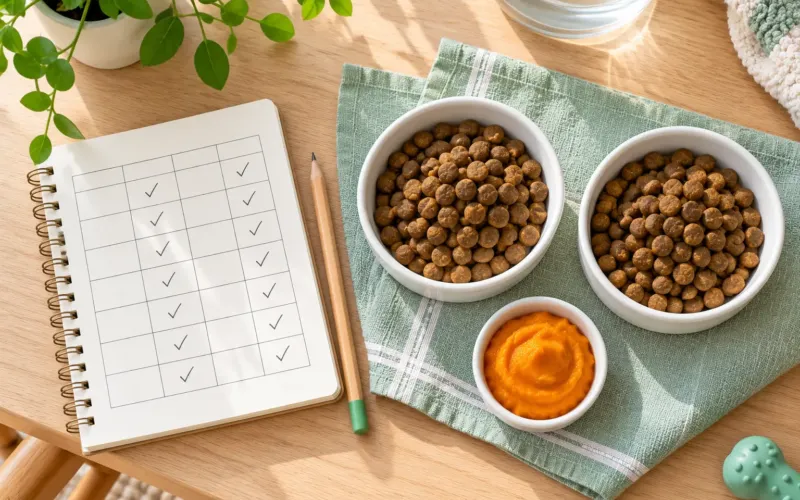
- Switch gradually over 7-10 days: about 25% new food for 2-3 days, then 50%, then 75%, then 100%.
- Feed only the new food for at least 2 weeks. No new treats, chews, table scraps or flavored medicines, unless your vet approves them.
- Feed 2-3 smaller meals instead of one big one.
- Keep a diary: stool quality (a 1-7 scale works well), vomiting, gas, appetite and energy each day.
- Review with your vet. If there’s clear improvement, stay with it. If not, the next step may be a different diet type, often a hydrolyzed one.
Suspected food allergies with skin signs need a longer trial, usually 8 weeks or more. Our dog food allergies guide covers that.
What to Feed a Dog With a Sensitive Stomach: Safe Extras
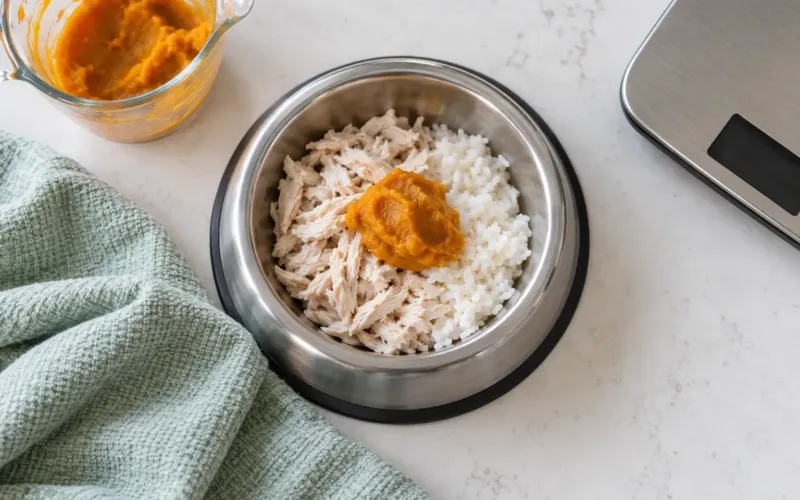
During a trial, keep extras to a minimum. Once your dog is stable, these gentle add-ons are usually well tolerated in small amounts:
| Gentle Option | Why It’s Often Tolerated | Watch Out For |
|---|---|---|
| Plain canned pumpkin | Soluble fiber can help firm stools | Pie filling; too much can loosen stool |
| Plain boiled chicken or turkey breast | Lean, simple protein | Skin, bones, seasoning; avoid if chicken is a suspected trigger |
| Cooked white rice | Low fiber, easy to digest short term | Not balanced on its own |
| Plain cooked sweet potato | Gentle carbohydrate and fiber | Butter, skin, large portions |
| Dog-specific probiotics | May support gut bacteria; see our probiotics guide | Choose products made for dogs; ask your vet |
| Low-sodium, onion-free broth | Adds moisture and appeal to meals | Onion, garlic, salt; see our bone broth guide |
Foods to skip for sensitive dogs: fatty meats and skin, cheese, rich chews, fried food, spicy or seasoned leftovers, and sudden new treats. For a short-term homemade meal during a flare, see what to feed a dog with diarrhea. For long-term homemade feeding, work with a board-certified veterinary nutritionist so the recipe is complete.
Feeding Habits That Calm a Sensitive Stomach
- Same food, same times: consistency is half the battle.
- Measure portions; overfeeding alone can cause soft stool.
- Slow down fast eaters with a slow-feeder bowl.
- Limit treats to one or two simple types, and count them.
- Stop scavenging: lock trash, watch on walks, and pick up fallen food.
- Plan food changes before a bag runs out, so you never have to switch suddenly.
Puppies and Senior Dogs
Puppies
Puppies often have loose stool after coming home because of stress and food changes. Keep the breeder’s or shelter’s food at first, change slowly, and check for parasites with your vet. Diarrhea in young puppies can dehydrate them quickly.
Senior dogs
New stomach sensitivity in an older dog deserves a full workup, since kidney, liver, pancreas and intestinal disease become more common with age. Many seniors do well on highly digestible food in smaller, more frequent meals.
How long should owners try a new diet? About 2 weeks for digestive signs, with no other changes. Skin allergies need longer.
The most common mistake? Switching foods too often and adding new treats, so it's impossible to tell what's working.
When is it more than a sensitive stomach? Blood in the stool, weight loss or frequent vomiting need a vet workup, not another food change.
— Dr. Sarah Miller, DVM
Sensitive Stomach Diet: Quick Guide
✓ What helps
- Match the diet type to the problem
- Switch foods over 7-10 days
- Give a new diet at least 2 weeks
- Keep a simple stool diary
✕ Don’t
- Change foods every few days
- Add new treats during a trial
- Feed fatty scraps or rich chews
- Ignore blood, weight loss or frequent vomiting
Every dog is different. Ask your vet to rule out medical causes before a long-term diet change.
Frequently Asked Questions
What is the best food for a dog with a sensitive stomach?
It depends on the cause. Highly digestible GI diets suit many dogs, low-fat diets help fat-sensitive dogs, and limited-ingredient or hydrolyzed diets help dogs with food intolerances. Your vet can help you choose.
Is wet or dry food better for sensitive stomachs?
Either can work. Wet food is often more appealing and adds water; dry food is easier to measure. Digestibility and ingredients matter more than the format.
Is grain-free food better for a sensitive stomach?
Not usually. Grain allergies are uncommon, and many sensitive-stomach diets include easy-to-digest grains like rice. Choose based on your dog’s response, not the grain-free label.
How long does it take a new diet to help?
Digestive signs often improve within about 2 weeks on the right diet. Skin-related food allergies take longer, usually 8 weeks or more.
Can I make homemade food for my dog’s sensitive stomach?
Short-term bland meals are fine. Long-term homemade diets need a recipe from a board-certified veterinary nutritionist; see our homemade dog food recipes guide.
Is chicken bad for dogs with sensitive stomachs?
Not for most dogs. Chicken is a common protein and is well tolerated by many, but it’s also a common trigger for dogs with food allergies, which is why some diet trials use a different protein.
For more health topics, see our dog nutrition and health guide.
The Bottom Line
A good sensitive stomach diet for dogs is easy to digest, simple and consistent. Work with your vet to rule out illness, choose a diet type that fits the likely cause, switch slowly, and give it a fair 2-week trial with no extras. If your dog has blood in the stool, weight loss or frequent vomiting, see your vet rather than switching foods again. Find more guides in our Nutrition & Health section. This article is general information, not veterinary advice; see our Veterinary Disclaimer.
References & Sources
Written by CPD Nutrition Desk using the sources below. We are not affiliated with these organizations, and this guide is not a substitute for advice from your veterinarian.
- mydigitalpublication.com — Today's Veterinary Practice
- news.cornell.edu — Cornell University researchers