


Lamb and rice dog food is a popular recipe built around lamb as the main protein and rice as an easy-to-digest carbohydrate. It’s a good fit for dogs that are bored of chicken or that don’t tolerate chicken or beef well. It used to be sold as “hypoallergenic,” but that’s no longer true for most dogs. This guide explains what lamb and rice offers, how to choose a commercial food, and how to make a short-term homemade lamb and rice meal.
Lamb and rice is a solid choice for many dogs, especially those sensitive to chicken or beef. Choose a commercial food labeled complete and balanced for your dog’s life stage, and check that lamb (or lamb meal) leads the ingredient list. Homemade lamb and rice is fine for a few days, but long-term homemade diets need a recipe from a veterinary nutritionist. Lamb is richer than chicken, so watch portions.
Table of Contents
Why Lamb and Rice?
Lamb is a high-quality protein with iron, zinc and B vitamins. White rice is gentle on the gut, and brown rice adds a bit more fiber. In the 1980s and 1990s, lamb was rarely used in dog food, so lamb and rice recipes were promoted for food allergies: most dogs had never eaten lamb, and you can’t be allergic to a protein you haven’t met.
Today lamb is common in dog foods and treats, so it’s no longer a true “novel” protein for most dogs. Still, food allergies in dogs are most often linked to beef, dairy, chicken and wheat, according to a 2016 review in BMC Veterinary Research, with lamb less frequently reported. That makes lamb and rice a reasonable switch for some sensitive dogs.

Lamb vs. Chicken vs. Beef: How They Compare
Per 100 grams cooked, from USDA FoodData Central:
| Protein (cooked) | Calories | Protein | Fat | Notes for Dogs |
|---|---|---|---|---|
| Lamb, leg, lean only | ~191 kcal | ~28 g | ~8 g | Rich flavor; trim visible fat |
| Ground lamb | ~283 kcal | ~25 g | ~20 g | Fatty; drain well or avoid for sensitive dogs |
| Chicken breast, skinless | 165 kcal | 31 g | 3.6 g | Leanest; a common allergen |
| Beef, 90% lean ground | ~217 kcal | ~26 g | ~12 g | A common allergen in dogs |
USDA values, rounded. Lamb’s higher fat content is why lamb-based foods can be richer; dogs with pancreatitis or weight problems may do better on leaner proteins.
How to Choose a Lamb and Rice Dog Food
- Complete and balanced: look for the AAFCO statement for your dog’s life stage. Our AAFCO label guide shows what to look for.
- Lamb first: in any dog food lamb recipe, lamb or lamb meal should be the first ingredient. “Lamb meal” is concentrated, dried lamb and is a perfectly good protein source.
- Check for chicken: many “lamb” foods also contain chicken fat, chicken meal or eggs. That matters if your dog has a chicken allergy.
- Rice type: white rice is easier to digest; brown rice adds fiber. Both are fine for most dogs.
- Life stage and size: puppy, adult, senior and large-breed formulas differ in calories and minerals.
- Calories per cup: lamb recipes can be calorie-dense; compare kcal on the bag and use our dog calorie calculator.
Homemade Lamb and Rice for Dogs (Short-Term Recipe)
This simple meal works for a few days, for example as a change during a mild tummy upset in a dog that can’t have chicken. It isn’t complete for long-term feeding.
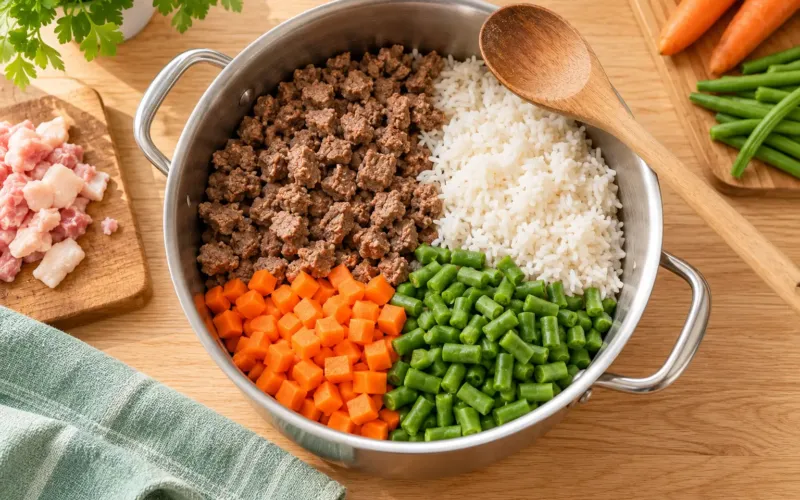
Homemade Lamb and Rice Dog Food
Ingredients
Method
- Simmer the lamb in water 25 to 30 minutes until tender and cooked through (at least 145°F / 63°C, then rest).
- Add the green beans and carrots for the last 10 minutes.
- Drain. Chill the cooking liquid and lift off the fat if you want to add some back for moisture.
- Chop the lamb finely and mix with the vegetables and rice. Cool before serving.
Notes
The batch has about 1,470 calories, roughly 210 calories per cup. No salt, garlic, onion, rosemary rubs or mint sauce.
How Much Lamb and Rice Dog Food to Feed
| Dog’s Weight | Est. Daily Calories | Homemade Lamb and Rice (210 kcal/cup) |
|---|---|---|
| 10 lb (4.5 kg) | ~350 kcal | ~1 2/3 cups |
| 25 lb (11 kg) | ~690 kcal | ~3 1/4 cups |
| 50 lb (23 kg) | ~1,160 kcal | ~5 1/2 cups |
| 75 lb (34 kg) | ~1,580 kcal | ~7 1/2 cups |
| 100 lb (45 kg) | ~1,960 kcal | ~9 1/4 cups |
Our estimates for neutered adult dogs (70 × body weight in kg0.75 × 1.6), split into 2-3 meals. For commercial lamb and rice food, follow the kcal on the bag instead. Adjust by body condition.
Switching to Lamb and Rice Food
Mix increasing amounts of the new food into the old over 7-10 days: about a quarter new for the first couple of days, then half, then three quarters, then all new. Dogs with sensitive stomachs may need two weeks. If you’re switching because of suspected allergies, ask your vet about a strict diet trial, since mixing in old treats can hide the results; see limited ingredient dog food and dog food allergies.
Is lamb still a good choice for dogs with allergies? It can help dogs allergic to chicken or beef, but it isn't hypoallergenic for every dog.
What to check on a lamb and rice label? That it's complete and balanced, lamb is first, and there's no hidden chicken if that's the problem.
Is homemade lamb and rice okay? For a few days, yes. For long-term home cooking, get a recipe from a veterinary nutritionist.
— Dr. Sarah Miller, DVM
Lamb and Rice Dog Food: Quick Guide
✓ Do
- Choose a complete food for your dog’s life stage
- Check for hidden chicken ingredients
- Use lean, trimmed lamb at home
- Switch foods over 7-10 days
✕ Don’t
- Assume lamb is always hypoallergenic
- Feed lamb bones or fat trimmings
- Add mint sauce, garlic or seasoning
- Use homemade lamb and rice long term
Every dog is different. Dogs with allergies, pancreatitis or weight issues should get their vet’s okay first.
Frequently Asked Questions
Is lamb and rice good for dogs with allergies?
It can help dogs allergic to chicken or beef, but it isn’t hypoallergenic for every dog. A vet-guided elimination diet is the only way to confirm a food allergy.
Is lamb and rice better than chicken and rice?
Not better, just different. Lamb is richer and less often an allergen; chicken is leaner and easier to find. Choose based on your dog’s tolerance and weight.
Is lamb and rice dog food good for sensitive stomachs?
Many dogs do well on it, especially recipes with white rice and moderate fat. Very rich lamb foods may upset some stomachs. See our sensitive stomach diet guide.
Can puppies eat lamb and rice dog food?
Yes, if it’s a puppy or all-life-stages formula. Large-breed puppies need a food labeled for large-size growth.
What is lamb meal?
Lamb meal is lamb that has been cooked and dried into a concentrated protein powder. It’s a normal, nutritious ingredient in dog food.
Can I give my dog leftover lamb?
A small piece of plain, lean, boneless lamb is fine. Skip fatty roast lamb, gravy, mint sauce and anything with garlic or onion.
Want the bigger picture? Our dog food guide covers choosing a food, portions and homemade meals.
The Bottom Line
Lamb and rice dog food is a good option for many dogs, especially those that don’t do well on chicken or beef, but it isn’t automatically hypoallergenic. Choose a complete food with lamb first, check for hidden chicken, and keep homemade lamb and rice to short-term use unless a veterinary nutritionist balances the recipe. Find more guides in our Dog Food section. This article is general information, not veterinary advice; see our Veterinary Disclaimer.
References & Sources
Written by CPD Nutrition Desk using the sources below. We are not affiliated with these organizations, and this guide is not a substitute for advice from your veterinarian.
- bmcvetres.biomedcentral.com — 2016 review in BMC Veterinary Research
- USDA — USDA FoodData Central
- acvn.org — American College of Veterinary Nutrition