
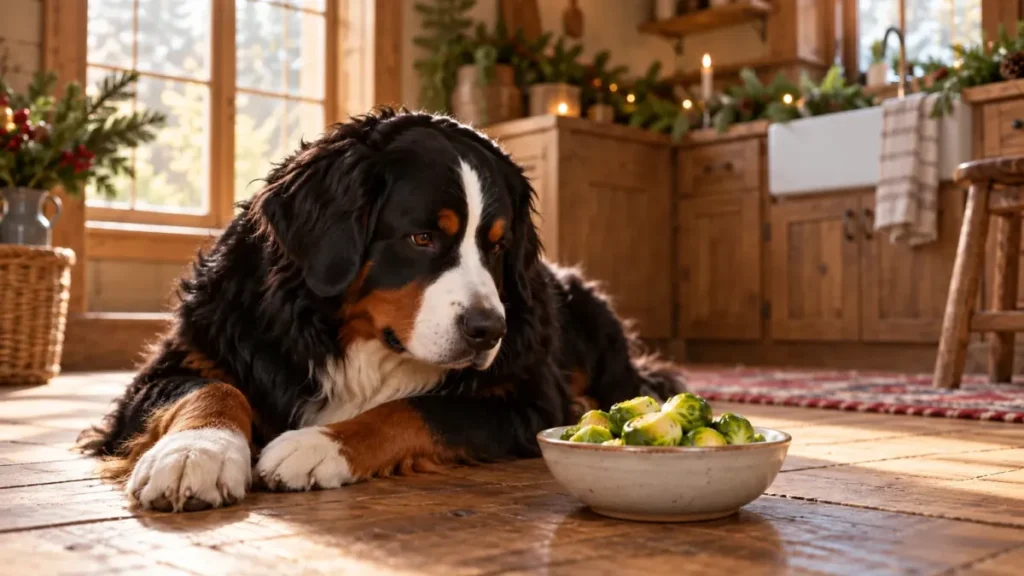

Can dogs eat brussels sprouts? Yes, in small amounts. Plain brussels sprouts are safe and packed with fiber and vitamins, but they're famous for causing gas, in dogs as much as in people. Steam them, cut them in halves or quarters, and stick to one or two at a time. Holiday sprouts tossed with bacon, butter or garlic are a different story.
Yes, plain and in moderation. Cooked, plain brussels sprouts are non-toxic and healthy in small portions. Cut them up so they're not a choking risk, start slow, and skip versions cooked with bacon, butter, balsamic glaze, onion or garlic.
Table of Contents
What's in a Brussels Sprout?
Brussels sprouts are mini cabbages from the cruciferous family. They bring fiber, vitamin C, vitamin K and antioxidants, with very few calories. Per 100 g raw, from USDA FoodData Central:
| Per 100 g (raw) | Brussels sprouts | Cabbage | Broccoli |
|---|---|---|---|
| Calories | ~43 kcal | ~25 kcal | ~34 kcal |
| Fiber | ~3.8 g | ~2.5 g | ~2.6 g |
| Vitamin C | ~85 mg | ~37 mg | ~89 mg |
| Vitamin K | ~177 µg | ~76 µg | ~102 µg |
Approximate USDA values. One medium sprout weighs about 19 g, or roughly 8 calories.
That fiber is good for regularity in small doses. In big doses, it's where the gas comes from.
Why Sprouts Make Dogs Gassy
Brussels sprouts contain raffinose, a sugar dogs can't fully break down, and sulfur-rich compounds called glucosinolates. Gut bacteria ferment them, producing gas. A sprout or two usually means a little extra wind. A bowlful can mean bloating, belly discomfort and loose stool.
Know the difference between gas and bloat. Ordinary gas passes on its own. A swollen, tight belly, restlessness, drooling and retching that brings nothing up can be bloat (GDV), an emergency, especially in large, deep-chested breeds. Call your vet right away if you see these signs.
How to Prepare Brussels Sprouts
- Trim the stem end and pull off any yellow or tough outer leaves.
- Steam or boil plain for 6 to 8 minutes until tender. Cooking makes them easier to digest than raw.
- Cut into halves for large dogs and quarters for small dogs. Whole sprouts are round and firm, and a dog that gulps can choke.
- Cool before serving, and skip butter, oil, salt and seasoning.
Raw sprouts aren't toxic, but they're harder to chew and digest, and tend to cause more gas.

How Many Brussels Sprouts Can a Dog Eat?
| Dog's weight | Cooked sprouts per serving | Frequency |
|---|---|---|
| Under 15 lb | ½ sprout, quartered | Once or twice a week |
| 15 to 40 lb | 1 sprout, halved | Once or twice a week |
| 40 to 70 lb | 1 to 2 sprouts | Once or twice a week |
| Over 70 lb | 2 to 3 sprouts | Once or twice a week |
Our estimates. Calories are low; the limit is gas and stool quality. All treats should stay under about 10% of daily calories, a guideline from WSAVA.
Holiday Sprouts to Keep Off the Plate
Brussels sprouts star on many Thanksgiving and Christmas tables, usually dressed up in ways that aren't dog-friendly:
- Roasted with bacon or pancetta: fat and salt. See our bacon guide.
- Garlic or shallot sprouts: both damage red blood cells, according to the ASPCA.
- Balsamic or honey glaze: sugar and acid.
- Parmesan or cheese sauce: fat and salt.
- Sprouts with nuts or dried cranberries: some nuts are risky, and sweetened cranberries add sugar.
For a full list of safe and unsafe holiday foods, see what Thanksgiving food dogs can eat.
Dogs That Should Skip or Limit Them
- Sensitive stomachs: start with a single quarter, or pick milder veggies like green beans.
- Large, deep-chested breeds prone to bloat: keep portions small and avoid gassy foods before exercise.
- Dogs with thyroid disease: ask your vet about cruciferous vegetables.
- Dogs on blood thinners: vitamin K-rich foods can matter; ask your vet.
Sprouts vs Other Holiday Veggies
| Holiday veggie | Plain and cooked | As usually served |
|---|---|---|
| Brussels sprouts | Safe, small amounts | Bacon, butter, glaze |
| Green beans | Safe | Casserole with fried onions |
| Carrots | Safe | Glazed with butter and sugar |
| Sweet potatoes | Safe | Marshmallows, sugar, butter |
Set aside a few plain pieces before seasoning, and your dog can share the holiday safely. See our green beans and sweet potatoes guides.
How many sprouts are too many? For most dogs, more than a couple at once is when gas and loose stool start. Keep them an occasional treat.
When is a bloated belly an emergency? A tight, swollen belly with retching that brings nothing up, drooling or restlessness. That can be bloat, so call your vet right away.
— Dr. Sarah Miller, DVM
Brussels Sprouts for Dogs: Quick Serving Guide
✓ Do
- Steam or boil them plain
- Cut into halves or quarters
- Give one or two at a time
- Start slowly to limit gas
✕ Don't
- Serve whole, raw sprouts
- Share sprouts with bacon or butter
- Add garlic, onion or glaze
- Feed a big bowlful
Large, deep-chested dogs and dogs on blood thinners should get a vet OK first.
Frequently Asked Questions
Can dogs eat raw brussels sprouts?
They aren't toxic, but cooked sprouts are easier to chew and digest. If you offer raw, shred or quarter them.
Can dogs eat brussels sprout leaves and stalks?
The loose leaves are fine, cooked and chopped. The thick stalk is very tough; skip it or cook and slice it thin.
Can dogs eat frozen brussels sprouts?
Yes, once cooked plain and cooled. Frozen whole sprouts are too hard and round for most dogs.
Can dogs eat brussels sprouts every day?
It's better not to. Once or twice a week keeps gas in check.
Are brussels sprouts better than broccoli for dogs?
They're similar. Both are healthy in small amounts and both can cause gas. See our broccoli guide.
Wondering about other foods? Our A-Z guide to what dogs can eat sorts them into safe, moderation and avoid.
The Bottom Line
Can dogs eat brussels sprouts? Yes, plain, cooked and cut into halves or quarters, one or two at a time. They're nutritious but gassy, so keep portions small and skip holiday versions made with bacon, butter, garlic or glaze. More answers in our Can Dogs Eat…? library.
References & Sources
Written by CPD Nutrition Desk using the sources below. We are not affiliated with these organizations, and this guide is not a substitute for advice from your veterinarian.
- USDA — USDA FoodData Central
- WSAVA — WSAVA guidetotreats dogs 251107
- ASPCA — People foods avoid feeding your pets