


Sweet potato shows up on plenty of dog food labels, so it’s tempting to share the leftover half from your plate. Can dogs eat sweet potatoes? Yes, as long as they’re cooked, plain and served in small amounts. Below: cooked versus raw, portions by size, sweet potato for constipation, and one treat worth thinking twice about.
Yes, cooked and plain. Baked, boiled or steamed sweet potato with no butter, sugar or spices is a safe, fiber-rich snack for most dogs. Skip raw sweet potato, sweet potato pie and candied dishes. Keep portions modest, since it’s starchy and calorie-dense compared with many vegetables.
Table of Contents
Cooked vs. Raw: Why Preparation Matters
Raw sweet potato isn’t toxic, but it’s hard and dense. Chunks can cause choking, stomach upset or, rarely, a blockage. Cooking softens it and makes the starch easier to digest.
- Best methods: bake, boil or steam until fork-tender.
- Keep it plain: no butter, oil, salt, brown sugar, marshmallows or seasoning.
- Peel it if you can: the skin isn’t harmful, but it’s chewier and harder to digest.
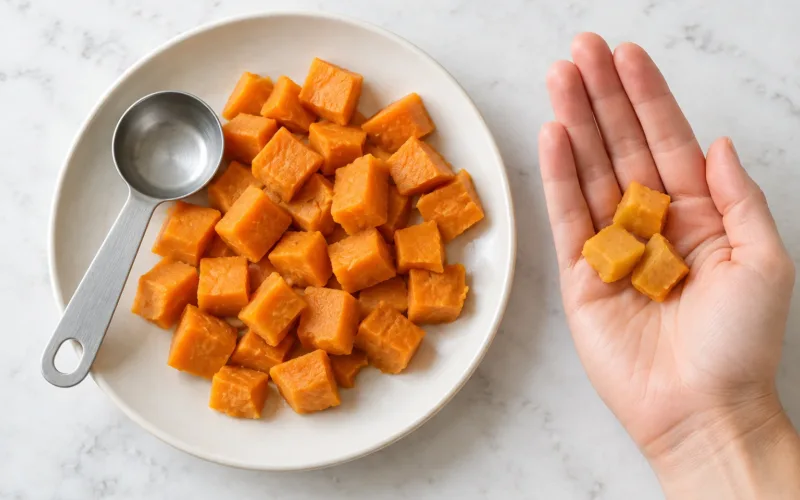
- Mash or dice small: pieces should be bite-sized for your dog.
- Cool it first: serve at room temperature.
Holiday dishes are where most trouble starts. Sweet potato pie and casseroles often contain nutmeg, which can cause stomach upset and is toxic in larger amounts, plus rich fats that can trigger pancreatitis. Some “sugar-free” recipes use xylitol, which is dangerous for dogs.

Nutrition Snapshot: Sweet Potato vs. Pumpkin
Sweet potato and plain canned pumpkin often get compared, so here they are side by side per 100 grams, using USDA data:
| Nutrient | Sweet Potato (baked) | Pumpkin (canned, plain) |
|---|---|---|
| Calories | 90 kcal | 34 kcal |
| Fiber | 3.3 g | 2.9 g |
| Natural sugars | 6.5 g | 3.3 g |
| Vitamin A (RAE) | 961 µg | 778 µg |
| Potassium | 475 mg | 206 mg |
USDA FoodData Central values. Your dog’s complete diet already supplies the vitamins and minerals they need.
Sweet potato brings a bit more fiber, plus beta-carotene (which the body turns into vitamin A), vitamin C and potassium. Pumpkin has a little over a third of the calories. That’s the real difference: for a dog watching their weight, pumpkin goes further.
How Much Sweet Potato Can a Dog Eat Per Day?
Think in spoonfuls, not whole potatoes. Veterinary nutrition guidelines from WSAVA cap all extras at roughly 10% of daily calories. A level tablespoon of mashed baked sweet potato is about 13 calories, so these amounts stay well inside that limit:
| Dog Size | Weight | Mashed, Cooked Portion | Approx. Calories |
|---|---|---|---|
| Toy | Under 10 lb | 1–2 teaspoons | 4–9 kcal |
| Small | 10–25 lb | 1–2 tablespoons | 13–26 kcal |
| Medium | 25–50 lb | 2–3 tablespoons | 26–40 kcal |
| Large | 50–90 lb | 3–4 tablespoons | 40–52 kcal |
| Giant | 90+ lb | Up to ⅓ cup | ~70 kcal |
Starting points for healthy adult dogs. Cut back on other treats the same day, and check with your vet for puppies or dogs with health conditions.
Can I give my dog sweet potato every day? A small daily spoonful is fine for many healthy dogs if it fits their calorie budget. Just don’t let it crowd out their regular food, and introduce it gradually over a few days to avoid gas or loose stool.
Is Sweet Potato a Laxative for Dogs?
Not exactly. Sweet potato isn’t a laxative, but its fiber adds bulk and helps stool hold water, which can support regular bowel movements. That’s why owners often reach for it, or pumpkin, when a dog seems a little backed up.
Too much fiber too fast can cause loose stool or gas, and constipation sometimes signals a swallowed object or dehydration. Call your vet if your dog hasn’t pooped in over two days, is straining, vomiting or in pain, and skip human laxatives.
What About Sweet Potato in Grain-Free Dog Food?
Here’s the part most sweet potato articles skip. From 2018 to 2022, the FDA investigated reports of a heart disease called dilated cardiomyopathy (DCM) in dogs eating diets high in peas, lentils and potatoes. Potatoes or sweet potatoes appeared in 42% of the reported diets, while peas or lentils appeared in 93%.
No direct cause has been proven, and the FDA stopped issuing routine updates in December 2022. This concern is about sweet potato as a main ingredient in a dog’s complete food, not an occasional spoonful as a treat. If your dog eats a grain-free diet, it’s worth a conversation with your vet.
Be careful with dried sweet potato chews. The FDA’s investigation into jerky pet treats included sweet potato treats among the complaints. Some dogs developed kidney problems, including a condition called Fanconi-like syndrome. Watch for:
- Drinking and urinating much more than usual
- Low energy or poor appetite
- Vomiting or diarrhea
Stop the treats and call your vet if you notice these signs. Homemade, soft-baked sweet potato is the safer choice. Read the FDA’s jerky treat advisory.
Sweet Potato for Dogs: Quick Serving Guide
Do
- Cook it plain: baked, boiled or steamed
- Peel it and serve mashed or in small cubes
- Keep it a small add-on, not a meal
- Try it as a soft training treat
Don't
- Raw sweet potato (hard to digest)
- Butter, sugar or marshmallow toppings
- Sweet potato fries or chips
- Large pieces of tough skin
Every dog is different. Check with your veterinarian first if your dog has a health condition or a sensitive stomach.
Frequently Asked Questions
Can dogs eat cooked sweet potatoes with the skin on?
A little cooked skin is unlikely to cause harm, but it’s tougher to digest. Peeling is the safer choice, especially for small dogs.
Which is better for dogs, pumpkin or sweet potato?
Both are healthy. Pumpkin is lower in calories and sugar, which suits dogs on a diet. Sweet potato offers a bit more fiber and potassium. Either should be plain and cooked or canned with no added spices.
Can dogs eat sweet potatoes from a can?
Check the label first. Canned sweet potatoes and “yams” are often packed in syrup or seasoned. Only plain versions with no added sugar or salt are a good fit, and fresh cooked sweet potato is still the better option.
What food helps a dog go poop?
Fiber-rich foods like plain cooked sweet potato or canned pumpkin, along with plenty of fresh water and daily exercise, can help keep things moving. If your dog is regularly constipated, ask your vet to look for an underlying cause.
Can diabetic dogs eat sweet potato?
Sweet potato is a starchy carbohydrate that can raise blood sugar. Ask your vet before offering it to a diabetic dog.
What other vegetables are good for dogs?
Green beans, carrots and plain pumpkin are popular low-calorie options. Fruits like bananas can work too in small amounts.
For more foods, browse the full what can dogs eat list.
The Bottom Line
Can dogs eat sweet potatoes? Most can, and plain, cooked sweet potato makes a wholesome topper or training treat. Peel, cook and mash it, keep portions small, and avoid seasoned dishes and dried chews of unknown origin. For more food safety guides, browse our Can Dogs Eat…? collection. This article is general information, not veterinary advice; see our Veterinary Disclaimer.
References & Sources
Written by CPD Nutrition Desk using the sources below. We are not affiliated with these organizations, and this guide is not a substitute for advice from your veterinarian.
- WSAVA — Frequently asked questions and myths
- U.S. Food and Drug Administration — FDA investigation potential link between certain diets and canine dilated cardiomyopathy
- U.S. Food and Drug Administration — Read the FDA's jerky treat advisory