
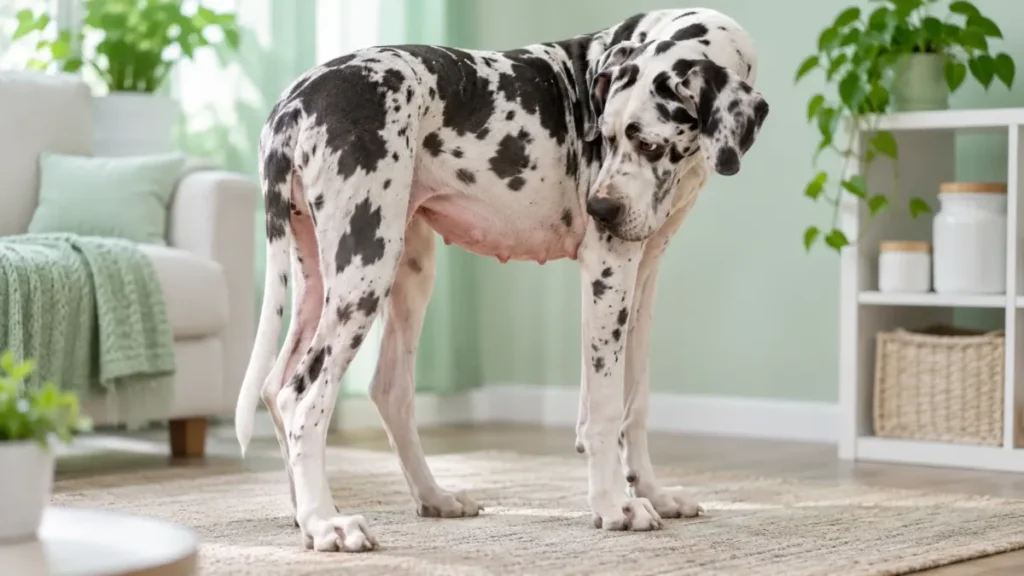

Bloat in dogs is a life-threatening emergency where the stomach fills with gas and can twist on itself (gastric dilatation-volvulus, or GDV). A swollen belly, retching with nothing coming up, drooling and restlessness are the classic signs. A dog with GDV can die within hours, so go to the nearest emergency vet immediately.
Signs: hard swollen belly, unproductive retching, pacing, drooling, pale gums. Large, deep-chested breeds are most at risk. Treatment is emergency decompression and usually surgery. Prevention: smaller meals, slow eating, calm after meals and, for high-risk breeds, a preventive gastropexy.
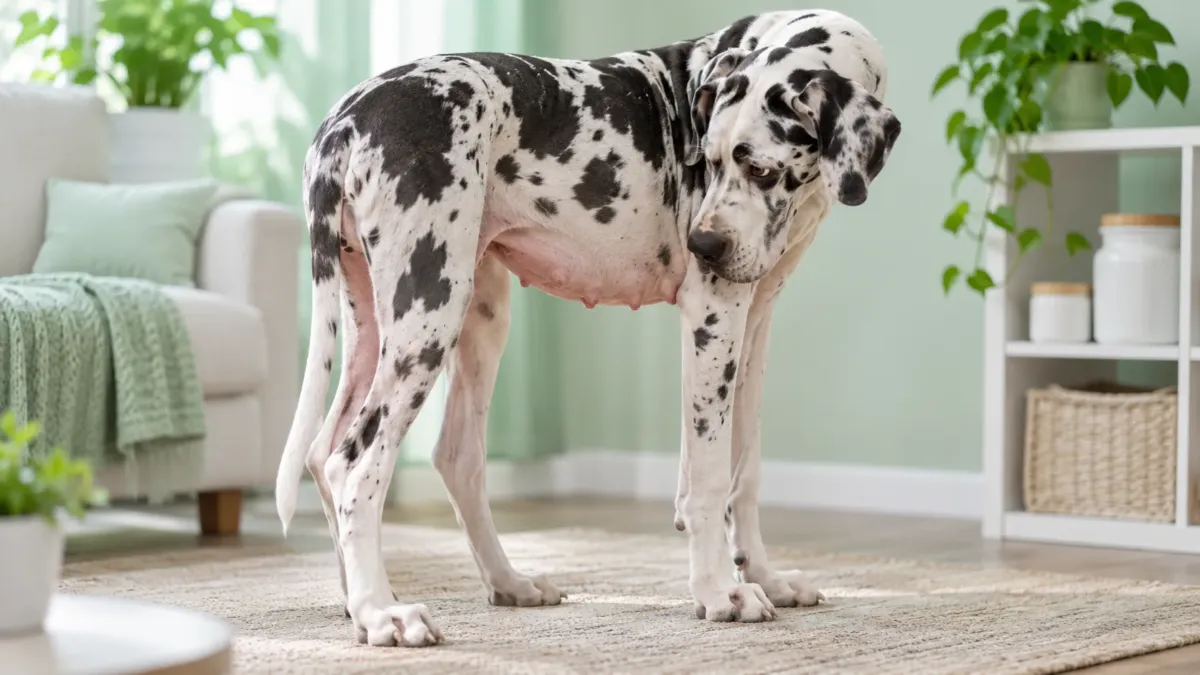
Table of Contents
What Is Bloat in Dogs?
There are two stages. Gastric dilatation means the stomach swells with gas, fluid or food. Volvulus means the swollen stomach rotates, closing off both ends so nothing can get out. The twisted stomach presses on big blood vessels, cuts blood flow and can damage the stomach wall and spleen. Shock follows quickly.
Simple food bloat, when a dog overeats a bag of kibble, can look similar early on. Only a vet with an X-ray can tell the difference, so treat every case as an emergency. The American College of Veterinary Surgeons has a clear overview.
Signs of Bloat in Dogs
| Early signs | Later signs (shock) |
|---|---|
| Retching or trying to vomit with little or nothing coming up | Pale or gray gums |
| Swollen, tight or drum-like belly | Fast, weak pulse and rapid breathing |
| Restlessness, pacing, unable to lie down | Weakness or collapse |
| Drooling, looking at the belly, whining | Cold legs, confusion |
This is not a wait-and-see problem. Call the nearest emergency vet and head there now. Don't give food, water or home remedies, and don't try to make your dog vomit.
Which Dogs Get Bloat?
Any dog can bloat, but risk is highest in large and giant breeds with a deep, narrow chest:
- Great Danes (highest reported risk), Weimaraners, Saint Bernards, Gordon and Irish Setters, Standard Poodles, German Shepherds, Bloodhounds and Akitas.
- Dogs over about 7 years old.
- Dogs with a parent or sibling who had GDV.
- Thin dogs, anxious or fearful dogs, and fast eaters.
- Dogs fed one large meal a day.
The AKC's bloat guide lists more breeds.
What Causes Bloat in Dogs?
No single cause is proven. Research points to a mix of anatomy (a deep chest gives the stomach room to rotate), genetics, temperament, and feeding habits that make dogs swallow lots of air or fill the stomach all at once.
Do raised food bowls cause bloat?
They were once recommended to prevent it, but a large study of large and giant dogs found raised bowls were linked to a higher risk, not a lower one. Unless your vet advises a raised bowl for another reason, a floor bowl is a reasonable default for at-risk breeds.
Can bloat happen hours after eating?
Yes. Many cases start within a few hours after a meal, often in the evening, but it can happen any time.
How Vets Treat Bloat
- Stabilize: IV fluids and pain relief to treat shock.
- Decompress: release gas with a stomach tube or a needle through the skin.
- X-ray to confirm whether the stomach has twisted.
- Surgery to untwist the stomach, check the spleen and stomach wall, and stitch the stomach to the body wall (gastropexy) so it can't twist again.
- Monitoring for heart rhythm problems for a few days after.
Survival is good when dogs reach surgery quickly, and much lower when treatment is delayed. Costs often run into thousands of dollars, which is one reason some owners of high-risk breeds choose prevention.
How to Prevent Bloat in Dogs
| Habit | Why it helps |
|---|---|
| Feed 2 to 3 smaller meals a day | Avoids a very full stomach |
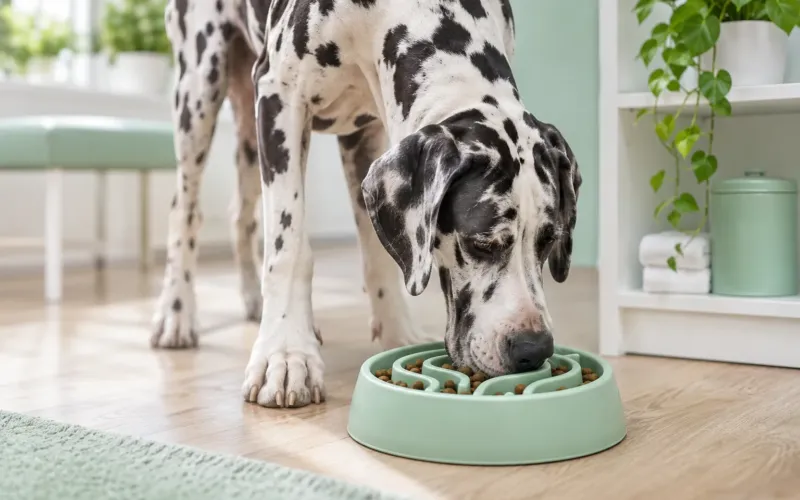
| Use a slow feeder or puzzle bowl | Less air swallowing |
| Keep the hour after meals calm | Reduces stomach movement when full |
| Avoid big water gulps right after exercise | Less stretching of the stomach |
| Reduce stress at mealtimes | Anxious eaters are higher risk |
| Ask about preventive gastropexy | Can be done during spay or neuter in at-risk breeds |
Feeding guides like our dog feeding chart and large breed puppy food can help you split daily portions.

Which breeds do you recommend a preventive gastropexy for? Large and giant deep-chested breeds such as Great Danes, Standard Poodles, Irish Setters, Weimaraners and German Shepherds. It is often done at the same time as the spay or neuter.
What is the one sign owners should never ignore? Retching or trying to vomit with nothing coming up, especially with a swollen belly. That is an emergency: go straight to the nearest vet.
— Dr. Sarah Miller, DVM
Bloat: lower the risk
✓ What helps
- 2 to 3 smaller meals a day
- Slow feeder bowl
- Calm hour after eating
- Ask about gastropexy
✕ Don't
- One huge daily meal
- Hard play right after meals
- Waiting to see if it passes
- Home remedies
Suspected bloat means emergency vet now.
Frequently Asked Questions
How quickly can bloat kill a dog?
GDV can become fatal within a few hours. Every minute counts, so go to an emergency vet as soon as you suspect it.
Can a dog with bloat poop or burp?
Sometimes early on, but a dog that burps or passes stool can still have GDV. Don't use this as a reason to wait.
Can small dogs get bloat?
It is much less common, but it can happen. Small dogs more often have simple food bloat or other stomach problems.
Does dry food cause bloat?
Dry food alone hasn't been proven to cause GDV. Feeding style matters more: very large meals, eating fast and one meal a day raise risk.
Can bloat in dogs go away on its own?
Mild gas may pass, but GDV never fixes itself. Only a vet can tell which one your dog has.
The Bottom Line
Bloat in dogs, especially GDV, is a true emergency: a tight belly and retching with nothing coming up means go to the vet now. For large, deep-chested breeds, smaller meals, slow eating, calm after meals and a talk about preventive gastropexy are the best protection.
References & Sources
Written by CPD Nutrition Desk using the sources below. We are not affiliated with these organizations, and this guide is not a substitute for advice from your veterinarian.
- ACVS — American College of Veterinary Surgeons
- American Kennel Club (AKC) — AKC's bloat guide