
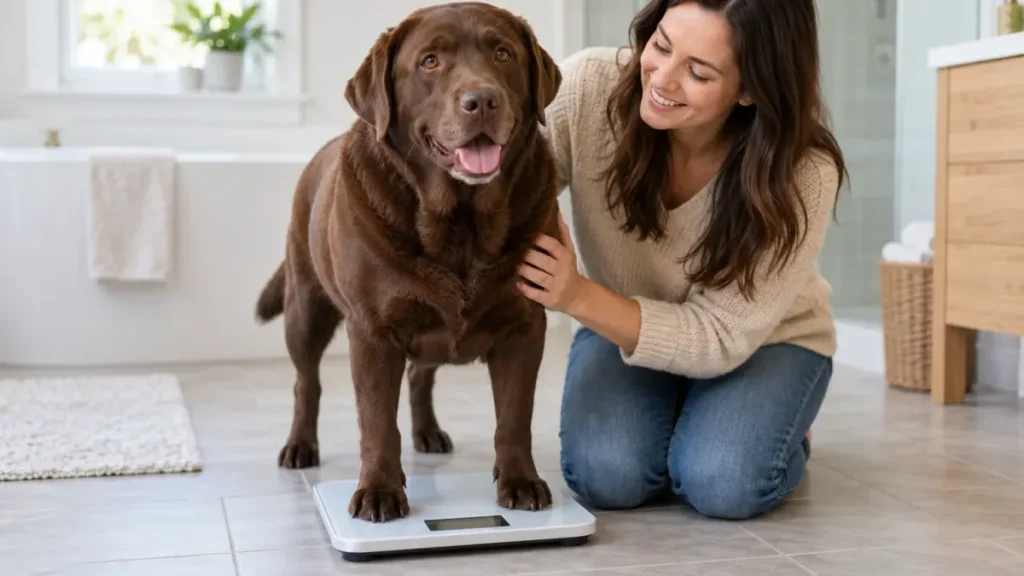

An overweight dog is one carrying more body fat than is healthy, usually 10% to 20% or more above ideal weight. It's very common: in a 2022 survey, vets classified 59% of dogs as overweight or obese. The good news is that you can check at home in a minute, and a slow, steady plan of measured meals, fewer treats and more activity works for most dogs.
Feel for ribs, look for a waist from above and a tummy tuck from the side. Extra weight raises the risk of arthritis, diabetes and breathing problems, and can shorten life. Aim to lose about 1% to 2% of body weight per week, with a vet check before you start.
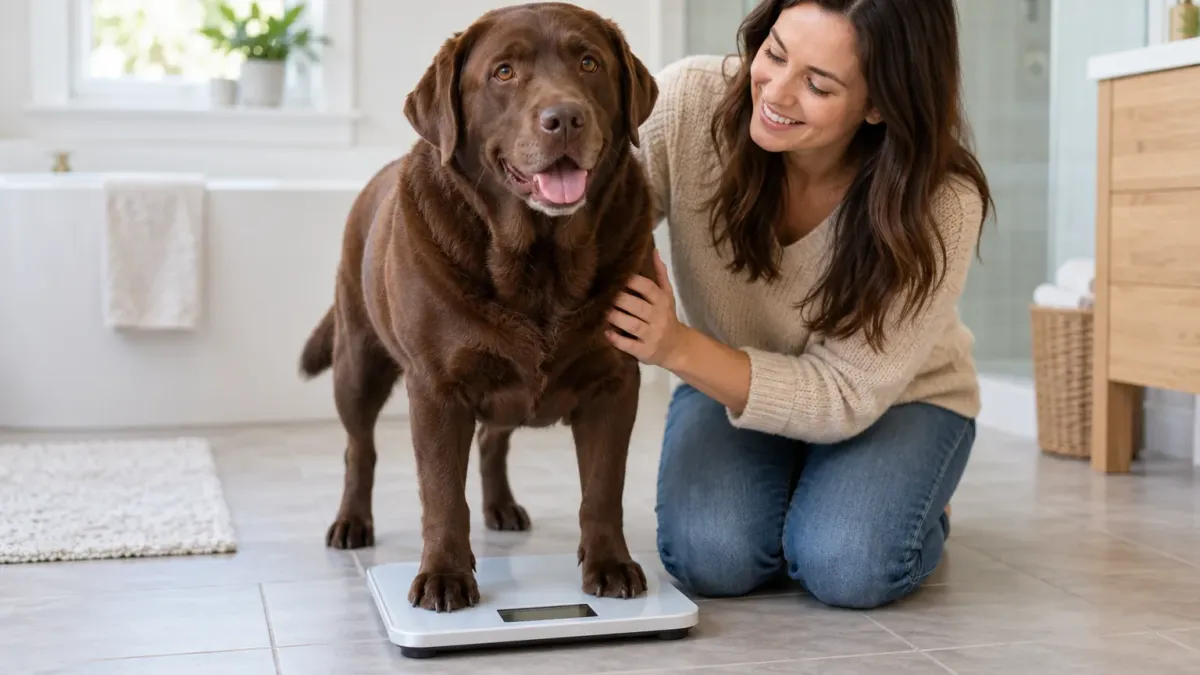
Table of Contents
How to Tell If Your Dog Is Overweight
Vets use a 9-point body condition score (BCS), where 4 to 5 is ideal. You can do a version at home with the WSAVA body condition chart:
| Score | What you see and feel | Status |
|---|---|---|
| 4 to 5 | Ribs easy to feel with a light fat cover; clear waist from above; belly tucks up from the side | Ideal |
| 6 | Ribs felt with slight pressure; waist visible but not obvious | Slightly overweight |
| 7 | Ribs hard to feel; little or no waist; belly barely tucked | Overweight |
| 8 to 9 | Ribs can't be felt; no waist; fat on back, neck and tail base; belly may hang | Obese |
Each point above 5 is roughly 10% to 15% extra body weight. A quick test: run your flat hand along your dog's side. Ribs should feel like the back of your hand, not your knuckles (too thin) or your palm (too much padding).
Why Extra Weight Matters
- Joints: extra load speeds up arthritis and makes it more painful.
- Metabolic disease: higher risk of diabetes and some skin and urinary problems.
- Breathing and heat: harder for flat-faced breeds and in hot weather.
- Lifespan: in a long-term study of Labrador Retrievers, dogs kept lean lived about 1.8 years longer on average than their heavier littermates (JAVMA, Kealy et al.).
The Association for Pet Obesity Prevention also found many owners don't recognize extra weight, so an honest check matters.
Common Reasons Dogs Gain Weight
- Overfeeding: using bag guides or scoops without measuring.
- Treats and scraps: these often add 20% or more to daily calories without owners noticing.
- Low activity: older dogs and dogs left alone a lot burn less.
- Neutering: energy needs drop afterward, so portions should too.
- Health issues: low thyroid function and some medications can play a role, which is why a vet check comes first.

A Safe Weight-Loss Plan
- Step 1: Vet visit. Get a starting weight, BCS, target weight and a check for medical causes.
- Step 2: Set calories. Your vet will usually base this on your dog's target weight. Our dog calorie calculator gives an estimate.
- Step 3: Weigh food. Use a kitchen scale, and pick up uneaten food after 20 minutes.
- Step 4: Fix treats. Keep treats under 10% of calories and swap biscuits for green beans, cucumber or pieces of the daily kibble.
- Step 5: Move more. Add 10 minutes of walking a day, then build up. Sniffy walks, swimming and fetch all count.
- Step 6: Weigh every 2 weeks. Aim for about 1% to 2% of body weight per week; adjust calories if progress stalls.
| Current weight | 1% per week | 2% per week |
|---|---|---|
| 25 lb | ~¼ lb | ~½ lb |
| 50 lb | ~½ lb | ~1 lb |
| 80 lb | ~¾ lb | ~1½ lb |
Our calculations. Slower loss is safer and easier to keep off.
A weight management food can help a dog feel full on fewer calories; see weight control dog food.
Don't crash diet. Cutting food drastically can cause nutrient shortfalls and, in some dogs, health problems. Rapid weight loss, weight loss you can't explain, or a dog that gains weight despite eating less all need a vet visit. See our veterinary disclaimer.
What's the most common reason dogs gain weight? Treats and extras that aren't counted. Measuring meals and keeping treats under 10% of calories makes a big difference.
Should I see a vet before a diet? Yes. We check for medical causes and set a safe target weight and calorie plan.
— Dr. Sarah Miller, DVM
Overweight Dog: Quick Guide
✓ What helps
- Check ribs, waist and tummy tuck
- Weigh food on a kitchen scale
- Swap biscuits for low-calorie veggies
- Weigh your dog every two weeks
✕ Don't
- Free-feed from a full bowl
- Ignore treats and table scraps
- Crash diet or cut food drastically
- Skip the vet check first
Dogs with joint pain, diabetes or unexplained weight changes need a vet-guided plan.
Frequently Asked Questions
How fast should an overweight dog lose weight?
About 1% to 2% of body weight per week. Most dogs reach their goal in several months.
Can I just feed less of the same food?
For small cuts, yes. For bigger cuts, a weight management food helps avoid nutrient gaps. Ask your vet.
Do vegetables help dogs lose weight?
Low-calorie veggies can replace higher-calorie treats and add volume, but the main diet still needs adjusting.
Why is my dog gaining weight while eating the same?
Lower activity, age or a medical issue like low thyroid function. A vet check helps rule out causes.
Is it bad if my dog is a little chubby?
Even a little extra weight affects joints and lifespan over time. It's easier to fix early.
Browse every topic, from tummy trouble to supplements, in our dog nutrition and health guide.
The Bottom Line
An overweight dog is easy to spot once you know the rib, waist and tummy-tuck checks. Start with a vet visit, measure every meal, cut treats, add daily activity and aim for slow, steady loss. More in our Nutrition & Health section and our dog feeding chart.
References & Sources
Written by CPD Nutrition Desk using the sources below. We are not affiliated with these organizations, and this guide is not a substitute for advice from your veterinarian.
- WSAVA — WSAVA body condition chart
- PubMed (NIH) — JAVMA, Kealy et al.
- petobesityprevention.org — Association for Pet Obesity Prevention