


A pound of chicken breast shrinks to about a quarter of its weight in the dehydrator, and the result is a chewy, single-ingredient jerky most dogs find irresistible. Dehydrated dog treats are simple to make, but meat comes with one food-safety step many dehydrator manuals skip. This guide walks through that step, a full chicken jerky method (with or without a dehydrator), other foods worth drying, the ones to avoid, portions and storage.
Prep: 30 minutes, including pre-cooking • Dry: 4–6 hours in a dehydrator, or 2–3 hours in a low oven • Yield: about 40 strips from 1 lb chicken breast • Difficulty: Easy • Storage: airtight jar in the fridge, or freezer up to 3 months
Each strip has roughly 14 calories and only one ingredient.
Table of Contents
The Golden Rule: Cook Meat Before You Dry It
A dehydrator runs at around 130–140°F, which dries food but doesn’t reliably kill bacteria. The USDA Food Safety and Inspection Service recommends steaming or roasting poultry to 165°F (and red meat to 160°F) before drying, checked with a food thermometer. It also notes that bacteria become more heat-resistant once meat has dried, so skipping the pre-cook and hoping for the best isn’t a safe shortcut.
That matters for your household as well as your dog, since you’ll be handling the treats every day.
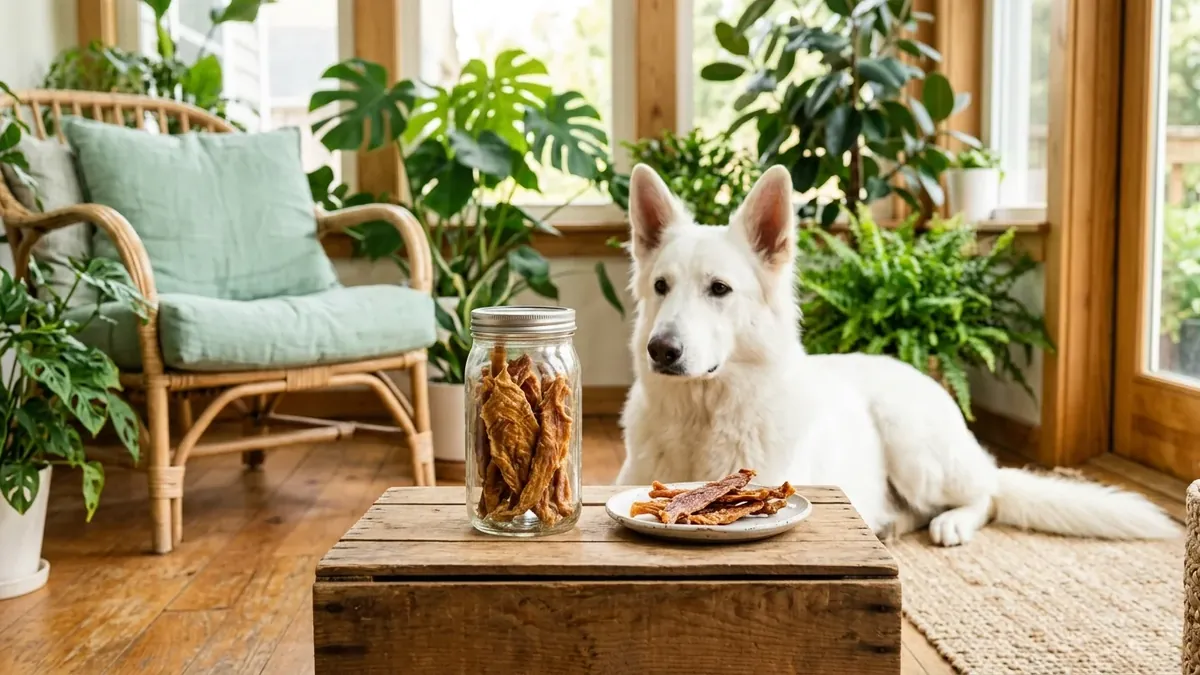
Chicken Jerky for Dogs, Step by Step
You’ll need: 1 lb (about 450 g) boneless, skinless chicken breast. No salt, marinade or seasoning.
Homemade Chicken Jerky for Dogs
Ingredients
Method
- Freeze the chicken for about an hour so it slices cleanly.
- Cut into strips about 1/4 inch thick and trim any visible fat.
- Poach the strips in plain simmering water or bake them until the thickest piece reads 165°F (74°C).
- Pat dry and lay the strips in a single layer on the dehydrator trays.
- Dehydrate at 140°F or higher for 4 to 6 hours, until firm and dry with no moist spots.
- No dehydrator? Dry on your oven's lowest setting with the door propped open for 2 to 3 hours, flipping once.
Notes

Other Foods You Can Dehydrate for Dogs
Fruits and vegetables don’t need the meat pre-cook, but a few benefit from a quick blanch so they dry softer:
| Food | How to Prep | Good to Know |
|---|---|---|
| Sweet potato | Slice ¼ inch; steam briefly | Our sweet potato chews recipe covers it in detail |
| Apple | Core, remove all seeds, slice into rings | Naturally sweet, so keep portions small |
| Banana | Slice into coins | Sugary once dried; see bananas for dogs |
| Green beans | Blanch 2 minutes, then dry | Crunchy, very low calorie |
| Carrot | Peel, slice into coins, blanch | Dries into a chewy chip |
Plain foods only, with nothing added. Drying times vary by thickness and machine.

Foods You Should Never Dehydrate for Dogs
- Grapes: drying them makes raisins, which the ASPCA links to kidney damage in dogs.
- Onions, garlic, leeks and chives: toxic in any form, including dried flakes and powders.
- Marinated or seasoned meat: human jerky marinades are salty and often contain garlic or onion.
- Stone fruit with pits: cherry, peach and plum pits are a choking and toxicity risk.
- Raw poultry or meat that hasn’t been cooked to a safe temperature first.
If your dog eats something risky, call your vet or the ASPCA Animal Poison Control Center at (888) 426-4435.
How Many Jerky Strips Per Day?
One pound of raw chicken breast has roughly 540 calories based on USDA FoodData Central values. Drying removes water but keeps the calories, so 40 strips work out to about 14 calories each. Veterinary guidelines suggest keeping all treats under about 10% of daily calories:
| Dog Size | Weight | Strips Per Day | Approx. Calories |
|---|---|---|---|
| Toy | Under 10 lb | 1–2 | 14–28 kcal |
| Small | 10–25 lb | 2–4 | 28–56 kcal |
| Medium | 25–50 lb | 4–7 | 56–98 kcal |
| Large | 50–90 lb | 7–10 | 98–140 kcal |
| Giant | 90+ lb | Up to 12 | ~170 kcal |
Estimates for healthy adult dogs if jerky is the only treat that day. Tear strips into smaller pieces for training.
How to Store Dehydrated Dog Treats
- Cool completely before packing, or trapped steam will turn into moisture and mold.
- Airtight and cold: the USDA puts home-dried jerky at 1–2 months of storage. With no preservatives, we prefer keeping dog treats in a sealed jar in the fridge and using them within a few weeks.
- Freeze the extras: portion into bags and freeze for up to 3 months.
- Check before serving: toss anything soft, sticky, discolored or sour-smelling.
Dehydrated Treats for Dogs: Quick Serving Guide
Do
- Pre-cook meat to a safe temperature
- Slice everything evenly
- Dry until no moisture remains
- Store treats cold and sealed
Don't
- Dry grapes into raisins
- Use onion or garlic
- Use human jerky marinades
- Pack treats while still warm
Every dog is different. Check with your veterinarian before adding new treats if your dog has a health condition or food allergy.
Frequently Asked Questions
Are dehydrated dog treats good for dogs?
Homemade ones made from a single plain ingredient can be a great choice. They’re concentrated, though, so a small piece goes a long way. Count them toward your dog’s daily treats.
How do I make dried dog treats without a dehydrator?
Use your oven on its lowest setting with the door propped open a crack, and flip the pieces halfway. For meat, pre-cook it to a safe temperature first, just as you would with a dehydrator.
Can I make dehydrated treats from ground beef?
You can, but whole cuts are easier to make safely. Research cited by the USDA found bacteria were more likely to survive in ground beef jerky. If you use ground beef, choose lean meat, cook it to 160°F, and press it thin before drying.
Which vegetable should you not feed a dog?
The onion family, including garlic, leeks, chives and shallots, is the main one to avoid, fresh or dried. Also skip wild mushrooms and the leafy parts of tomato and rhubarb plants.
Do dehydrated treats make dogs thirsty?
A few pieces won’t make much difference, but dried foods have lost their water. Keep fresh water available, especially if your dog had a bigger helping.
Find your next bake in our homemade dog treats guide, sorted into baked, frozen, meaty and holiday recipes.
The Bottom Line
The best dehydrated dog treats start with one plain ingredient and, for meat, a pre-cook to a safe temperature. Slice thin, dry until there’s no moisture left, store cold, and hand them out in small pieces. Find more recipes in our Homemade Treats collection. This article is general information, not veterinary advice; see our Veterinary Disclaimer.
References & Sources
Written by CPD Nutrition Desk using the sources below. We are not affiliated with these organizations, and this guide is not a substitute for advice from your veterinarian.