


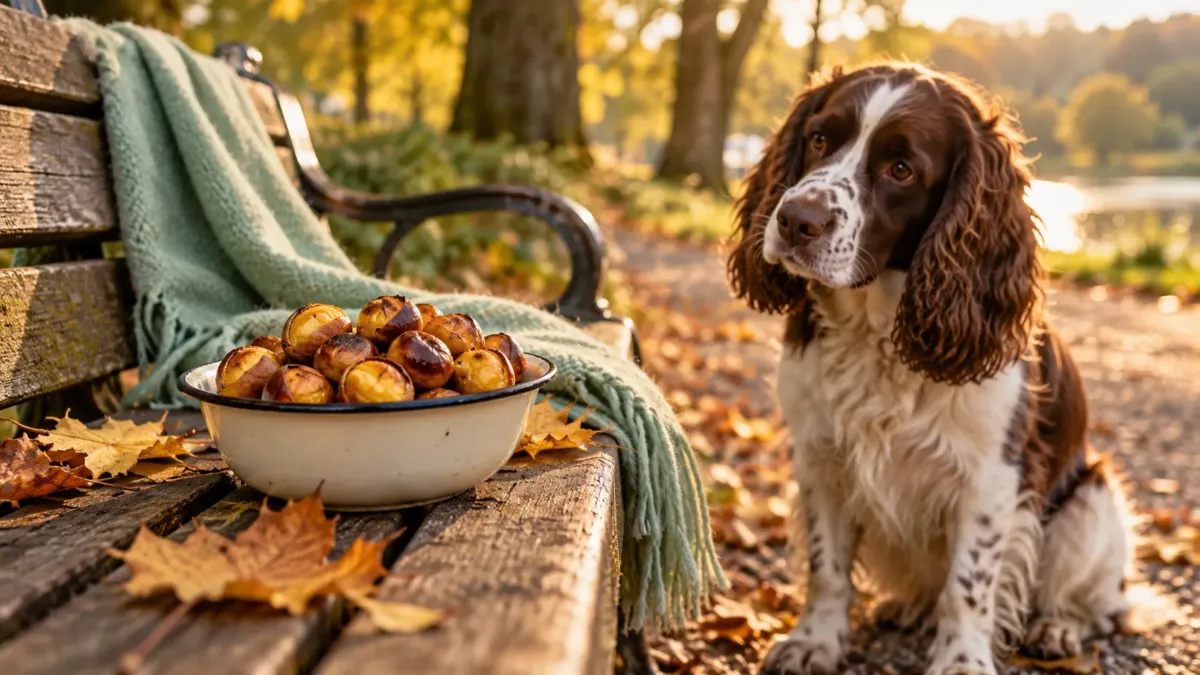
Can dogs eat chestnuts? Yes, edible sweet chestnuts are safe for dogs in small amounts when they’re cooked, peeled and plain. Unlike most nuts, they’re low in fat. The big catch is a look-alike: horse chestnuts, also called buckeyes or conkers, are toxic to dogs and drop from trees in parks and yards every fall. This guide shows how to tell them apart, how to serve real chestnuts, and what to do if your dog ate the wrong kind.
Safe in moderation: cooked, peeled sweet chestnuts only. A few small pieces of plain roasted or boiled chestnut are fine. Never let your dog eat horse chestnuts (buckeyes or conkers), chestnut shells or the spiky husks. Skip candied, salted or stuffing-style chestnuts.
Table of Contents
Sweet Chestnuts vs Horse Chestnuts: Know the Difference
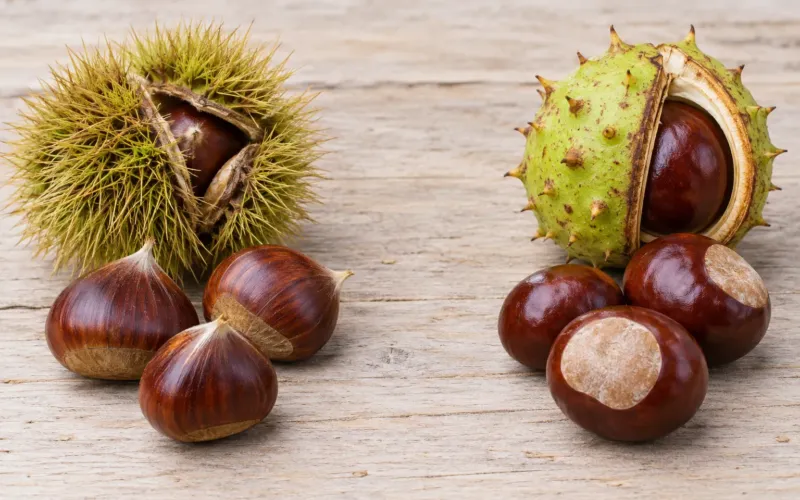
This is the most important part of the article. The two trees are not closely related, and only one is food:
| Feature | Sweet (Edible) Chestnut | Horse Chestnut / Buckeye |
|---|---|---|
| Safe for dogs? | Yes, cooked and peeled | No, toxic |
| Outer husk | Covered in many fine, sharp spines, like a hedgehog | Thicker, with fewer short, blunt bumps or spikes |
| Nut shape | Flat on one side with a pointed tip and a small tuft | Round and smooth, no point or tuft |
| Nuts per husk | Usually 2–3 | Usually 1 |
| Where you see them | Sold roasted or in jars; some orchards | Parks, streets, school yards and gardens |
The ASPCA lists horse chestnut as toxic to dogs because of aesculin and other saponins, with signs such as severe vomiting and diarrhea, weakness, wobbliness and, in serious cases, seizures. If you’re not 100% sure what a nut on the ground is, treat it as a horse chestnut.
Are Sweet Chestnuts Good for Dogs?
Sweet chestnuts are more like a starchy vegetable than a typical nut. Roasted chestnuts have roughly 245 calories and only about 2 grams of fat per 100 grams, according to USDA FoodData Central. Compare that with about 70 grams of fat in the same weight of pecans. They also provide fiber, vitamin C, potassium and some B vitamins.
So can dogs eat chestnuts more freely than other nuts? Somewhat. They’re one of the few “nuts” that won’t overload a dog with fat. They’re still mostly carbohydrate, so think of them as an occasional treat, not a health food.
How Many Chestnuts Can a Dog Eat?
One roasted chestnut weighs about 8–10 grams and has around 20–25 calories. Keep portions small and cut them up:
| Dog Weight | Cooked, Peeled Chestnut | Approx. Calories |
|---|---|---|
| Under 10 lb | ½ chestnut, chopped | ~10 kcal |
| 10–25 lb | 1 chestnut, chopped | ~20 kcal |
| 25–50 lb | 2 chestnuts, chopped | ~45 kcal |
| 50 lb and up | 3 chestnuts, chopped | ~70 kcal |
Our estimates for healthy adult dogs. Chestnuts are dense and starchy, so start with less the first time and watch for gas or loose stools.
How to Prepare Chestnuts for Your Dog
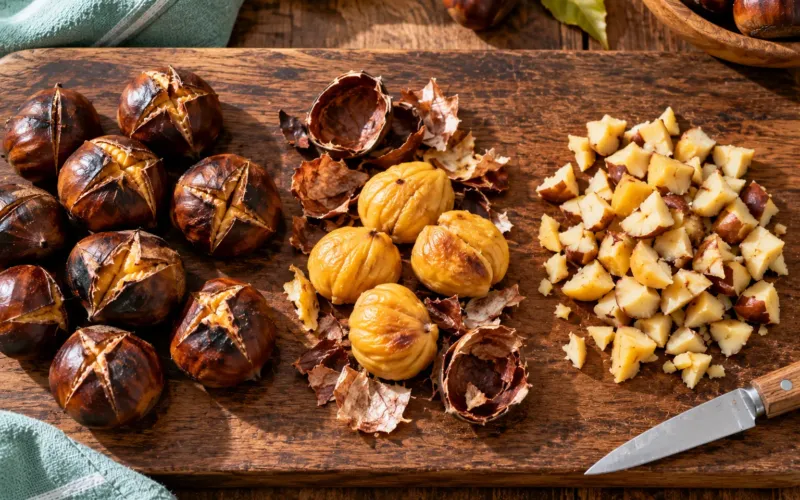
- Use sweet chestnuts only. Buy them from a store, not from trees you can’t identify.
- Cook them. Roast or boil until soft. Raw chestnuts are hard and high in tannins, which can upset the stomach.
- Peel completely. Remove the hard shell and the bitter inner skin.
- Keep them plain. No salt, butter, sugar or spices.
- Chop or mash. Whole chestnuts are a choking risk for small and greedy dogs.
Water Chestnuts and Chestnut Foods
| Food | OK for Dogs? | Why |
|---|---|---|
| Water chestnuts (plain) | Yes, small amounts | A crunchy water plant, not a nut; rinse canned ones and slice small |
| Roasted street-vendor chestnuts | Only if unsalted | Often salted or buttered |
| Candied chestnuts (marrons glacés) | No | Soaked in sugar syrup |
| Chestnut stuffing | No | Onion, garlic, butter and herbs |
| Chestnut spread or purée | Only unsweetened | Most are sweetened; some contain chocolate |
| Chestnut flour baked goods | Rarely | Sugar and fat from the rest of the recipe |
Water chestnuts show up in stir-fries, which are usually cooked with soy sauce, garlic and onion. Only share plain pieces before any sauce is added.
Fall Walk Safety: Nuts, Husks and Mold
Autumn walks bring a carpet of nuts, acorns and spiky husks. Besides horse chestnuts, acorns can upset the stomach, and moldy fallen nuts of any kind can carry toxins. The spiny husks of sweet chestnuts can also injure paws and mouths.
- Keep your dog on a leash under nut trees in fall.
- Practice “leave it” and “drop it” with high-value rewards.
- Check paws and mouth after walks through husk-covered paths.
- Carry safe treats, such as plain carrot pieces, to swap for anything your dog picks up.
Puppies, Small Dogs and Sensitive Stomachs
Puppies explore with their mouths, so they’re the most likely to eat a conker. Keep them away from horse chestnut trees entirely. For small dogs, mash any chestnut you share. Dogs with diabetes or weight issues should skip starchy chestnuts or count them carefully, and dogs with sensitive stomachs may get gassy. See our dog upset stomach guide if your dog seems unwell after a new food.
How quickly do signs appear after a dog eats a horse chestnut? Often within a few hours: vomiting, diarrhea, drooling or weakness. Call a vet as soon as you know.
Are cooked sweet chestnuts a reasonable treat? Yes, in small pieces. They're low in fat, but starchy, so keep them occasional.
— Dr. Sarah Miller, DVM
Chestnuts for Dogs: Quick Serving Guide
✓ Do
- Use store-bought sweet chestnuts
- Roast or boil, then peel fully
- Chop or mash for small dogs
- Keep them plain and occasional
✕ Don’t
- Let your dog eat park conkers or buckeyes
- Give raw chestnuts or shells
- Share candied or salted chestnuts
- Offer chestnut stuffing
Call your vet if your dog ate a horse chestnut. Dogs with diabetes or a sensitive stomach should get a vet’s OK first.
Frequently Asked Questions
Can dogs eat raw chestnuts?
It’s better not to. Raw chestnuts are hard and high in tannins, which can upset the stomach. Cook and peel them first.
Are conkers poisonous to dogs?
Yes. Conkers are horse chestnuts, which contain aesculin and other saponins. They can cause vomiting, diarrhea and, in some cases, more serious signs or a blockage.
Can dogs eat water chestnuts?
Yes, plain water chestnuts are safe in small, sliced pieces. Avoid ones cooked in sauces.
Can dogs have chestnuts every day?
It’s best as an occasional treat. They’re starchy and add up in calories over time.
Are chestnuts healthier than other nuts for dogs?
They’re much lower in fat than pecans, walnuts or macadamias, which makes them a safer choice. That’s only true for cooked, plain sweet chestnuts.
Can dogs eat chestnut shells?
No. The shells and spiny husks are indigestible and can cause choking, mouth injuries or blockages.
Checking another food? See our What Can Dogs Eat? A-Z list of safe and unsafe foods.
The Bottom Line
Can dogs eat chestnuts? Yes, cooked, peeled sweet chestnuts are a safe, low-fat treat in small pieces. The danger is the look-alike horse chestnut or buckeye found in parks, which is toxic to dogs. Learn the difference, keep your dog on a leash under nut trees in fall, and call your vet if you think your dog ate a conker. Find more answers in our Can Dogs Eat? guides. This article is general information, not veterinary advice; see our Veterinary Disclaimer.
References & Sources
Written by CPD Nutrition Desk using the sources below. We are not affiliated with these organizations, and this guide is not a substitute for advice from your veterinarian.
- ASPCA — Horse chestnut
- ASPCA — ASPCA Animal Poison Control Center
- USDA — USDA FoodData Central