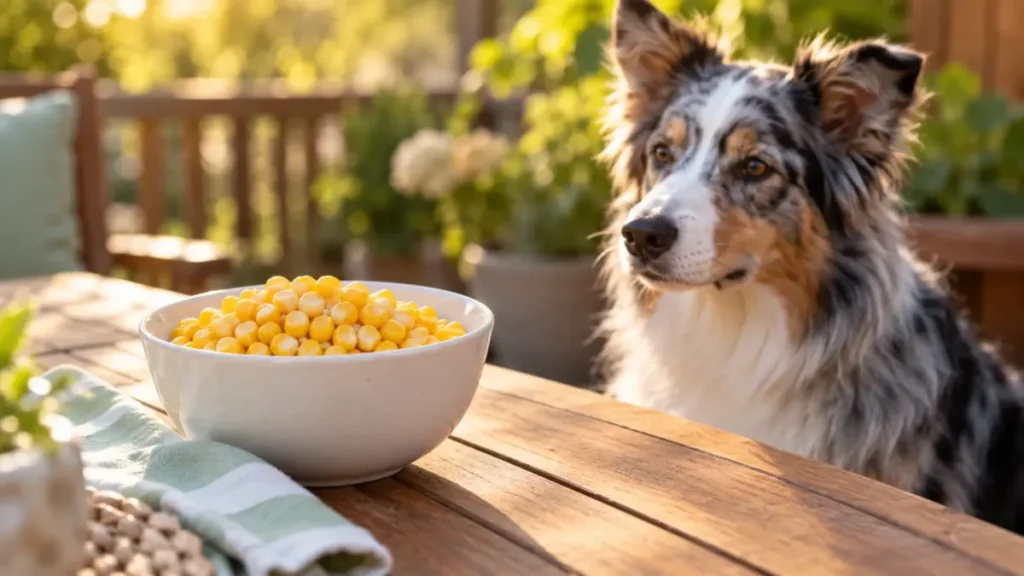

Can dogs eat corn? Yes. Plain corn kernels, cut off the cob and served without butter or salt, are safe for most dogs in small amounts. The cob is the real danger: dogs often swallow chunks of it, and it is one of the classic causes of intestinal blockages. Below you’ll find how much corn fits each dog size, which corn foods to skip, and what to do if your dog stole a cob from the plate.
Safe in moderation, kernels only. Cooked or raw plain kernels are fine as an occasional treat. Never give corn on the cob, husks, buttered or salted corn, or corn snacks like chips and kettle corn. If your dog swallowed any piece of cob, call your vet the same day, even if they seem fine.
Table of Contents
Is Corn Good or Bad for Dogs?
Corn isn’t toxic, and it isn’t a superfood either. A spoonful of kernels gives your dog some fiber, a little protein and carbohydrate for energy, plus small amounts of B vitamins, antioxidants such as lutein, and minerals like magnesium and potassium. The American Kennel Club lists plain corn as a safe food in small amounts.
So why does corn have a bad reputation? Mostly because of how it’s used in kibble. Many owners believe corn is “filler” or a common allergen. In reality, ground corn in a complete dog food is a digestible source of energy and some nutrients. Food allergies in dogs are more often linked to animal proteins: in a 2016 review in BMC Veterinary Research, beef, dairy and chicken topped the list, while corn was reported far less often. If you’re worried about allergies, our dog food allergies guide explains how a proper elimination diet works.
The honest answer to “is corn bad for dogs” is: not on its own. The problems come from the cob, the toppings, and eating too much at once.

Can Dogs Eat Corn on the Cob?
No, and this is the part every dog owner should remember. Dogs don’t chew carefully. They break a cob into chunks and swallow them. Cob pieces don’t break down in the stomach, and they are just the right size to lodge in the small intestine. Even a cooked cob that your dog “chewed up” can still cause a blockage that needs surgery.
Cobs are a common late-summer and holiday emergency because they end up on cookout plates and in kitchen trash. A few habits prevent most cases:
- Cut kernels off before sharing, and never hand your dog a gnawed cob as a “chew”.
- Bag cobs and put them straight into a lidded or outdoor bin.
- Watch plates at picnics, barbecues and Thanksgiving buffets.
- Ask guests not to slip leftovers to the dog.
How Much Corn Can a Dog Have?
Treats, including people food, should stay around 10% of your dog’s daily calories. Plain cooked corn kernels have about 96 calories per 100 grams, according to USDA FoodData Central, or roughly 10 calories per tablespoon. Here’s a simple size guide:
| Dog Weight | Daily Treat Budget (approx.) | Corn Kernels per Day | Calories From Corn |
|---|---|---|---|
| 10 lb (4.5 kg) | 35 kcal | 1 tablespoon | ~10 kcal |
| 25 lb (11 kg) | 70 kcal | 2 tablespoons | ~20 kcal |
| 50 lb (23 kg) | 115 kcal | ¼ cup | ~40 kcal |
| 75 lb (34 kg) | 160 kcal | ⅓ cup | ~55 kcal |
Our estimates for healthy, neutered adult dogs. These amounts leave room for other treats in the day. Start with half the listed amount the first time.
Corn is a starchy vegetable, so these servings are smaller than you’d use for green beans or cucumber. Some dogs pass whole kernels in their stool. That’s normal: the outer hull is hard to digest. Mashing or lightly blending the kernels helps your dog absorb more of what’s inside.
How to Prepare Corn for Your Dog
- Choose plain corn. Fresh, frozen or canned with no added salt all work. Rinse canned corn to remove extra sodium.
- Cook it simply. Steam or boil with no butter, oil, salt or seasoning. Raw kernels are safe too, but cooked ones are easier on the stomach.
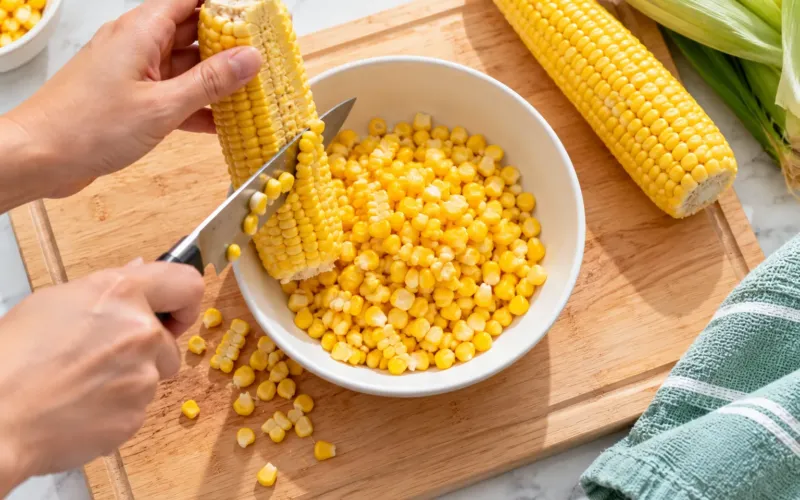
- Take it off the cob. Slice the kernels into a bowl and throw the cob away immediately.
- Serve a little. Sprinkle a spoonful over dinner, or freeze a few kernels in water in an ice cube tray for a summer snack.
Corn Foods: Which Are OK for Dogs?
Most of the corn your dog will try to steal comes processed, salted or buttered. Here is a quick guide to the common ones:
| Corn Food | OK for Dogs? | Why |
|---|---|---|
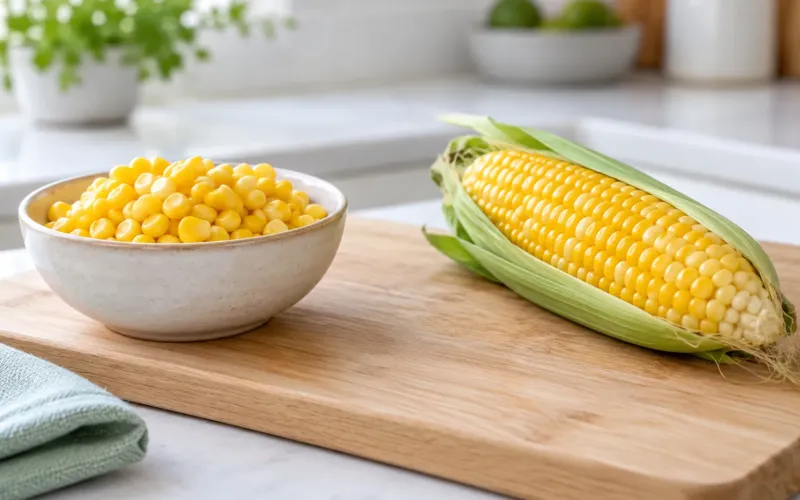
| Plain kernels (fresh, frozen, no-salt canned) | Yes, in small amounts | Simple carbs and fiber |
| Plain air-popped popcorn | A few pieces | Remove unpopped kernels, which can crack teeth |
| Buttered, salted or kettle corn | No | Fat, salt and sugar; stomach upset |
| Corn chips and tortilla chips | No | High in salt and oil |
| Plain corn tortilla | A small piece | Low value; skip flavored or fried ones |
| Cornbread and corn muffins | Not recommended | Butter, sugar, and sometimes jalapeños or onion |
| Creamed corn | No | Added sugar, salt and dairy |
| Cobs and husks | Never | Indigestible; can cause blockages |
Puppies, Allergies and Health Conditions
Can puppies eat corn?
A few plain kernels are fine for puppies already eating solid food. Their stomachs are more sensitive, so keep portions tiny, and puppies are especially likely to gulp cob pieces, so keep cobs well out of reach.
Dogs with allergies
If your dog is on an elimination diet, don’t add any extra foods, corn included, unless your vet approves. Adding treats during the trial can ruin the results.
Diabetes, pancreatitis and weight loss
Corn is starchy, so it can affect blood sugar more than leafy vegetables. Dogs with diabetes or weight problems do better with low-calorie snacks like green beans or cucumber. Buttered corn is a poor choice for any dog with a history of pancreatitis; see our low-fat foods for pancreatitis guide for better options.
Is corn in dog food bad?
Not by itself. Whether a food is good depends on the whole recipe and whether it is complete and balanced. Our article on grain-free diets explains why removing grains like corn isn’t automatically healthier.
Should owners make a dog vomit at home after it swallows a corn cob? No. Call your vet first. A cob piece can get stuck in the esophagus on the way back up.
How long after eating a cob can blockage signs appear? Anywhere from a few hours to several days, so don't wait for symptoms.
Is corn a common food allergen in dogs? Not very. Beef, dairy and chicken are reported much more often.
— Dr. Sarah Miller, DVM
Corn for Dogs: Quick Serving Guide
✓ Do
- Serve plain kernels off the cob
- Steam or boil with no seasoning
- Rinse no-salt canned corn
- Keep it a small, occasional treat
✕ Don’t
- Give corn on the cob or husks
- Share buttered or salted corn
- Offer chips, kettle corn or cornbread
- Leave cobs in an open trash can
Call your vet if your dog swallowed any cob. Dogs with diabetes, pancreatitis or allergies should get a vet’s OK first.
Frequently Asked Questions
Can dogs eat corn off the cob?
Yes. Plain kernels cut off the cob are safe in small amounts. The cob itself should never be given.
Can dogs eat raw corn?
Raw sweet corn kernels are safe, but cooked kernels are easier to digest. Either way, serve them plain and off the cob.
Why does my dog poop out whole corn kernels?
The tough outer skin of each kernel resists digestion in dogs and people alike. It’s harmless. Mashing the kernels helps.
Can dogs eat popcorn?
A few pieces of plain, air-popped popcorn are fine. Skip butter, salt, caramel and kettle corn, and remove unpopped kernels.
My dog ate a corn cob 3 days ago and seems fine. Am I in the clear?
Not necessarily. Blockages can take several days to show. Call your vet to talk through the risk, especially if your dog is eating less or vomiting.
Is corn bad for dogs with kidney disease?
Small amounts of plain corn aren’t usually a problem, but dogs with kidney disease often eat a carefully balanced prescription diet. Ask your vet before adding any extras.
Wondering about other foods? Our A-Z guide to what dogs can eat sorts them into safe, moderation and avoid.
The Bottom Line
Can dogs eat corn? Yes, plain kernels in small portions make an easy, low-cost treat. The cob is the real hazard, so cut the corn off, toss the cob in a closed bin, and skip butter, salt and corn snacks. If your dog ever swallows a piece of cob, call your vet right away. For more food answers, browse our Can Dogs Eat? guides. This article is general information, not veterinary advice; see our Veterinary Disclaimer.
References & Sources
Written by CPD Nutrition Desk using the sources below. We are not affiliated with these organizations, and this guide is not a substitute for advice from your veterinarian.
- American Kennel Club (AKC) — Can dogs eat corn
- bmcvetres.biomedcentral.com — 2016 review in BMC Veterinary Research
- USDA — USDA FoodData Central