
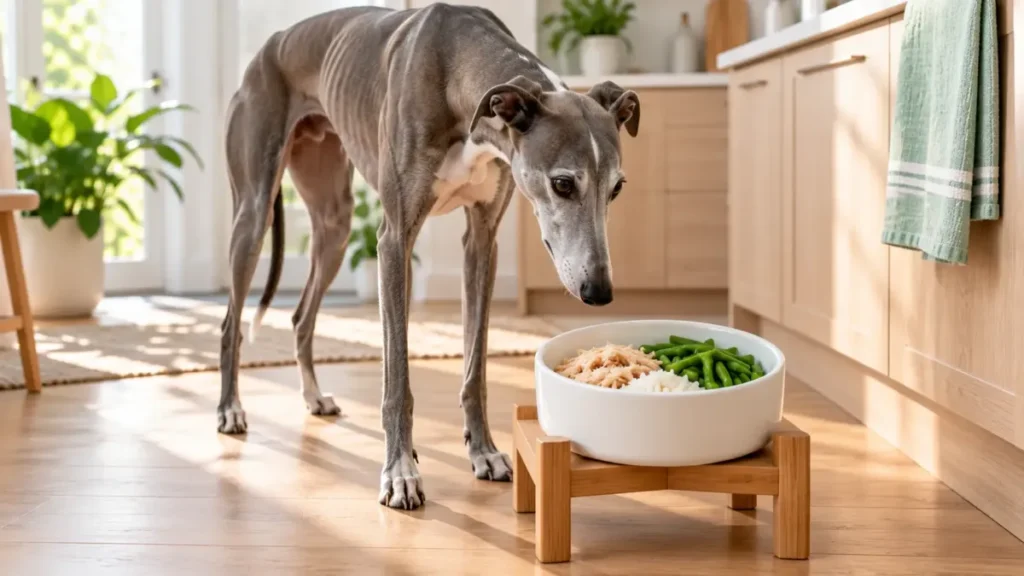

The best low fat foods for dogs with pancreatitis are lean, plain and simple: skinless chicken or turkey breast, white fish, egg whites, fat-free cottage cheese or yogurt, white rice, pumpkin, sweet potato and green beans. Most dogs recovering from pancreatitis do best on a vet-recommended low-fat diet, with treats chosen just as carefully. Here’s a food list with real fat numbers, and the foods to keep off the menu.
Fat is the main dietary trigger to control. Your vet will usually recommend a prescription or low-fat commercial diet; homemade food can work short term or with a recipe from a board-certified veterinary nutritionist. Feed small, frequent meals, cut out table scraps and fatty chews, and count treats. Severe or repeated vomiting needs a vet the same day.
Table of Contents
Why Dogs With Pancreatitis Need a Low-Fat Diet
The pancreas makes enzymes that digest food, including fat. In pancreatitis, it becomes inflamed, and those enzymes can start to damage the pancreas itself. A fatty meal, like a plate of bacon, holiday ham or a raided trash can, is one of the most common triggers. A low fat diet for dogs with pancreatitis asks less of the pancreas and lowers the risk of another flare-up.
The AKC notes that long-term management usually means a low-fat diet, no table scraps and smaller, more frequent meals, and that some dogs need a prescription low-fat diet for life. Your vet will choose a fat target based on your dog’s history, bloodwork and other conditions.
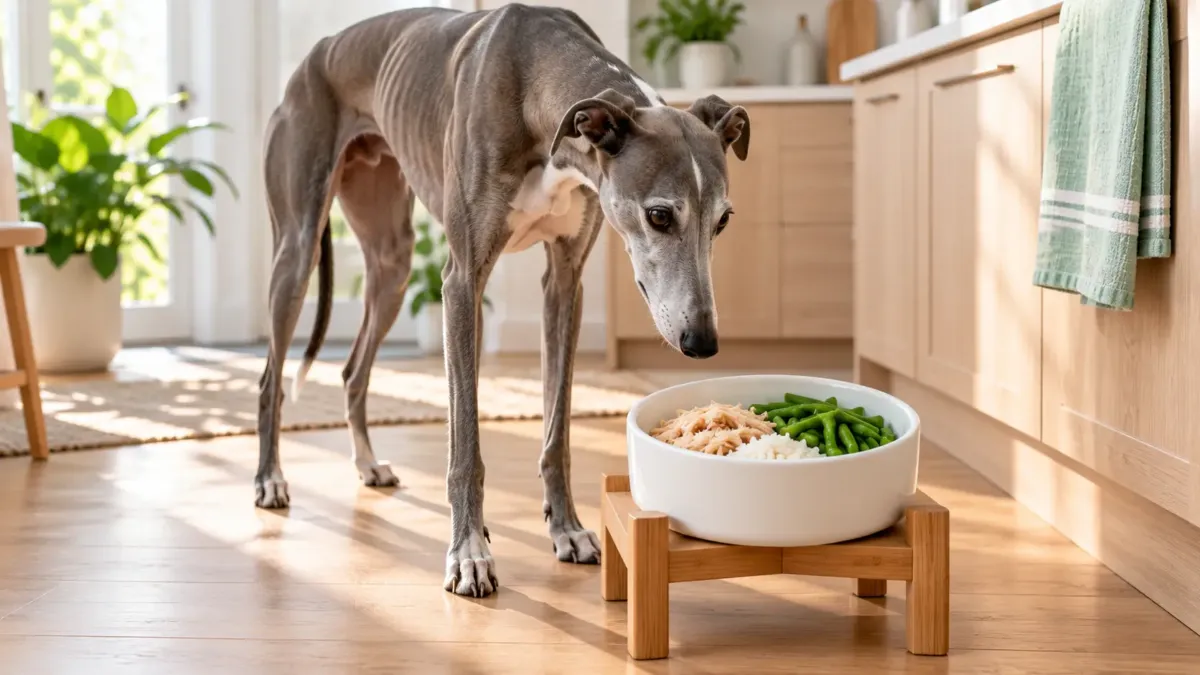
Low Fat Foods for Dogs With Pancreatitis: A List With Numbers
“Low fat” is easier to judge when you compare fat per 100 calories, which shows how much fat comes along with each bit of energy. Values below are from USDA FoodData Central, cooked and plain unless noted:
| Food (plain) | Fat per 100 g | Fat per 100 kcal | Notes |
|---|---|---|---|
| Egg white | 0.2 g | 0.4 g | Very lean protein; cook it, and skip the yolk |
| White rice | 0.3 g | 0.2 g | Easy-to-digest carbohydrate |
| Sweet potato, baked | 0.2 g | 0.2 g | Fiber and energy; no butter |
| Nonfat plain Greek yogurt | 0.4 g | 0.7 g | A spoonful as a topper; no sweeteners |
| Cod or other white fish | 0.9 g | 0.9 g | Boneless, skinless |
| Pumpkin, canned plain | 0.3 g | 0.9 g | Not pie filling |
| Green beans | 0.3 g | 0.9 g | Great low-calorie filler and treat |
| Low-fat (1%) cottage cheese | 1.0 g | 1.4 g | Small amounts; see our cottage cheese guide |
| Chicken breast, skinless | 3.6 g | 2.2 g | The classic lean protein; no skin |
USDA FoodData Central values, rounded. Use these to compare foods, not as a complete diet: single ingredients don’t provide balanced nutrition on their own.
High-Fat Foods to Avoid
Compare the lean list with common foods dogs get as scraps or chews. Many have three to four times the fat per calorie of chicken breast:
| Food | Fat per 100 g | Fat per 100 kcal |
|---|---|---|
| Bacon, cooked | ~42 g | ~7.8 g |
| Peanut butter | ~50 g | ~8.5 g |
| Cheddar cheese | ~33 g | ~8.2 g |
| 80/20 ground beef, cooked | ~17 g | ~6.7 g |
Also avoid poultry skin, fat trimmings, gravy, sausages, ham, fried food, butter, oils, whole-milk dairy, fatty fish like salmon (unless your vet approves), and many popular chews, such as pig ears and bully sticks, which can be surprisingly fatty.
What to Feed a Dog With Pancreatitis
During and right after a flare-up
Follow your vet’s plan exactly. Current guidance favors feeding small amounts of a low-fat, easily digested food early, once vomiting is controlled, rather than long fasts. Your vet may send you home with a prescription gastrointestinal low-fat food or recommend a short-term bland meal.
Long term: prescription, commercial or homemade
| Option | Pros | Watch Out For |
|---|---|---|
| Prescription low-fat diet | Complete, consistent, designed for this purpose | Needs a vet prescription; cost |
| Over-the-counter “low fat” or weight food | Easy to buy | Fat levels vary widely; check with your vet |
| Homemade diet | Full control of ingredients; appealing to picky dogs | Must be balanced by a board-certified veterinary nutritionist for long-term use |
Plain chicken and rice is fine for a few days, but it isn’t complete. If you want to cook long term, our guide to homemade dog food recipes explains how to get a balanced recipe.

Feeding Tips for a Canine Pancreatitis Diet
Whatever food your vet chooses, these habits make any dog pancreatitis diet work better day to day:
- Small, frequent meals: 3-4 smaller meals are easier on the pancreas than one big meal.
- Change foods slowly over 7-10 days, unless your vet says otherwise.
- Keep your dog lean. Obesity is a risk factor; our weight control guide can help.
- Lock up the trash and keep counters clear, especially around holidays.
- Tell every family member and visitor: no table scraps.
- Ask before adding supplements, including fish oil, which adds fat.
Low Fat Treats for Dogs With Pancreatitis
Treats still matter for training and bonding. Keep them under about 10% of daily calories and choose lean options:
- Green beans, cucumber, carrots, apple slices and blueberries
- Small pieces of plain boiled chicken breast
- Pieces of the dog’s prescription food, or prescription low-fat treats
- Homemade options from our low fat dog treats recipes

Pancreatitis With Diabetes, Kidney Disease or Other Conditions
Many dogs with pancreatitis have other conditions too. Diabetic dogs need consistent meals timed with insulin, and dogs with kidney disease need limited phosphorus as well as fat. Feeding these dogs is a balancing act, so work closely with your vet or a veterinary nutritionist. Our kidney diet for dogs guide explains the kidney side.
The most important diet change after pancreatitis? Keeping fat low, usually with a prescription low-fat diet, and no table scraps.
Is homemade chicken and rice okay long term? It's fine for a few days but isn't balanced. For long-term homemade feeding, use a recipe from a veterinary nutritionist.
What treats are safe for these dogs? Lean, plain options like green beans, carrots or small pieces of chicken breast, kept to a small share of the day.
— Dr. Sarah Miller, DVM
Pancreatitis Diet: Quick Guide
✓ What helps
- Follow your vet’s low-fat diet plan
- Feed small, frequent meals
- Choose lean, plain treats like green beans
- Keep trash and counters dog-proof
✕ Don’t
- Share bacon, ham, cheese or gravy
- Give fatty chews like pig ears
- Feed homemade diets long term without a recipe
- Add oils or supplements without asking
Every dog with pancreatitis is different. Fat targets and food choices should be guided by your vet.
Frequently Asked Questions
Is chicken and rice good for dogs with pancreatitis?
Plain, skinless chicken breast with white rice is a common short-term option. It isn’t nutritionally complete, so use it only for a few days unless your vet provides a balanced recipe.
Can dogs with pancreatitis eat eggs?
Egg whites are very low in fat and usually fine. Yolks contain most of the fat, so many vets suggest skipping them or using only small amounts.
What fat percentage should dog food be for pancreatitis?
Your vet will set the target. Many veterinary low-fat diets are well under 10% fat on a dry-matter basis, and the label’s “guaranteed analysis” alone can be misleading, so ask your vet to check any food you’re considering.
Is wet food better for dogs with pancreatitis?
Not necessarily. What matters is the fat content and digestibility. Both wet and dry prescription low-fat foods exist.
Can dogs with pancreatitis eat pumpkin or sweet potato?
Yes, plain cooked pumpkin and sweet potato are very low in fat. Keep portions moderate and skip butter, sugar and pie filling.
Can a dog recover fully from pancreatitis?
Many dogs recover well from a single mild episode. Some have repeat flares or develop chronic pancreatitis, which is why a long-term low-fat diet is often recommended. VCA Animal Hospitals covers the outlook in more detail.
Find related guides in our dog nutrition and health hub.
The Bottom Line
Low fat foods for dogs with pancreatitis include skinless chicken breast, white fish, egg whites, low-fat dairy, white rice, pumpkin, sweet potato and green beans. For long-term feeding, a prescription low-fat diet or a nutritionist-balanced homemade recipe is safest. Feed small meals, choose lean treats, and keep fatty foods and trash out of reach. For gentle foods after any tummy trouble, see our dog upset stomach guide, or browse our Nutrition & Health section. This article is general information, not veterinary advice; see our Veterinary Disclaimer.
References & Sources
Written by CPD Nutrition Desk using the sources below. We are not affiliated with these organizations, and this guide is not a substitute for advice from your veterinarian.
- American Kennel Club (AKC) — Pancreatitis in dogs
- USDA — USDA FoodData Central
- VCA Animal Hospitals — Pancreatitis in dogs