
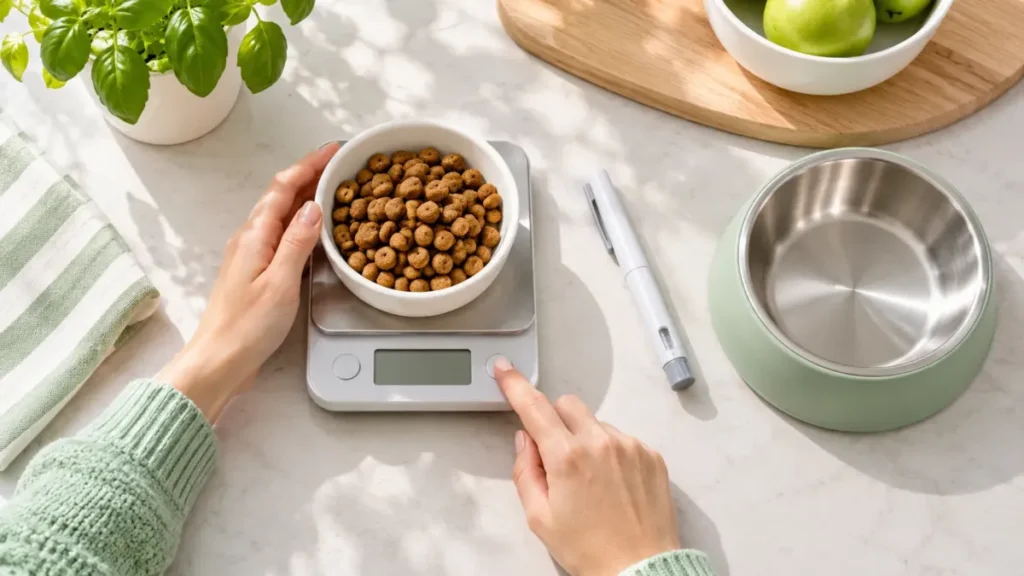

Diabetic dog food is any complete diet that keeps blood sugar steady alongside insulin: the same food, same amount, at the same times every day. Many vets choose a food with moderate to high fiber and complex carbohydrates, and a low fat food for dogs with a history of pancreatitis. The best diet depends on your dog's weight and other conditions, so choose it with your vet.
Consistency matters most: same food, same portions, same times, matched to insulin. Fiber can smooth blood sugar after meals, especially in overweight dogs. Avoid semi-moist foods and sugary treats. Never change food or insulin timing without talking to your vet.
Table of Contents
What Diabetic Dog Food Needs to Do
Insulin doses are set around the food your dog eats. If meal size or type changes, blood sugar swings. The AAHA diabetes guidelines on diet and VCA's nutrition guide for diabetic dogs both stress consistency and a diet suited to the dog's body condition.
| Diet goal | Why it helps |
|---|---|
| Same food and amount every meal | Lets insulin doses stay predictable |
| Meals timed with insulin, usually twice a day | Matches the insulin peak to the glucose from food |
| Moderate to high fiber, complex carbs | Slower glucose rise after meals |
| Reach and keep an ideal weight | Improves insulin sensitivity |
| Lower fat if pancreatitis history | Pancreatitis often occurs with diabetes in dogs |
| No simple sugars | Avoids sharp spikes |
Types of Diabetic Dog Food
Prescription diets
Many vets start with a therapeutic diet designed for glucose control or weight management. These have consistent recipes and calorie content, which helps with dosing.
Over-the-counter foods
Some dogs do fine on a regular complete food fed very consistently, especially if they are at a good weight. A higher fiber weight control food may help overweight dogs; see weight control dog food.
Homemade diets
Possible, but recipes must be balanced by a board-certified veterinary nutritionist and made the same way every time, which is harder than it sounds.
What about underweight diabetic dogs?
Thin dogs shouldn't get high fiber, low calorie diets. They need enough calories to regain weight; your vet may choose a different food.
How Much to Feed a Diabetic Dog
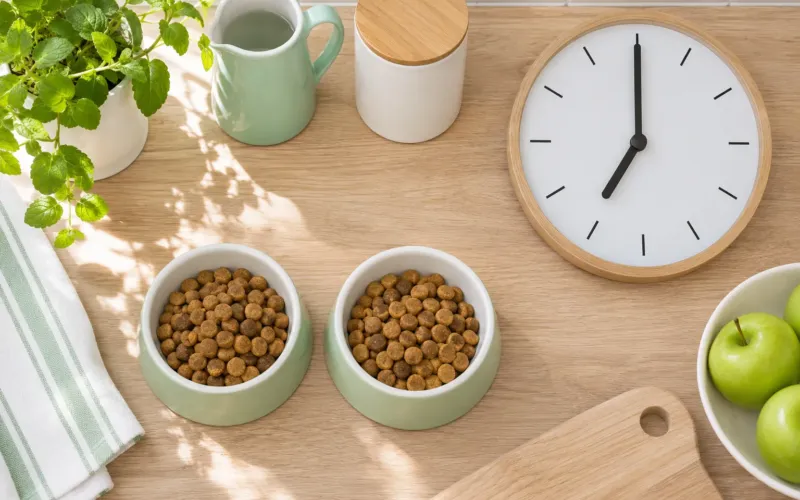
Split the daily amount into two equal meals, given with or just before insulin as your vet directs.
| Ideal weight | Approx. daily calories | Per meal (2 meals) | Cups per meal at 330 kcal per cup |
|---|---|---|---|
| 10 lb | about 350 | about 175 | about 1/2 cup |
| 25 lb | about 690 | about 345 | about 1 cup |
| 50 lb | about 1,160 | about 580 | about 1 3/4 cups |
| 75 lb | about 1,580 | about 790 | about 2 1/3 cups |
Estimates using 70 x kg^0.75 x 1.6 at ideal weight; overweight dogs are fed for their target weight under vet guidance. Use a kitchen scale.
Treats for Diabetic Dogs
- Green beans, cucumber slices and broccoli florets.
- Small pieces of plain cooked chicken or turkey.
- A few blueberries.
- Count treats in the daily calories and give them at the same times each day.
Avoid semi-moist treats, jerky with added sugar, honey, fruit in large amounts, and table scraps. Read low calorie dog treats and can dogs have honey.
If your diabetic dog won't eat a meal, call your vet before giving insulin. Giving a full dose without food can cause dangerously low blood sugar. Signs include weakness, wobbling, trembling, confusion or seizures; rub a little corn syrup on the gums and go to the vet.
Changing a Diabetic Dog's Food
Any change can shift insulin needs. Talk to your vet first, switch gradually over 7 to 10 days, and expect a glucose check or curve afterward.
My Diabetic Dog Got Into Food
Don't give extra insulin. Note what and how much was eaten, then call your vet for advice on the next dose. A single high reading is usually less dangerous than a low one caused by overcorrecting.

What type of diet do you usually start diabetic dogs on? A consistent, complete diet that the dog will reliably eat, often a higher-fiber prescription food. The same food, same amount and same times every day matter most.
What should an owner do if their diabetic dog skips a meal? Don't give the full insulin dose. Call your vet for advice; many vets suggest giving half the dose or skipping it, but follow your own vet's plan.
— Dr. Sarah Miller, DVM
Feeding a diabetic dog
✓ Do
- Same food every day
- Weigh each meal
- Feed with insulin timing
- Low calorie veggie treats
✕ Don't
- Semi-moist food
- Sugary treats
- Insulin without a meal
- Food switches without your vet
Ask your vet before changing food or insulin.
Frequently Asked Questions
What is the best diabetic dog food?
The one your vet recommends for your dog's weight and health, fed consistently. Many dogs do well on a moderate to high fiber prescription or weight control food.
Can I make diabetic dog food at home?
Only with a recipe balanced by a veterinary nutritionist, made the same way every time. Changes in ingredients change blood sugar.
Should diabetic dogs eat grain-free food?
Not necessarily. Grain-free foods aren't lower in carbs by default, and some contain more starch from peas or potatoes.
How long after eating should a dog get insulin?
Most vets advise giving insulin right after the dog eats a full meal. Follow your vet's exact instructions.
Is wet food better for diabetic dogs?
Either can work. What matters most is consistency and the right calories. Avoid semi-moist foods, which often contain sugars.
The Bottom Line
Diabetic dog food is about consistency: the same complete food, measured the same way, at the same times, matched to insulin. Choose the type with your vet, keep treats low in sugar, and never change food or skip meals with insulin without advice.
References & Sources
Written by CPD Nutrition Desk using the sources below. We are not affiliated with these organizations, and this guide is not a substitute for advice from your veterinarian.
- aaha.org — AAHA diabetes guidelines on diet
- VCA Animal Hospitals — VCA's nutrition guide for diabetic dogs