


A good weight control dog food has fewer calories per cup, more fiber to keep your dog full, and enough protein to protect muscle, while still being complete and balanced. It works best when you feed for your dog’s ideal weight, measure every meal and count treats. Here’s how to read the label, how much to feed, and how fast a dog should safely lose weight.
The food helps, but the portion decides. Choose a complete weight-loss or “light” formula with a low calorie count per cup, feed the amount for your dog’s target weight, weigh portions, and keep treats small. Aim for about 1–2% of body weight lost per week, with your vet checking progress.
Table of Contents
Why Weight Matters So Much
Extra weight is the most common nutrition problem vets see. In a 2022 survey by the Association for Pet Obesity Prevention, 59% of dogs were classified as overweight or having obesity. Extra pounds raise the risk of arthritis, diabetes, breathing problems and some cancers.
Staying lean pays off. In a well-known lifetime study of Labrador retrievers, dogs fed about 25% less food than their littermates stayed leaner and lived a median of nearly two years longer, as Penn Today reported.

Is Your Dog Overweight?
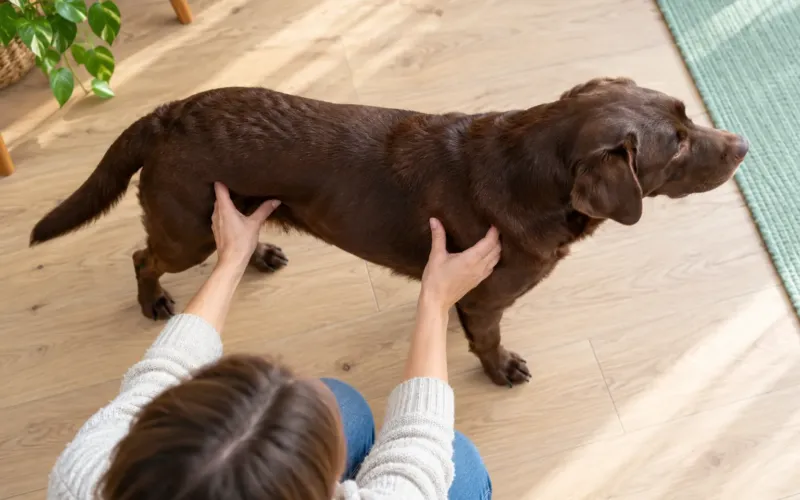
Vets use a 9-point body condition score, where 4 or 5 is ideal. You should be able to feel the ribs easily under a thin layer of fat and see a waist when looking down from above. Cornell’s Riney Canine Health Center notes that each point above ideal is roughly 10% extra body weight, so a dog scored 7 is about 20% heavier than it should be.
Before starting a diet, have your vet check for medical causes of weight gain, such as an underactive thyroid, and confirm a target weight.
What Makes a Weight Loss Dog Food Different?
| Feature | What to Look For | Why It Helps |
|---|---|---|
| Calories per cup | Lower than your current food | Your dog gets a satisfying portion with fewer calories |
| Fiber | Higher than standard adult foods | Adds bulk and helps dogs feel full |
| Protein | Moderate to high | Helps preserve muscle while fat is lost |
| Fat | Lower | Fat is the most calorie-dense nutrient |
| AAFCO statement | “Complete and balanced” for adult maintenance | Vitamins and minerals stay adequate even at smaller portions |
“Light” vs. “weight management” on the label
These words aren’t interchangeable. According to AAFCO, foods labeled “light,” “lite” or “low-calorie” must meet set calorie limits. “Weight management” or “healthy weight” has no such standard, so some of those foods have nearly as many calories as regular food. Always compare the kcal per cup on the calorie statement.
Can’t I Just Feed Less of the Current Food?
For a small loss, sometimes yes, under your vet’s guidance. But cutting a regular food by a lot also cuts vitamins, minerals and protein, and leaves your dog hungrier. That’s why weight management dog food is designed to stay balanced at lower calories. For dogs that need to lose a lot, vets often prescribe a therapeutic weight-loss diet, which is higher in protein and fiber than store-bought options.
How Much to Feed a Dog on a Diet
A common starting point is the resting energy requirement (RER) for your dog’s ideal weight, not its current weight. The Pet Nutrition Alliance lists 1.0 × RER for weight loss. Here’s what that looks like, keeping a tenth for treats:
| Target (Ideal) Weight | Daily Calories (1.0 × RER) | Food at 300 kcal/cup | Treat Allowance | Safe Weekly Loss (1–2%) |
|---|---|---|---|---|
| 10 lb | ~220 kcal | ~⅝ cup | ~20 kcal | ~0.1–0.2 lb |
| 20 lb | ~365 kcal | ~1 cup | ~35 kcal | ~0.2–0.4 lb |
| 30 lb | ~495 kcal | ~1½ cups | ~50 kcal | ~0.3–0.6 lb |
| 40 lb | ~615 kcal | ~1⅞ cups | ~60 kcal | ~0.4–0.8 lb |
| 50 lb | ~725 kcal | ~2¼ cups | ~75 kcal | ~0.5–1 lb |
| 60 lb | ~835 kcal | ~2½ cups | ~85 kcal | ~0.6–1.2 lb |
| 70 lb | ~935 kcal | ~2¾ cups | ~95 kcal | ~0.7–1.4 lb |
| 80 lb | ~1,035 kcal | ~3 cups | ~105 kcal | ~0.8–1.6 lb |
Our estimates: RER = 70 × ideal weight in kg0.75. Food amount assumes 300 kcal per level 8-oz cup after the treat allowance; use your food’s own number. Weekly loss is approximate. Your vet may adjust the plan, so treat this as a starting point.
For your own dog and food, try our dog calorie calculator in weight-loss mode, or see the dog feeding chart.

How to Make the Diet Work
- Weigh food in grams or use a level measuring cup. Heaped scoops add up fast.
- Count every extra. Swap biscuits for green beans, cucumber or carrot pieces; see our cucumber and carrot guides.
- Use part of the daily food as rewards during training.
- Slow down fast eaters with puzzle feeders, which also add mental exercise.
- Add activity gradually: longer walks, sniff walks, fetch or swimming, as your vet allows.
- Weigh your dog every two weeks at the same time of day, and keep a simple log.
- Get the whole household on board, so nobody slips extra snacks.
Switching to the new food
Move to the new weight control dog food over about 7 to 10 days, mixing a little more of it each day, to avoid an upset stomach.
Small Dogs, Seniors and Dogs With Health Conditions
Small dogs gain weight from tiny extras: one 30-calorie biscuit is about a tenth of a 10-lb dog’s day on a diet. Choose small-breed weight-loss kibble and tiny treats. Senior dogs need protein to keep muscle, so don’t cut food so much that they lose strength. Dogs with arthritis benefit most from losing weight, but exercise should be gentle. Dogs with diabetes, pancreatitis, kidney or heart disease need a diet chosen with their vet.
Store-bought or prescription? For a few pounds, a good light food and strict portions often work. For bigger losses, I prefer a prescription weight-loss diet so the dog doesn't feel starved.
What is the biggest mistake? Not counting treats and using a heaped scoop. Weighing food makes a real difference.
How often should weight be rechecked? Every 2 to 4 weeks at first, so we can adjust before the dog stalls.
— Dr. Sarah Miller, DVM
Weight Control for Dogs: Quick Guide
✓ Do
- Feed for your dog’s ideal weight
- Compare kcal per cup on the label
- Weigh food and count every treat
- Weigh your dog every two weeks
✕ Don’t
- Trust “weight management” without checking calories
- Cut regular food drastically on your own
- Use heaped scoops
- Aim for fast weight loss
Every dog is different. Dogs with health conditions should follow a weight plan from their vet.
Frequently Asked Questions
What is the best weight loss dog food?
One that’s complete and balanced, low in calories per cup, higher in fiber and protein, and that your dog will eat. For large weight loss, a vet-prescribed diet often works best.
How fast should my dog lose weight?
About 1–2% of body weight per week is considered safe. Most overweight dogs take several months to reach their target.
Is weight management food the same as weight reduction dog food?
Not always. Weight management foods are usually meant to keep a healthy weight, while weight reduction dog food, especially prescription versions, is built for active weight loss. Check the calories and your vet’s advice.
Is wet or dry food better for weight loss?
Either can work. Wet food has more water, so dogs get a bigger-looking portion for the calories. What matters most is the total daily calories.
Can I give my dog treats while on a diet?
Yes, if you count them. Keep treats to about a tenth of daily calories and use low-calorie options like green beans or pieces of the daily food.
Should a healthy-weight dog eat weight management food for dogs?
It can help dogs that gain weight easily, such as neutered or less active dogs. Feed the amount that keeps a body condition score of 4 or 5.
Want the bigger picture? Our dog food guide covers choosing a food, portions and homemade meals.
The Bottom Line
Weight control dog food makes dieting easier by keeping meals filling and balanced with fewer calories, but success comes from portions. Feed for your dog’s ideal weight, measure every meal, count treats and track progress every couple of weeks with your vet. For more feeding guides, browse our Dog Food section. This article is general information, not veterinary advice; see our Veterinary Disclaimer.
References & Sources
Written by CPD Nutrition Desk using the sources below. We are not affiliated with these organizations, and this guide is not a substitute for advice from your veterinarian.
- petobesityprevention.org — Association for Pet Obesity Prevention
- penntoday.upenn.edu — Study finds dogs fed reduced calorie diet live nearly two years longer dogs unrestricted diet
- vet.cornell.edu — Cornell's Riney Canine Health Center
- AAFCO — Reading labels
- Pet Nutrition Alliance — Mer.rer .pna