


Most healthy dogs eating a complete and balanced commercial food don’t need a dog multivitamin, because the vitamins and minerals are already in the food. One can make sense for homemade diets, certain medical conditions or poor appetite, but only with your vet’s guidance, since some vitamins are harmful in excess.
Check the food label first. “Complete and balanced” with an AAFCO statement means a multivitamin is probably unnecessary. Homemade diets need a vet-formulated balancer. Never give human vitamins, and choose products with an NASC Quality Seal.
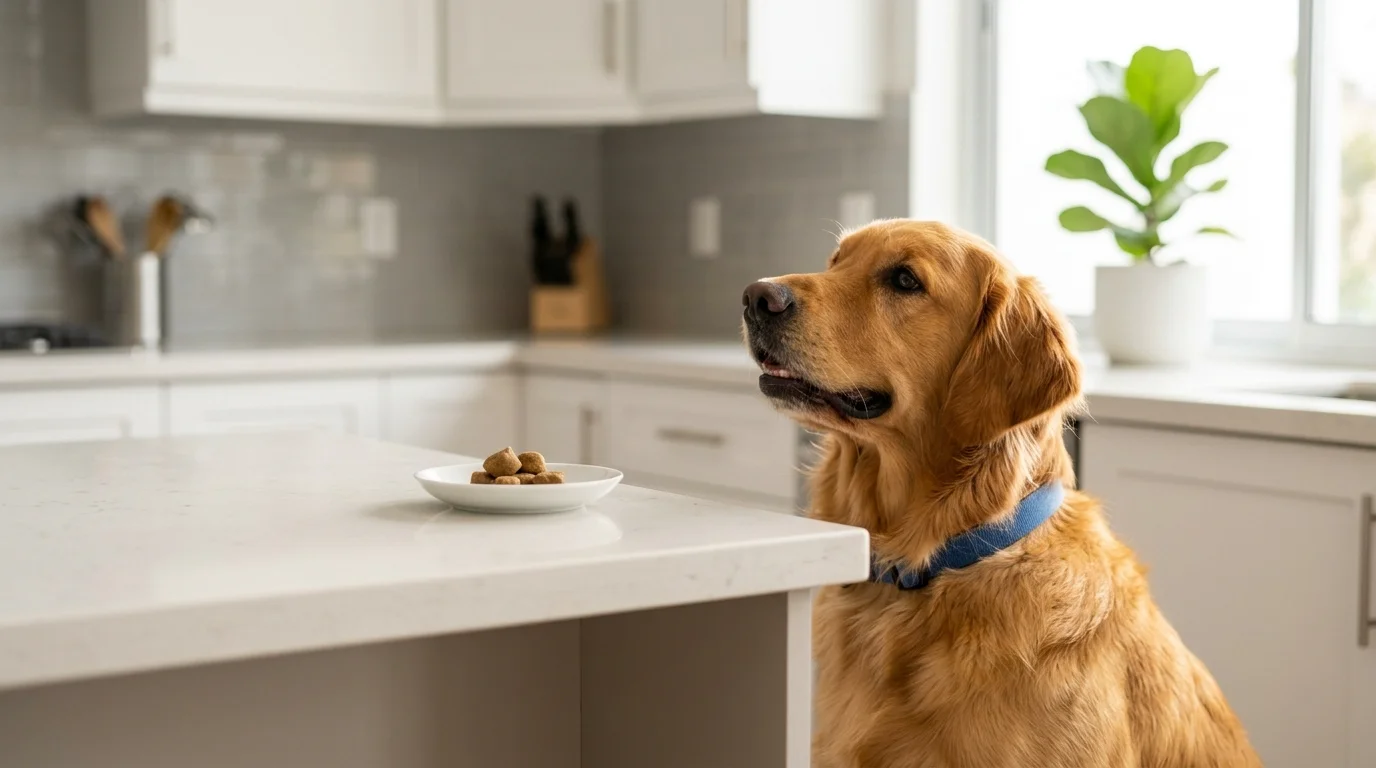
Table of Contents
Do Dogs Need a Multivitamin?
Dogs need vitamins A, D, E, K and the B group, plus minerals like calcium, zinc and iron; they make their own vitamin C. Foods meeting AAFCO nutrient profiles already cover these, so extra can push some nutrients too high.
First, Check Your Dog Food Label
Look for the nutritional adequacy statement, which reads like:
“[Product] is formulated to meet the nutritional levels established by the AAFCO Dog Food Nutrient Profiles for adult maintenance.”
- “Complete and balanced” for your dog’s life stage (growth, adult maintenance, or all life stages): the food is designed to supply all required vitamins and minerals when fed at the recommended amount.
- “For intermittent or supplemental feeding only”: the product is a treat or topper, not a full diet, and shouldn’t be the main food.
- No statement: balance isn’t certain. A better food may beat a supplement.
Signs a Dog Might Be Missing Nutrients
Deficiencies are uncommon on complete diets. Possible signs include:
- Dull, dry or flaky coat and slow hair regrowth
- Skin sores or crusting, especially around the face and paws
- Weight loss or poor muscle condition despite eating
- Abnormal bone growth or lameness in puppies
These signs have many other causes, so let your vet test before you supplement.
Does My Dog Need One? A Quick Decision Guide
| Your dog’s situation | Multivitamin needed? | Better approach |
|---|---|---|
| Healthy, eating a complete and balanced commercial food | Usually no | Keep feeding the right amount of a quality food |
| Eating a homemade or raw diet | Something is needed | A recipe and balancer designed by a board-certified veterinary nutritionist |
| Eating very little (illness, recovery, picky senior) | Sometimes | Find the cause with your vet; they may recommend a supplement short term |
| Diagnosed deficiency or medical condition | Possibly a specific nutrient | Targeted supplement prescribed by your vet |
| Senior dog, otherwise healthy | Usually no | A senior-formula complete food; ask about omega-3s or joint support |
| Puppy on puppy food | No | Extra calcium or vitamins can harm growing bones |
Essential Vitamins and Minerals for Dogs
| Nutrient | Main role | Risk of too much? |
|---|---|---|
| Vitamin A | Vision, skin, immune function | Yes: bone and liver problems with long-term excess |
| Vitamin D | Calcium and bone balance | Yes: excess can cause kidney damage and dangerous calcium levels |
| Vitamin E | Antioxidant, cell protection | Low risk at normal supplement levels |
| B vitamins | Energy metabolism, nerves | Low risk; extra is mostly excreted |
| Calcium and phosphorus | Bones and teeth; must be in the right ratio | Yes: imbalance harms growing puppies especially |
| Zinc | Skin, coat, immunity | Yes: toxic in large amounts |
| Iron | Red blood cells | Yes: iron poisoning from human supplements is a known risk |
When Vets Do Recommend Vitamins or Supplements
- Homemade diets: often short in calcium, zinc and vitamins D and E, which a generic multivitamin rarely fixes. Use a recipe from a board-certified nutritionist (see ACVIM).
- Medical conditions: some digestive, liver, kidney or skin conditions affect nutrient absorption or needs, and your vet may prescribe a specific vitamin such as B12.
- Poor appetite: dogs eating much less than their normal amount may fall short temporarily.
Risks and Side Effects of Dog Vitamins
- Vitamin D and A toxicity from doubling up on supplements, feeding a lot of liver, or a dog getting into a bottle.
- Stomach upset: vomiting or diarrhea, especially when starting a new chew.
- Overdose from tasty chews: flavored supplements are easy for dogs to eat by the jarful. Store them like medicine.
Never give your dog human vitamins
Human vitamins and gummies can contain xylitol and people-sized doses of iron, vitamin D and zinc. If your dog eats them or a bottle of chews, call your vet or the ASPCA Animal Poison Control Center with the label.
How to Choose a Dog Multivitamin: Label Checklist
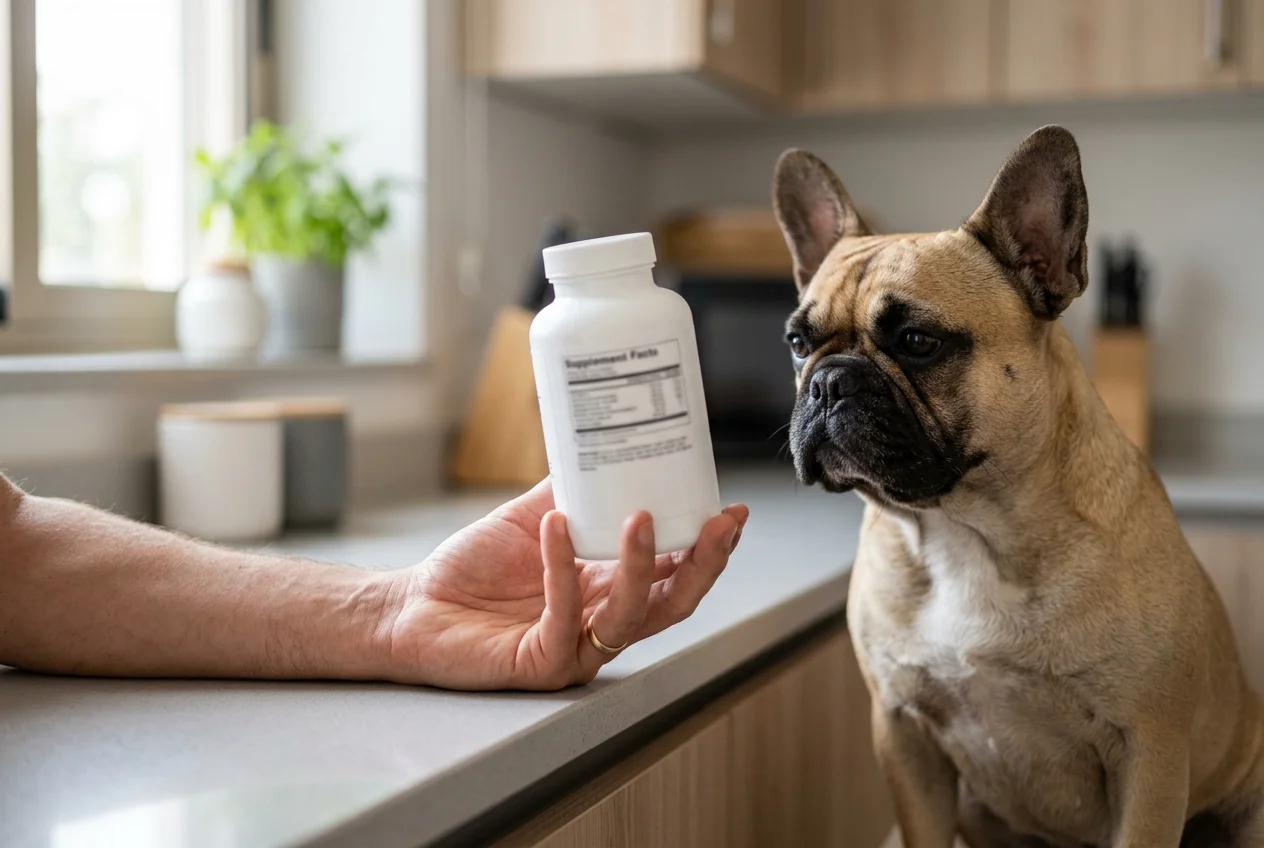
Quality varies, so check for:
- NASC Quality Seal from the National Animal Supplement Council, which audits manufacturing and labeling practices
- Made for dogs, with dosing by body weight
- Clear amounts of each vitamin and mineral per serving
- A lot number and expiry date, which signal quality control
- No xylitol or other artificial sweeteners
Chews are easy but add calories; powders suit small dogs; liquids suit pill-refusers. Pick the form your dog reliably takes.
Supplements Vets Recommend More Often Than Multivitamins
For many dogs, a targeted supplement makes more sense than a general multivitamin:
- Omega-3s (EPA and DHA): for skin, joints and some kidney or heart cases, at a vet-set dose.
- Joint supplements: glucosamine and chondroitin for some dogs with arthritis; see our guide to glucosamine for dogs.
- Probiotics: sometimes helpful during or after digestive upsets; see what to feed a dog with diarrhea.
Frequently Asked Questions
Should I give my dog a multivitamin every day?
Only if your vet recommends it. Healthy dogs on a complete and balanced food don’t need one daily, and long-term excess of some vitamins can be harmful.
What vitamins are good for senior dogs?
A complete senior diet usually suffices; vets more often suggest omega-3s or joint support.
What happens if my dog eats a bottle of multivitamins?
Call your vet or a pet poison hotline right away. Risks depend on the product, but iron, vitamin D and xylitol can be dangerous even if your dog seems fine at first.
Do dog multivitamins actually work?
They can correct a real shortfall, such as in an unbalanced homemade diet. For dogs already eating a complete food, there’s little evidence that adding a multivitamin improves health.
For more health topics, see our dog nutrition and health guide.
The Bottom Line
A dog multivitamin isn’t a must-have. Complete foods already cover most dogs, while homemade diets need expert balancing. If your vet recommends one, choose a dog-specific NASC-sealed product and store it out of reach. Browse Nutrition & Health and Dog Food. This is general information, not veterinary advice; see our Veterinary Disclaimer.
References & Sources
Written by CPD Nutrition Desk using the sources below. We are not affiliated with these organizations, and this guide is not a substitute for advice from your veterinarian.
- AAFCO — AAFCO nutrient profiles
- ACVIM — View source
- ASPCA — ASPCA Animal Poison Control Center
- National Animal Supplement Council — View source