


Human grade dog food is food in which every ingredient, and the finished product, is legally fit for people to eat and made under human-food safety rules. That’s stricter than most pet food and usually pricier. It doesn’t guarantee complete nutrition, though, so the label still matters more than the marketing.
Human grade describes how food is sourced and made, not how well it nourishes your dog. To work as a full diet, it still needs an AAFCO “complete and balanced” statement. Many dogs thrive on well-made conventional foods too.
Table of Contents
What Does “Human Grade” Actually Mean?
Under AAFCO’s human-grade guidelines, the claim is only truthful when every ingredient and the finished product are stored, handled, processed and transported under human-food good manufacturing practices (21 CFR 117). In plain terms:
- Every ingredient must be edible for people, not just the meat.
- The plant must follow human-food safety rules.
- The finished food must stay human-edible through packing, shipping and storage.
Most other dog food is “feed grade.” That doesn’t mean unsafe: feed-grade ingredients are regulated for animals and can include nutritious organ meats people rarely buy.

Label Decoder: What the Words on the Bag Mean
| Label Wording | What It Tells You |
|---|---|
| Human grade | Ingredients and product meet human-food standards; says nothing about balance |
| Made with human-grade ingredients | Ingredients started human-edible, but the food may be made in a pet-food plant |
| USDA-inspected meat | The meat came from an inspected facility, not the whole food |
| Natural | AAFCO-defined: no chemically synthetic ingredients except added vitamins and minerals |
| Premium, gourmet, holistic | No official definition |
| Complete and balanced | The most important line: meets nutrient profiles for a stated life stage |
Pros and Cons of Human Grade Dog Food
| Possible Benefits | Drawbacks |
|---|---|
| Stricter sourcing and handling | Usually much pricier than kibble |
| Often fresh and very tasty to dogs | Not automatically complete and balanced |
| Recognizable whole-food ingredients | Fresh versions need fridge or freezer space |
| Can tempt picky eaters | No strong evidence yet of longer, healthier lives |
Early research suggests gut microbiome changes on fresh human-grade diets, as PetMD notes, but long-term data are limited. Tasty food also makes weight gain easy if portions aren’t measured.
Is Human Grade Dog Food Better Than Kibble?
Not automatically. A healthy diet is complete, balanced, safely made and fed in the right amount. A well-formulated kibble can meet those goals; an unbalanced human-grade food can fall short. It may be worth the cost if:
- Your dog is a picky eater and your vet has ruled out medical causes.
- You value strict sourcing and can afford it comfortably.
- Your vet suggests a fresh, palatable diet, for example for a senior with a small appetite.
If your dog already thrives on a food you trust, a fresh topper is a cheaper middle ground.
How to Choose a Human Grade Dog Food
- Find the AAFCO statement for your dog’s life stage, including large-breed growth for big puppies.
- Ask who formulates it. WSAVA suggests looking for a qualified nutritionist, such as a board-certified veterinary nutritionist.
- Ask about safety testing and where the food is made.
- Check calories per pack or cup.
- Plan storage: fresh foods usually stay frozen and keep only a few days once thawed.
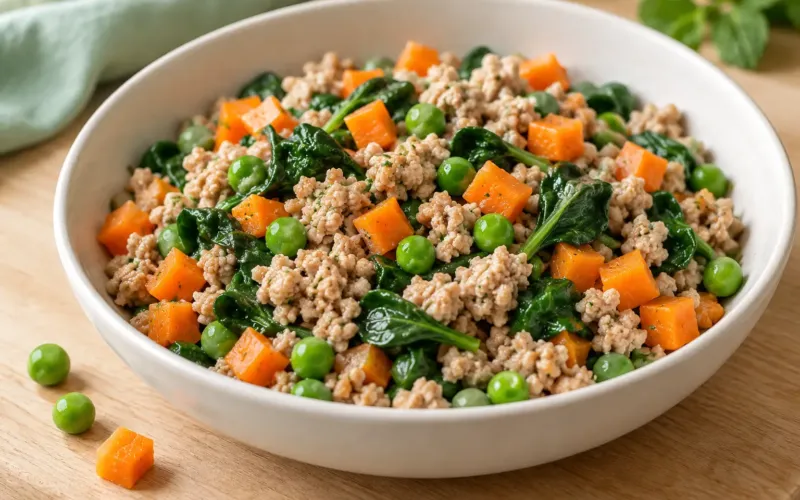
How Much to Feed
Fresh human-grade foods are mostly water, so portions look bigger than kibble. Start with the brand’s feeding guide, then adjust to keep your dog lean.
- Feed by calories, not volume. Our dog calorie calculator gives a daily target.
- As a topper, cut the kibble by the same calories.
- Weigh your dog every couple of weeks at first.
- Switch over 7 to 10 days, starting with about a quarter of the meal.
What About Cooking Human Food at Home?
Home cooking is human grade by nature, with the same catch: balance. Most home recipes miss key nutrients. Our homemade dog food recipes guide explains how to fix that, and our Dog Food section covers more options.
Special Cases
- Food allergies: human grade isn’t hypoallergenic; a chicken-allergic dog reacts to human-grade chicken too. See dog food allergies.
- Kidney, liver or pancreas disease: these dogs often need therapeutic diets, so ask your vet first.
- Sensitive stomachs: fresh food can be rich, so introduce it slowly.
Does human grade make a real nutritional difference? "Human grade" is about how ingredients are handled, not proof of better nutrition.
What matters more on the label? The AAFCO "complete and balanced" statement, and who formulated the food.
— Dr. Sarah Miller, DVM
Human Grade Dog Food: Quick Buying Guide
✓ Do
- Look for the AAFCO “complete and balanced” statement
- Ask who formulates the recipes
- Portion by calories, not by cups
- Follow the brand’s storage directions
✕ Don’t
- Assume human grade means balanced
- Confuse “human-grade ingredients” with human grade
- Pay extra for words like premium or gourmet
- Switch foods overnight
Every dog is different. Dogs with allergies or health conditions should get their vet’s okay before a diet change.
Frequently Asked Questions
Do vets recommend human grade dog food?
Many are comfortable with complete and balanced human-grade foods from companies with strong quality control, and say the same about good conventional foods.
Is human grade dog food worth the money?
It can be for picky eaters or owners who value sourcing. If your dog thrives on a complete food you trust, switching isn’t a must.
Is human grade the same as fresh dog food?
Not always. Some fresh foods aren’t human grade, and some human-grade foods are freeze-dried. Check both claims.
Can I mix human grade dog food with kibble?
Yes. Just reduce the kibble so daily calories stay the same.
Is human grade dog food good for puppies?
Only if the AAFCO statement covers growth or all life stages, including large-breed growth for big puppies. Puppies are sensitive to nutrient imbalances, so check with your vet.
Can people eat human grade dog food?
A taste wouldn’t be expected to harm a healthy person, since it’s made to human-food standards, but it’s formulated for dogs, not people.
For feeding amounts, labels and more meals, see our dog food guide.
The Bottom Line
Human grade dog food meets human-food standards from ingredient to finished product, but it isn’t a nutrition guarantee. Look for the AAFCO complete-and-balanced statement, ask who formulates it, portion by calories and switch gradually. Start with our Start Here page for more. This article is general information, not veterinary advice; see our Veterinary Disclaimer.
References & Sources
Written by CPD Nutrition Desk using the sources below. We are not affiliated with these organizations, and this guide is not a substitute for advice from your veterinarian.