


The best homemade dog food recipes combine a cooked lean protein, a digestible carb, dog-safe vegetables, a little oil and, for everyday feeding, a vitamin-mineral supplement chosen with your vet. Below are three easy batch recipes with calories per cup, a feeding chart by weight, and the balance mistakes most online recipes make.
Cooking for your dog can work, but balance is the hard part. Meat, rice and vegetables alone miss key nutrients, especially calcium. Use these recipes as occasional meals or toppers, and have your vet or a board-certified veterinary nutritionist complete them before they become your dog’s only food.
Table of Contents
Why Most Homemade Dog Food Recipes Fall Short
A UC Davis analysis of 200 home-cooked recipes from books, websites and vet textbooks found 95% short on at least one essential nutrient, per the UC Davis summary. Only the four written by board-certified nutritionists passed. Because the gaps repeat, rotating recipes doesn’t fix them:
| Nutrient | Why it matters | Why recipes miss it |
|---|---|---|
| Calcium | Bones, muscles, nerves | Meat is high in phosphorus but has almost no calcium |
| Choline | Liver and brain | Lean meat and grains supply little |
| Vitamin D | Calcium use | Few everyday foods contain much |
| Zinc | Skin, coat, immunity | Lean poultry is low; plants reduce absorption |
| Vitamin E | Protects cells | Cooking lowers it; recipes rarely add it |
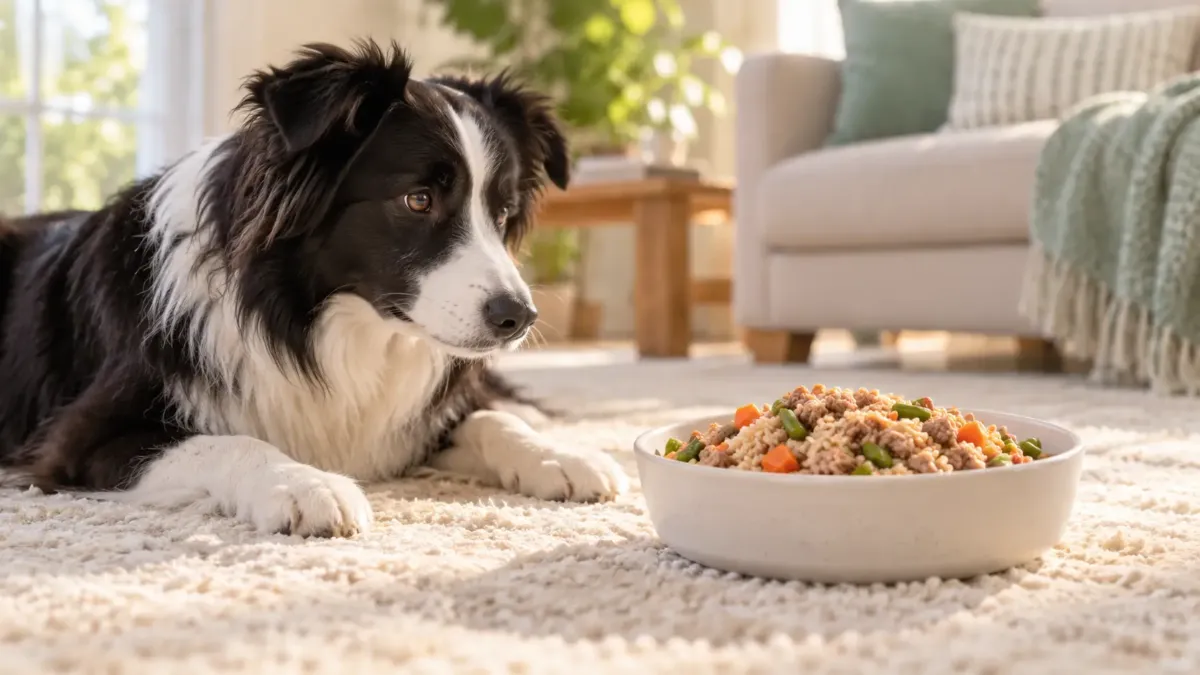
The Building Blocks of a Balanced Bowl
The American Kennel Club describes the same five parts nutritionists use:
- Protein: lean turkey, chicken, lean beef, eggs or white fish, fully cooked.
- Carbohydrate: rice, oats, potatoes, sweet potatoes or pasta, cooked soft.
- Vegetables: carrots, green beans, zucchini, peas or pumpkin, chopped small.
- Fat: a measured spoon of sunflower or safflower oil; ask your vet about fish oil.
- Vitamins and minerals: calcium plus a blend made for homemade dog diets. Human multivitamins aren’t a safe shortcut.

3 Easy Homemade Dog Food Recipes
Calories are our estimates from USDA FoodData Central.
| Recipe | Yield | Est. kcal per Cup | Good fit for |
|---|---|---|---|
| Turkey, Brown Rice & Garden Veggie | ~10 cups | ~220 | Everyday base |
| Beef & Sweet Potato with Liver | ~8.5 cups | ~235 | Active or picky dogs |
| Chicken, Oats & Pumpkin | ~9.5 cups | ~185 | Lower fat |
Recipe 1: Turkey, Brown Rice & Garden Veggie
Turkey, Brown Rice and Garden Veggie Dog Food
Ingredients
Method
- Cook the rice in unsalted water.
- Brown the turkey until no pink remains (165°F / 74°C).
- Add the vegetables and a splash of water; cover and simmer about 10 minutes.
- Stir in the rice and oil and cool completely.
- Add the calcium and vitamin-mineral supplement your vet or veterinary nutritionist recommends, at the dose they set.
Notes
Recipe 2: Beef & Sweet Potato with Liver
Beef and Sweet Potato Dog Food With Liver
Ingredients
Method
- Boil the sweet potato until tender and mash lightly.
- Brown the beef and drain the fat, then cook the liver through, about 5 minutes.
- Add the peas and broccoli with a little water and cook until tender.
- Fold in the sweet potato and cool completely.
- Add the calcium and vitamin-mineral supplement your vet or veterinary nutritionist recommends, at the dose they set.
Notes
Recipe 3: Chicken, Oats & Pumpkin

Chicken, Oats and Pumpkin Dog Food
Ingredients
Method
- Poach the chicken 15 to 20 minutes until cooked through to 165°F (74°C), then shred.
- Cook the oats and steam the green beans.
- Combine everything with the pumpkin, eggs and oil and cool completely.
- Add the calcium and vitamin-mineral supplement your vet or veterinary nutritionist recommends, at the dose they set.
Notes
For a short-term bland meal, see what to feed a dog with diarrhea.
How Much Homemade Dog Food to Feed
Homemade food holds more water than kibble, so it has fewer calories per cup: about 185 to 235 here versus 350 to 450 for many dry foods. Swapping cup for cup underfeeds.
| Dog’s Weight | Est. Daily Calories | Turkey & Rice | Beef & Sweet Potato | Chicken & Oats |
|---|---|---|---|---|
| 10 lb (4.5 kg) | ~350 kcal | ~1½ cups | ~1½ cups | ~1¾ cups |
| 25 lb (11 kg) | ~690 kcal | ~3 cups | ~3 cups | ~3¾ cups |
| 50 lb (23 kg) | ~1,160 kcal | ~5¼ cups | ~5 cups | ~6¼ cups |
| 75 lb (34 kg) | ~1,580 kcal | ~7¼ cups | ~6¾ cups | ~8½ cups |
| 100 lb (45 kg) | ~1,960 kcal | ~9 cups | ~8¼ cups | ~10½ cups |
Per day, split into two meals, for a neutered adult (70 × kg0.75 × 1.6). Active, senior and overweight dogs differ.
Weigh portions and adjust by about 10% as needed. Our dog calorie calculator helps set a target; count toppers and treats too.
Batch Cooking, Storage and Kitchen Safety
- Cool fast in shallow containers and refrigerate within two hours.
- Fridge: 3 to 4 days, per USDA leftovers guidance.
- Freezer: single-day portions, best within about three months; thaw in the fridge.
- Hygiene: wash hands and boards after raw meat, and toss bowl leftovers after about an hour.
Ingredients to Keep Out of the Pot
Skip fatty extras, which can trigger pancreatitis. For moisture, use water or our dog-safe bone broth, and keep our toxic foods fridge chart handy.
How to Switch Your Dog to Homemade Food
Over 7 to 10 days, move from 25% homemade (days 1 to 3) to half (days 4 to 6), 75% (days 7 to 9), then 100%, measuring by calories. Pause if stools loosen, and call your vet for ongoing diarrhea, vomiting or refusing food.
Is Homemade Dog Food Right for Your Dog?
- Puppies: tight calcium needs; the AKC advises against homemade puppy diets unless a veterinary nutritionist formulates them.
- Allergies: homemade food allows controlled trials with your vet; see dog food allergies.
- Kidney disease, pancreatitis, diabetes or liver disease: need a condition-specific recipe.
Find a board-certified veterinary nutritionist, many offering remote consults, on VetSpecialists.com or through your vet.
What is the most common supplement mistake in homemade diets? Leaving out the calcium and the vitamin-mineral supplement, or using a human multivitamin instead. Most online recipes fall short on several nutrients.
Do you recommend homemade food for puppies? Only with a recipe made for that puppy by a veterinary nutritionist, because growing bones need exact calcium.
— Dr. Sarah Miller, DVM
Homemade Dog Food: Quick Cooking Guide
✓ Do
- Cook all meat thoroughly
- Add the supplement your vet recommends
- Feed by calories, not by kibble cups
- Switch over gradually
✕ Don’t
- Season with onion, garlic or salt
- Rely on meat, rice and veggies alone
- Use human multivitamins
- Keep cooked batches in the fridge too long
Every dog is different. Puppies and dogs with health conditions need a recipe planned with their vet or a veterinary nutritionist.
Frequently Asked Questions
Is homemade dog food better than kibble?
Not automatically. Both can keep a dog healthy if balanced; an unbalanced homemade diet is worse than either.
Can I mix homemade dog food with kibble?
Yes. Reduce the kibble and keep the homemade part small so the kibble does most of the nutritional work.
Want the bigger picture? Our dog food guide covers choosing a food, portions and homemade meals.
The Bottom Line
Homemade dog food can be wholesome as long as balance is part of the recipe. Start with one of the three bowls above, feed by calories, cook thoroughly and skip seasonings. Then have your vet or a veterinary nutritionist add the right supplement before it becomes the full diet. Explore our Dog Food section or Start Here page. This article is general information, not veterinary advice; see our Veterinary Disclaimer.
References & Sources
Written by CPD Nutrition Desk using the sources below. We are not affiliated with these organizations, and this guide is not a substitute for advice from your veterinarian.
- ucdavis.edu — UC Davis summary
- American Kennel Club (AKC) — Homemade dog food
- USDA — USDA leftovers guidance
- ASPCA — ASPCA Animal Poison Control Center
- vetspecialists.com — Find a specialist