


The ingredients to avoid in dog food fall into two groups. The first is truly dangerous: toxic foods like xylitol, onion, garlic, grapes and chocolate, which turn up in homemade meals, people food and some treats. The second is ingredients worth questioning on a commercial label, like artificial colors or added sugar. Many popular worries, such as by-products or corn, are mostly myths.
Never feed xylitol, onion, garlic, chives, grapes, raisins, chocolate, macadamia nuts, alcohol or raw yeast dough. On commercial labels, artificial colors, added sugars and vague fat sources add nothing useful. By-products, corn and grains aren't automatically bad. A complete and balanced statement matters more than any single ingredient.
Table of Contents
Toxic Ingredients: Never Feed
These are the ingredients that cause real emergencies. The ASPCA lists them among foods to keep away from pets:
| Ingredient | Where it hides | Main risk |
|---|---|---|
| Xylitol (birch sugar) | Sugar-free peanut butter, gum, baked goods, some yogurts | Low blood sugar, liver failure |
| Onion, garlic, chives, leeks | Broth, seasoning, sauces, baby food | Damage to red blood cells |
| Grapes, raisins, currants | Trail mix, cereal, baked goods | Kidney failure |
| Chocolate, cocoa | Desserts, baking mixes | Vomiting, heart rhythm problems, seizures |
| Macadamia nuts | Cookies, nut mixes | Weakness, tremors, fever |
| Alcohol, raw yeast dough | Drinks, rising bread dough | Alcohol poisoning, bloat |
| Nutmeg (larger amounts) | Spice mixes, pumpkin pie | Tremors, disorientation |
The FDA specifically warns about xylitol. See our toxic foods list for more.
Label Ingredients Worth Questioning
Commercial dog foods are regulated, and approved ingredients are considered safe at the levels used. Still, some add little or nothing for your dog:
- Artificial colors (Red 40, Yellow 5, Blue 2): dogs don't care what color their food is. They're there for owners.
- Added sugars (corn syrup, sucrose, cane molasses) in treats: unnecessary calories.
- High salt near the top of a treat's list: fine in small amounts, not as a main ingredient.
- Vague sources like “animal fat” or “meat meal”: not dangerous by default, but named sources such as “chicken fat” are clearer, which helps dogs with allergies.
- Synthetic preservatives (BHA, BHT, ethoxyquin): approved for use, though some owners prefer foods preserved with mixed tocopherols (vitamin E). Long-term human health debates exist for BHA; the evidence in dogs at feed levels is limited.
- Propylene glycol: used in some soft treats; allowed in dog food but banned in cat food. Not a concern in normal amounts for dogs.
Common Myths About Dog Food Ingredients
| Claim | The reality |
|---|---|
| “By-products are fillers” | Organ meats are by-products and are rich in nutrients |
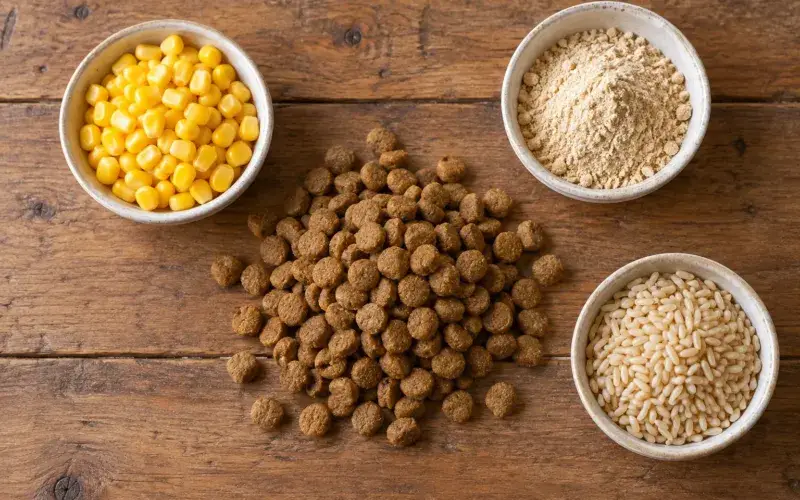
| “Corn is a cheap filler” | Cooked corn supplies energy, protein and fatty acids; allergies to it are uncommon |
| “Grain-free is healthier” | Not for most dogs; see is grain free bad for dogs |
| “Meat meal is low quality” | Meal is meat with water removed; it's a concentrated protein |
| “The first ingredient tells you everything” | Ingredients are listed by weight including water; balance matters more |
What to Look For Instead
- A nutritional adequacy statement saying the food is complete and balanced for your dog's life stage.
- A clear calorie statement so you can portion correctly.
- A company that employs a qualified nutritionist and runs quality-control testing, a question the WSAVA suggests owners ask.
- Named protein and fat sources if your dog has food allergies.
Our dog food nutrition labels guide shows how to read each section.
If your dog ate something toxic, such as xylitol, grapes, onion, chocolate or macadamia nuts, call your vet or a pet poison control line right away, even if your dog seems fine. Signs can be delayed. Keep the package so you can share the ingredients and amount. See our veterinary disclaimer.
Ingredients to Avoid in Homemade Dog Food
If you cook for your dog, the biggest risks are seasonings and missing nutrients. Skip onion, garlic, salt, butter, spicy sauces and cooked bones, and use a balanced recipe from a veterinary nutritionist. Our how to make homemade dog food guide covers the basics.
Which ingredient do you worry about most? Xylitol. It hides in sugar-free products like some peanut butters, and small amounts can be serious.
Should owners avoid by-products and corn? Not by default. A complete, balanced diet from a company with good quality control matters far more than those labels.
— Dr. Sarah Miller, DVM
Dog Food Ingredients: Quick Guide
✕ Risky
- Xylitol or birch sugar
- Onion, garlic and chives
- Grapes, raisins and chocolate
- Macadamia nuts and raw dough
✓ Better swaps
- Complete and balanced foods
- Named protein and fat sources
- Plain, unseasoned toppers
- Treats with short ingredient lists
Call your vet right away if your dog ate a toxic ingredient.
Frequently Asked Questions
What is the most dangerous ingredient for dogs?
Xylitol is one of the most dangerous because small amounts can cause a sudden drop in blood sugar.
Are by-products bad in dog food?
Not necessarily. Many are nutritious organ meats. The overall diet quality matters more.
Should I avoid corn in dog food?
Only if your dog has a diagnosed corn allergy, which is uncommon.
Are artificial preservatives harmful to dogs?
Approved preservatives are allowed at set levels. If you prefer to avoid them, look for mixed tocopherols.
Is garlic in dog food safe?
It's best avoided. Garlic is toxic to dogs in larger amounts, and there's no proven benefit at small doses.
Explore more in the complete dog food guide.
The Bottom Line
The ingredients to avoid in dog food that truly matter are the toxic ones: xylitol, onion, garlic, grapes, chocolate, macadamias, alcohol and raw dough. On commercial labels, question artificial colors and added sugars, but don't panic over by-products or corn. A complete and balanced food from a careful company is what counts. More in our Dog Food section.
References & Sources
Written by CPD Nutrition Desk using the sources below. We are not affiliated with these organizations, and this guide is not a substitute for advice from your veterinarian.
- ASPCA — People foods avoid feeding your pets
- U.S. Food and Drug Administration — Paws xylitol its dangerous dogs
- WSAVA — Global nutrition guidelines