
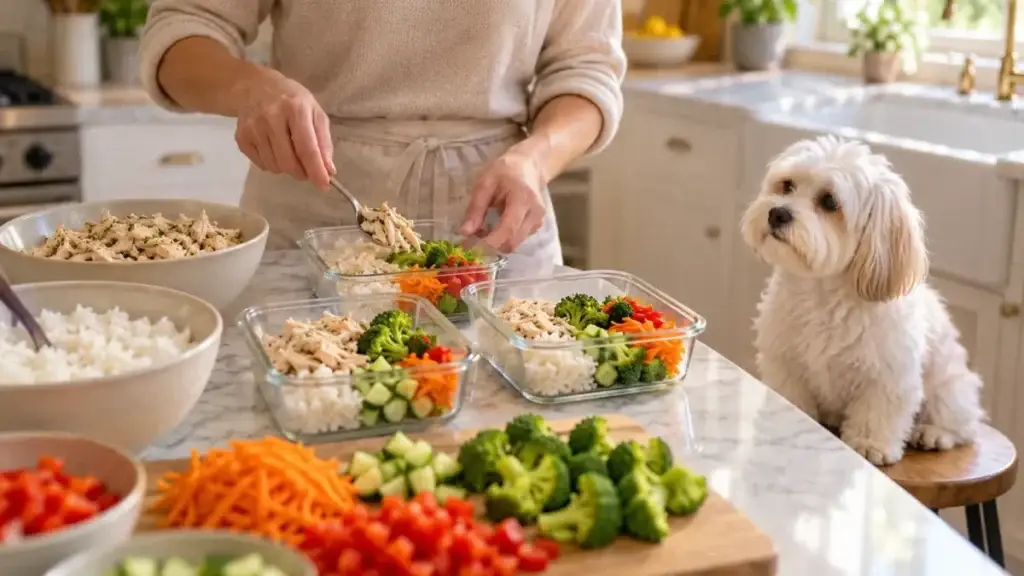

To make homemade dog food, you cook a lean protein, a digestible carbohydrate and a few dog-safe vegetables, then add the right supplement so the meal is complete. The cooking is easy; getting the nutrition right is the part most guides skip. This beginner guide covers the building blocks, a starter batch, portions, storage and how to make it balanced.
Homemade food can be a great option, but most home recipes found online are missing nutrients. Start with lean protein, a carb and vegetables, cook everything plain, and work with a board-certified veterinary nutritionist before feeding it every day. Switch over 7 to 10 days.
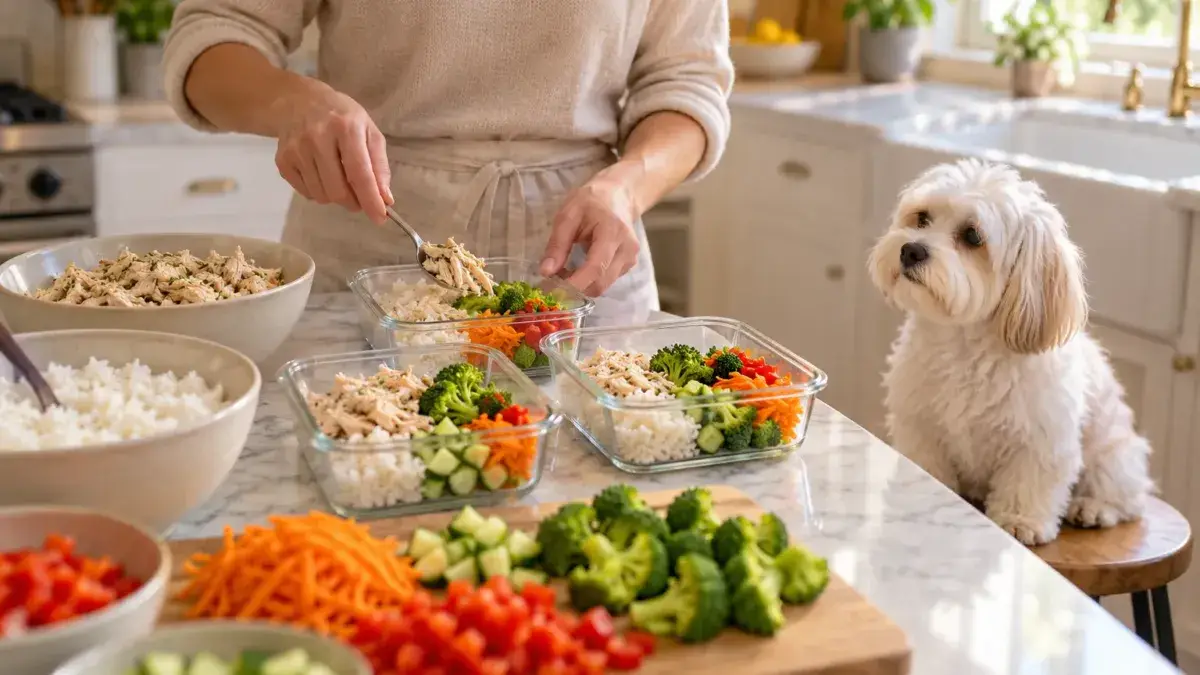
Table of Contents
The Building Blocks of Homemade Dog Food
| Building block | Good choices | Why it matters |
|---|---|---|
| Protein | Chicken, turkey, lean beef, white fish, eggs | Amino acids for muscles and organs |
| Carbohydrate | White or brown rice, oats, sweet potato, quinoa | Energy and fiber |
| Vegetables | Carrots, green beans, zucchini, pumpkin | Fiber, vitamins, low calories |
| Fat | Fat from meat, measured fish oil | Essential fatty acids, energy |
| Supplement | A vitamin-mineral mix chosen by a vet nutritionist | Calcium, zinc, vitamins D and E |
The supplement is what turns a meal into a diet. Without it, homemade food often runs short on calcium and several vitamins and minerals.
Step by Step: Your First Batch
- Step 1: Talk to your vet. Ask about your dog's calorie needs, ideal weight and any health conditions.
- Step 2: Get a balanced recipe. A board-certified veterinary nutritionist, or a recipe service run by one, can give you exact amounts and a supplement. The American College of Veterinary Nutrition lists specialists.
- Step 3: Weigh ingredients. Use a kitchen scale, not cups, for accuracy.
- Step 4: Cook plain. Boil, bake or steam with no oil, salt or seasoning.
- Step 5: Mix and add the supplement. Stir it in after cooking so heat doesn't damage vitamins.
- Step 6: Portion and store. Divide by meal, refrigerate 3 to 4 days' worth and freeze the rest.
Starter Batch: Chicken, Rice and Vegetables
Starter Batch: Chicken, Rice and Vegetable Dog Food
Ingredients
Method
- Cook the rice in the water until soft.
- Meanwhile, simmer the chicken in a pot of plain water 15 to 20 minutes until it reaches 165°F (74°C).
- Steam the carrots and green beans until tender, about 8 minutes.
- Chop or shred the chicken into small pieces.
- Mix the chicken, rice and vegetables. Once cooled, stir in the supplement your vet nutritionist recommends.
- Portion into containers by meal.
Notes

How Much Homemade Food to Feed
| Dog's weight | Est. daily calories | Starter batch (~200 kcal/cup) |
|---|---|---|
| 10 lb (4.5 kg) | ~350 kcal | ~1¾ cups |
| 25 lb (11 kg) | ~690 kcal | ~3½ cups |
| 50 lb (23 kg) | ~1,160 kcal | ~5¾ cups |
| 75 lb (34 kg) | ~1,580 kcal | ~8 cups |
Our estimates for typical neutered adults (70 × kg0.75 × 1.6), using USDA FoodData Central values. Homemade food is bulkier than kibble, so the cups look large. Check your dog's weight every two weeks.
Ingredients to Keep Out
Never add these to homemade dog food: onion, garlic, chives or leeks; grapes and raisins; chocolate; xylitol; macadamia nuts; cooked bones; salt and seasoning mixes; alcohol; raw yeast dough. The ASPCA keeps a full list. See our ingredients to avoid in dog food guide.
Pros and Cons of Homemade Dog Food
| Pros | Cons |
|---|---|
| You control every ingredient | Easy to get nutrients wrong |
| Useful for picky eaters and allergy trials | Takes time every week |
| Fresh, minimally processed | Short fridge life |
| Easy to adjust for weight | Supplement and consult costs |
If time is short, a fresh food for dogs service or a mix of kibble with a homemade topper can be a good middle ground.
Switching to Homemade Food
Mix it in gradually over 7 to 10 days, starting with about a quarter of the meal. Our how to transition dog food guide has a day-by-day plan.
What's the most common homemade diet mistake? Leaving out calcium and other minerals. Meat and rice alone aren't enough for everyday feeding.
Do I really need a veterinary nutritionist? For long-term homemade feeding, yes. They can design a recipe for your dog's age, weight and health in one consult.
— Dr. Sarah Miller, DVM
Homemade Dog Food: Quick Guide
✓ Do
- Start with a balanced recipe
- Weigh ingredients on a scale
- Cook everything plain
- Add the recommended supplement
✕ Don't
- Add onion, garlic or salt
- Include cooked bones
- Guess at calcium amounts
- Switch foods overnight
Puppies and dogs with health conditions need a diet designed by a vet nutritionist.
Frequently Asked Questions
Is homemade dog food better than kibble?
Not automatically. A balanced homemade diet and a good complete kibble can both keep a dog healthy. Balance is what matters.
Can I make dog food without supplements?
Not for everyday feeding. It's fine as an occasional meal or topper.
What's the easiest homemade dog food?
Chicken, rice and vegetables. See our chicken and rice for dogs guide.
Is homemade dog food cheaper?
Sometimes. Lean meats, supplements and time can make it cost as much as premium food.
Can puppies eat homemade dog food?
Only with a recipe designed for growth by a vet nutritionist. Calcium errors can harm growing bones.
For feeding amounts, labels and more meals, see our dog food guide.
The Bottom Line
Making homemade dog food is mostly simple cooking: lean protein, a carb and vegetables, all plain. The key step is balance, so get a recipe and supplement from a veterinary nutritionist, weigh ingredients and switch slowly. More recipes in our homemade dog food recipes and the Dog Food section.
References & Sources
Written by CPD Nutrition Desk using the sources below. We are not affiliated with these organizations, and this guide is not a substitute for advice from your veterinarian.
- acvn.org — American College of Veterinary Nutrition
- USDA — USDA FoodData Central
- ASPCA — People foods avoid feeding your pets