

My dog has diarrhea but is acting fine is one of the most common worries owners have, and the good news is that a happy, eating, drinking adult dog with soft stool usually has a mild gut upset that clears in 1 to 3 days. Give water, a bland diet and close watching; call your vet if it lasts longer than 48 hours, contains blood, or your dog's behavior changes.
"Acting fine" is a good sign, not a guarantee. Mild diarrhea in a bright adult dog is usually diet or stress related. Puppies, seniors, dogs with health problems, blood, black stool, vomiting or diarrhea past 2 days all need a vet, even if your dog seems happy.
Table of Contents
Why Does My Dog Have Diarrhea but Act Normal?
When only the gut is irritated, the rest of the body often feels fine. These are the most common reasons, with clues to look for:
| Likely cause | Clue |
|---|---|
| Ate something new or rich | Table scraps, a new chew, trash, grass or a found snack in the last 24 hours |
| Sudden food change | New bag or brand without a slow switch |
| Too many treats | A party, guests, or a new treat type |
| Stress or excitement | Boarding, travel, visitors, a move, fireworks |
| Mild intestinal parasite | Comes and goes; mucus; more common in young dogs |
| Food intolerance | Repeats after the same food or treat |
| Medication side effect | Started an antibiotic or new medicine |
If you just changed food, our guide on how to transition dog food shows the 7-10 day schedule that prevents it next time.
How to Tell How Bad It Is
Vets often use a 1-to-7 fecal score chart (1 = very hard, 7 = watery). A 5 (soft, loses shape when picked up) in a bright dog is usually a watch-at-home case; 6-7 or any change in behavior is worth a call.
Check these four things
- Energy: playing, walking and greeting you as usual.
- Appetite: eating meals and interested in treats.
- Water: drinking and keeping it down.
- Gums: pink and moist, not pale, white or sticky.
If all four are normal, home care is reasonable for a day or two. If any one changes, call your vet.
My Dog Has Diarrhea but Is Acting Fine: A 3-Day Home Plan
This plan fits a healthy adult dog with mild diarrhea and no vomiting.
| Day | Food | Watch for |
|---|---|---|
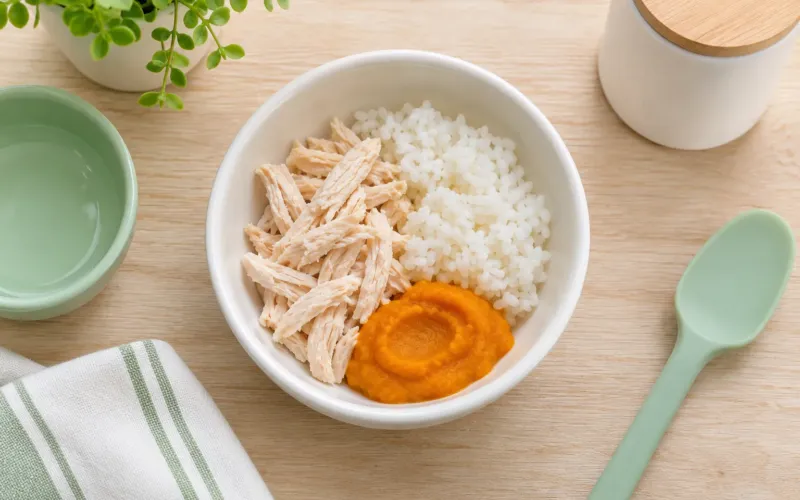
| Day 1 | Small bland meals 3-4 times: boiled chicken and white rice, or add 1-2 tbsp plain pumpkin | Number of stools, blood, energy |
| Day 2 | Same bland diet, slightly larger portions if stools firm up | Stool getting firmer |
| Day 3 | Mix bland food 50/50 with regular food | Formed stool returns |
| Days 4-5 | Back to normal food | Any relapse |
Plain canned pumpkin, not pie filling. A rough pumpkin amount is 1 tsp for small dogs, 1 tbsp for medium dogs and 2 tbsp for large dogs per meal.
For portions and recipes, see what to feed a dog with diarrhea and our chicken and rice for dogs guide.
Do's and don'ts
- Do keep fresh water out at all times and offer it often.
- Do pause new treats, chews and table food until stools are normal.
- Do pick up and look at each stool so you can describe it to your vet.
- Don't give human anti-diarrhea medicines unless your vet names the product and dose.
- Don't switch foods again during the upset.
When to Call the Vet Even if Your Dog Seems Fine
Call your vet if you see blood (red streaks or black, tarry stool), vomiting, diarrhea for more than 48 hours, many watery stools in a day, a swollen belly, or if your dog may have eaten a toxin or object. Puppies, seniors and dogs with diabetes, kidney, liver or heart disease should be seen sooner.
- Puppies: they dehydrate quickly, and unvaccinated puppies are at risk of parvovirus.
- Recurring diarrhea: it keeps coming back, even if mild, which can point to parasites, food intolerance or bowel disease.
- Weight loss or a dull coat along with soft stool.
- Mucus or jelly in the stool for more than a day or two.
The American Kennel Club and the PDSA list similar warning signs.
What the Vet May Check
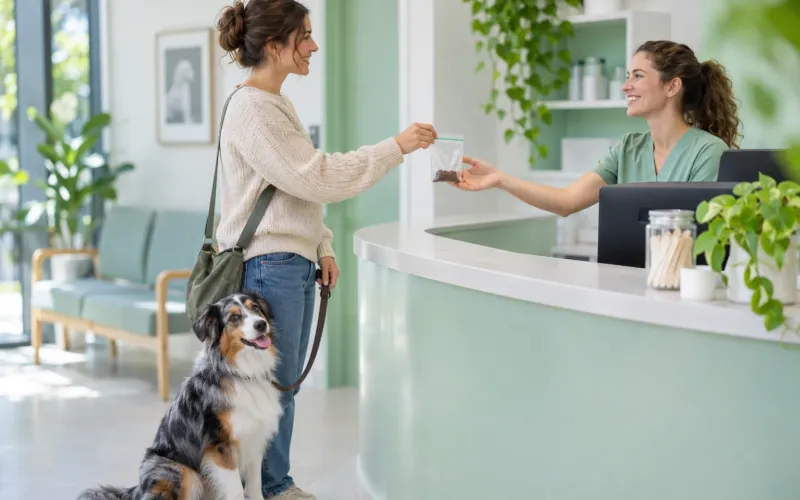
Bring a fresh stool sample in a clean bag. Your vet may run a fecal test for parasites and giardia, check hydration, and sometimes blood work. Treatment is often a prescription gut diet, a dewormer if parasites are found, or a probiotic. Read more in probiotics for dogs.
How to Prevent Diarrhea
- Switch foods slowly over a week or more.
- Keep treats under 10% of daily calories.
- Secure trash and compost; supervise in the yard.
- Stay current on deworming and vaccines.
- If one food or treat keeps causing soft stool, talk to your vet about food allergies.
What one sign means a dog with mild diarrhea should be seen the same day? Blood, especially dark or tarry stool, or any drop in energy or appetite. A dog that stops acting fine is no longer a mild case.
Is plain canned pumpkin or a probiotic more useful in mild cases? Both can help. A teaspoon to a tablespoon of plain pumpkin adds soluble fiber quickly; a veterinary probiotic can shorten recovery. Neither replaces a vet visit if diarrhea lasts more than two days.
— Dr. Sarah Miller, DVM
Mild Diarrhea, Happy Dog
✓ What helps
- Fresh water always available
- Small bland meals for 2-3 days
- Pause new treats and chews
- Check energy, appetite and gums
✕ Don't
- Human anti-diarrhea medicine
- Another food switch now
- Ignoring blood or black stool
- Waiting past 48 hours
Puppies and seniors: call your vet early.
Frequently Asked Questions
How long can a dog have diarrhea before going to the vet?
If your adult dog is acting normal, it's reasonable to watch for 24-48 hours. Go sooner for blood, vomiting, weakness, or if your dog is a puppy or senior.
Should I starve my dog with diarrhea?
Long fasting is no longer routinely advised. Small, frequent bland meals are usually better. Never fast puppies, toy breeds or diabetic dogs.
My dog has diarrhea but is acting fine. Why are there no other symptoms?
Most often it's something they ate, a food change or stress. The gut is irritated, but the rest of the body is fine.
Can I give my dog rice for diarrhea?
Yes, plain white rice with boiled chicken is a classic bland meal. Feed small amounts several times a day.
Is diarrhea with mucus but acting normal serious?
A little mucus can happen with colon irritation. If it lasts more than 1-2 days or comes with blood, see your vet.
The Bottom Line
If your dog has diarrhea but is acting fine, start with water, a bland diet and close watching for 24-48 hours. Check energy, appetite, water and gums daily. Blood, vomiting, lasting diarrhea, puppies and seniors mean a vet visit. If vomiting starts too, read dog loose stool and vomiting.
References & Sources
Written by CPD Nutrition Desk using the sources below. We are not affiliated with these organizations, and this guide is not a substitute for advice from your veterinarian.
- American Kennel Club (AKC) — Dog diarrhea
- pdsa.org.uk — Gastroenteritis stomach upset in dogs