


Puppy milk replacer is a formula made to copy a mother dog's milk for puppies that are orphaned, rejected or not getting enough from their mom. It has more protein and fat and less lactose than cow's milk, which is why cow's or goat's milk alone can cause diarrhea and poor growth. Feed it warm, with the puppy on its belly, and weigh puppies every day.
Use a commercial puppy milk replacer, not cow's milk. Feed at about body temperature, puppy lying on its tummy, never on its back. Newborns need feeding every 2 to 3 hours; weaning starts around 3 to 4 weeks. Weigh daily and call your vet if a puppy stops gaining, cries constantly or gets milk from the nose.

Table of Contents
When Puppies Need Milk Replacer
- Mom has died, is ill, or has no milk.
- Mom rejects a puppy or the litter.
- A large litter where weak puppies can't compete.
- A puppy is losing weight or not gaining in the first days.
Newborns need colostrum, the first milk, in their first 24 hours for immunity. If a puppy missed it, tell your vet right away. VCA's guide to caring for orphaned puppies covers warmth, hygiene and more.
Why Not Cow's or Goat's Milk?
| Milk | Protein and fat | Lactose | Result for puppies |
|---|---|---|---|
| Mother dog's milk | High | Lower | Ideal |
| Commercial puppy milk replacer | Matched to dog's milk | Lower | Best substitute |
| Cow's milk | Lower | Higher | Diarrhea, poor growth |
| Goat's milk | Lower | Similar to cow's | Not a complete substitute |
Read can dogs drink milk for why adult dogs often don't tolerate milk well either.
Powder or liquid?
Both work. Powder lasts longer and lets you mix small batches; ready-to-feed liquid is convenient for a day or two. Follow the label for mixing exactly, because formula that's too concentrated can cause diarrhea or dehydration.
What about homemade puppy formula?
Emergency recipes exist online, but they are hard to balance and are only a stopgap for a few hours until you get a commercial product. Ask your vet before using one.
How Much Puppy Milk Replacer to Feed
Always start with the product label. As a general guide, many vets use these daily amounts, split into equal feeds:
| Age | Daily amount | Feeds per day | Example: 300 g puppy |
|---|---|---|---|
| Week 1 | about 13 ml per 100 g body weight | 8 to 12 (every 2 to 3 hours) | about 39 ml a day, about 4 to 5 ml per feed |
| Week 2 | about 17 ml per 100 g | 6 to 8 | about 51 ml a day (if still 300 g) |
| Week 3 | about 20 ml per 100 g | 4 to 6 | about 60 ml a day |
| Week 4 | about 22 ml per 100 g | 4, plus starting gruel | about 66 ml a day |
General guide based on commonly used veterinary feeding rules; recalculate as the puppy grows. The VCA guide to feeding orphaned puppies explains more.
A puppy's stomach holds very little, so it's safer to feed small amounts more often than to push large feeds.
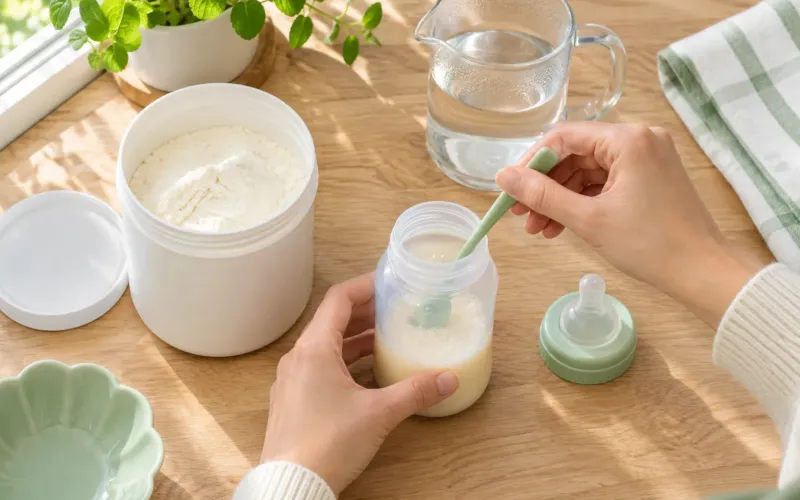
How to Bottle-Feed a Puppy
- Wash hands and use clean, sterilized bottles and nipples.
- Warm the formula to about body temperature; it should feel warm, not hot, on your inner wrist.
- Place the puppy on its belly on a towel, head level, the way it would nurse.
- Let the puppy suck; never squeeze formula into its mouth.
- Stop when the belly is rounded but not tight, then burp gently.
- After each feed, rub the genitals and bottom with a warm damp cloth to stimulate peeing and pooping, until about 3 weeks of age.
Never feed a puppy on its back. Milk can go into the lungs and cause aspiration pneumonia. If you see milk from the nose, coughing, or noisy breathing, stop and call your vet.
Track Weight Every Day
Weigh puppies on a kitchen scale at the same time every day. Healthy newborns usually gain steadily each day and often double their birth weight in about 1 to 2 weeks. A puppy that loses weight, stops gaining, cries constantly, feels cold or has a bloated belly needs a vet the same day.
Weaning From Milk Replacer
- At 3 to 4 weeks, offer a shallow dish of puppy food softened into a gruel with milk replacer.
- Thicken the gruel gradually over 2 to 3 weeks.
- Most puppies are fully on puppy food by 7 to 8 weeks. The AKC guide to raising newborn puppies has more on the early weeks.
See how much to feed a puppy for the next stage.

Storage and Hygiene
- Mix only what you need, or refrigerate mixed formula as the label allows, usually up to 24 hours.
- Throw away formula left in the bottle after a feed.
- Store opened powder sealed in a cool, dry place.
- Keep puppies warm; chilled puppies can't digest milk properly.
What is the biggest mistake people make when bottle-feeding puppies? Feeding a puppy on its back, or feeding too fast. That can let milk into the lungs; feed belly-down, with the head level.
How much weight gain per day do you like to see in newborns? About 5 to 10% of birth weight a day in the first weeks, with birth weight doubled by about 10 days. Weigh them daily on a kitchen scale.
— Dr. Sarah Miller, DVM
Bottle-feeding puppies
✓ Do
- Feed on the belly
- Warm to body temperature
- Weigh daily
- Stimulate after feeds
✕ Don't
- Cow's milk
- Feeding on the back
- Squeezing the bottle
- Formula mixed too strong
Call your vet if a puppy stops gaining.
Frequently Asked Questions
Can I give a puppy cow's milk instead of milk replacer?
No. Cow's milk has the wrong balance of nutrients and more lactose, which often causes diarrhea. Use a commercial puppy milk replacer.
What temperature should puppy milk replacer be?
About body temperature. Test a drop on your inner wrist; it should feel warm, not hot.
How often do newborn puppies need milk replacer?
Every 2 to 3 hours in the first week, including at night, then less often as they grow.
Can older puppies or adult dogs drink milk replacer?
It can be used as a weight-gain aid or appetizer for some dogs under vet guidance, but it isn't needed for healthy weaned dogs.
Why does my puppy have diarrhea on milk replacer?
Formula mixed too strong, overfeeding, cold formula or infection are common causes. Check the mixing ratio and call your vet.
The Bottom Line
Puppy milk replacer is the safe substitute when a mother dog can't feed her litter. Use a commercial formula, mix it exactly, feed warm with the puppy on its belly, weigh daily, and stay in touch with your vet through the first weeks.
References & Sources
Written by CPD Nutrition Desk using the sources below. We are not affiliated with these organizations, and this guide is not a substitute for advice from your veterinarian.
- VCA Animal Hospitals — VCA's guide to caring for orphaned puppies
- VCA Animal Hospitals — VCA guide to feeding orphaned puppies
- American Kennel Club (AKC) — AKC guide to raising newborn puppies