


A new puppy learns something every few minutes, and every “good sit” deserves a reward. Store-bought training treats add up fast, though, both in cost and calories. These puppy treat recipes are soft, tiny and made from a handful of simple ingredients, so they suit small mouths and sensitive stomachs. You’ll find what makes a treat puppy-friendly, three easy recipes (baked, frozen and no-cook), how many to give, storage tips and the ingredients puppies must never have.
Recipes: soft peanut butter pumpkin bites, frozen teething cubes, plain chicken training bits • Prep: 5–15 minutes each • Best for: puppies already eating solid puppy food • Storage: fridge 3–5 days, freezer up to 3 months
Each baked training bite is pea-size and has roughly 7 calories, perfect for repetition-heavy training sessions.
Table of Contents
What Makes a Good Puppy Treat?
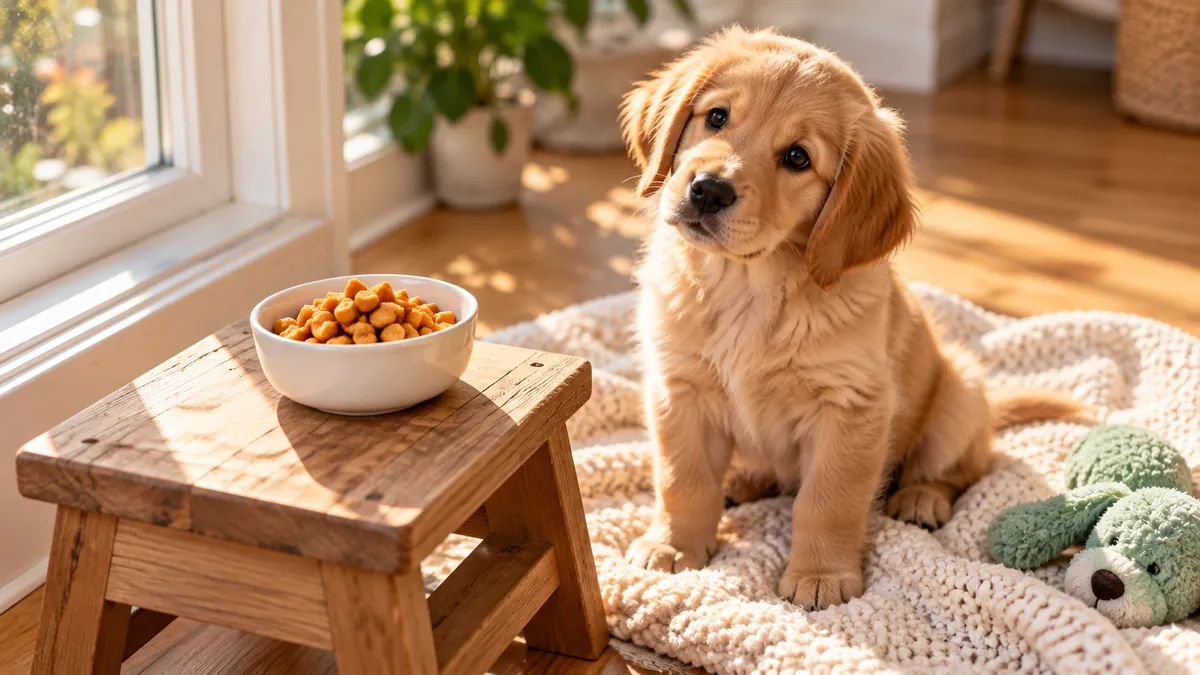
Puppies aren’t just small adult dogs. Their stomachs are still adjusting and their main food has to do the heavy lifting for growth. A good puppy treat is:
- Tiny: pea-size pieces are plenty for a reward and lower the choking risk.
- Soft: easy on baby teeth and quick to swallow, so training keeps flowing.
- Simple: few ingredients, introduced one at a time, so you can spot anything that disagrees with your puppy.
- A small extra: complete puppy food comes first, and treats should never crowd it out.
Making puppy treats homemade lets you control all four.
3 Easy Puppy Treat Recipes
Each of these homemade puppy treats recipes uses ingredients you can find in a regular grocery store.
1. Soft Peanut Butter Pumpkin Training Bites
This is our go-to for homemade puppy treats with peanut butter, since the pumpkin keeps them soft. You’ll need ½ cup plain canned pumpkin, 2 tablespoons xylitol-free peanut butter, 1 egg and 1 cup oat flour.
Soft Peanut Butter Pumpkin Puppy Training Bites
Ingredients
Method
- Heat the oven to 350°F (175°C) and line a baking sheet with parchment.
- Whisk the pumpkin, peanut butter and egg, then stir in the oat flour to make a soft dough.
- Press the dough into a 1/4-inch-thick rectangle on the parchment.
- Bake 15 to 18 minutes, until set but still soft. While warm, cut into pea-size squares with a pizza cutter.
Notes
Check the peanut butter label every time: xylitol (also called birch sugar) is dangerous for dogs. Our peanut butter dog treats guide explains what to look for, and our pumpkin dog treats explain which can to buy.

2. Frozen Teething Cubes
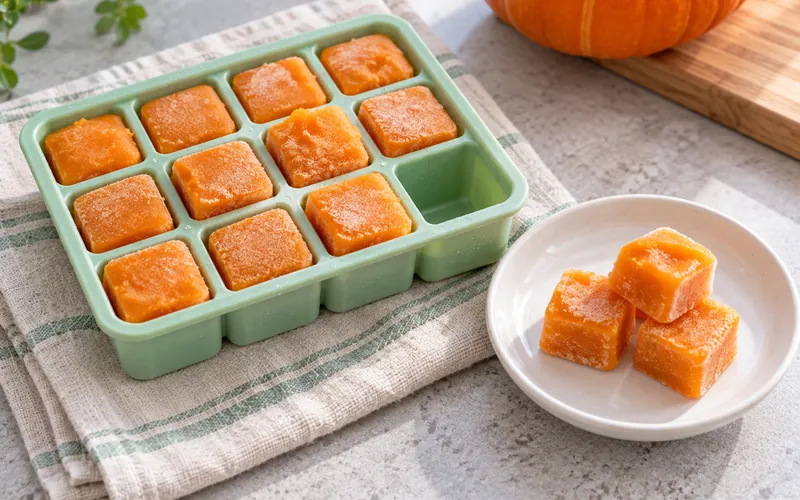
Mix ½ cup plain canned pumpkin with ½ cup water, spoon into a mini silicone mold, and freeze. The cold can feel soothing on sore gums. Let each cube soften for a few minutes before serving, and stay nearby while your puppy works on it. For more ideas, see our frozen dog treats roundup.
3. No-Cook Chicken Training Bits
Boil a skinless, boneless chicken breast in plain water with nothing added. Cool it, then dice it into pieces no bigger than a pea. These are high-value rewards for tricky lessons like recall, and they keep for 3–4 days in the fridge. Saving something extra special? A tiny piece of our liver treats works as an occasional reward.
How Many Treats Can a Puppy Have?
The WSAVA recommends keeping treats under about 10% of daily calories, and that matters even more for puppies, whose food is carefully balanced for growth. On heavy training days, a simple trick is to set aside some of your puppy’s daily kibble and use it as rewards too.
The baked bites come to about 720 calories per batch based on USDA FoodData Central values, or roughly 7 calories each across 100 pieces. Match the piece size to your puppy:
| Expected Adult Size | Treat Piece Size | Tip |
|---|---|---|
| Toy | Half a pea | Break bites in half; a few a day is plenty |
| Small | Pea-size | Mix with kibble for long sessions |
| Medium | Pea-size | Save chicken bits for harder skills |
| Large and giant | Chickpea-size | Bigger isn’t needed; it’s the reward that counts |
Your vet can tell you your puppy’s daily calorie needs, which change quickly as they grow.
Storage Tips
- Baked bites: fridge for up to 5 days in a sealed container.
- Chicken bits: fridge for 3–4 days.
- Freezer: all three keep for up to 3 months. Freeze small bags so you only thaw what you need.
Ingredients Puppies Should Never Have
The ASPCA lists xylitol, chocolate, grapes and raisins, onion and garlic, and macadamia nuts among the foods to keep away from pets, and a puppy’s small body makes even small amounts riskier. Also skip salt, seasonings, cooked bones and fatty table scraps. If your puppy eats something risky, call your vet or the ASPCA Animal Poison Control Center at (888) 426-4435.
Puppy Treats: Quick Serving Guide
Do
- Keep pieces pea-size or smaller
- Introduce one ingredient at a time
- Use kibble as rewards too
- Supervise frozen treats
Don't
- Peanut butter with xylitol
- Hard chews on baby teeth
- Salty or seasoned scraps
- Let treats replace puppy food
Every puppy is different. Ask your veterinarian about treats if your puppy has a sensitive stomach or a health condition.
Frequently Asked Questions
At what age can puppies have treats?
Once a puppy is weaned and eating solid puppy food comfortably, tiny, soft treats are generally fine. Start with one new ingredient at a time and check with your vet if your puppy has a sensitive stomach.
How do you make homemade puppy treats soft enough for young teeth?
Use moist ingredients like pumpkin, bake for a shorter time, and cut the treats while they’re still warm. Storing them in the fridge in a sealed container keeps them from drying out.
Can puppies eat peanut butter?
A small amount of xylitol-free peanut butter is fine for most puppies. It’s rich, so use it as an ingredient or a tiny lick rather than a spoonful.
What treats are good for teething puppies?
Cold, soft options like frozen pumpkin cubes or a thin frozen carrot stick, always supervised. Avoid very hard chews that could damage baby teeth.
Are homemade treats better for puppies?
They can be, because you control the ingredients and piece size. They still need to stay small and occasional so your puppy’s complete food does its job.
Want more ideas? See the full collection of homemade dog treat recipes.
The Bottom Line
The best puppy treat recipes keep things tiny, soft and simple. Bake a batch of peanut butter pumpkin bites, freeze a few teething cubes, and keep plain chicken bits on hand for big lessons. Count every treat toward the day’s food and ask your vet if you’re unsure. Explore more recipes in our Homemade Treats collection. This article is general information, not veterinary advice; see our Veterinary Disclaimer.
References & Sources
Written by CPD Nutrition Desk using the sources below. We are not affiliated with these organizations, and this guide is not a substitute for advice from your veterinarian.