


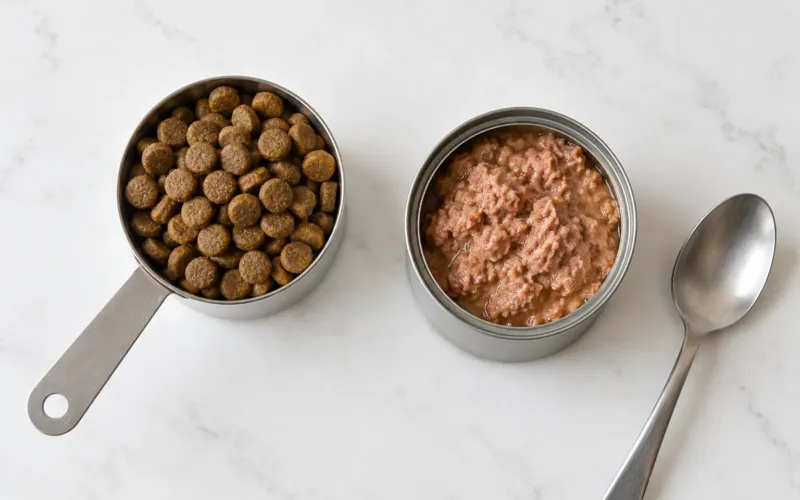
Wet vs dry dog food isn't a question of good versus bad. Both can be complete and balanced. Dry food is cheaper, easier to store and convenient for measuring; wet food has far more water, tends to be tastier and helps some dogs feel full on fewer calories. The best choice depends on your dog's age, teeth, weight, health and your budget.
Choose a food labeled complete and balanced for your dog's life stage, wet or dry. Dry suits most healthy adults and budgets. Wet helps picky eaters, seniors with dental pain and dogs that need more water. Mixing both works well if you adjust the total calories.

Table of Contents
Wet vs Dry Dog Food at a Glance
| Feature | Dry food (kibble) | Wet food (canned/pouch) |
|---|---|---|
| Water content | About 10% | About 75% to 80% |
| Calories | Dense: often 330 to 450 kcal per cup | Lighter: often 300 to 450 kcal per 13 oz can |
| Cost per day | Lower | Higher, often 2 to 4 times |
| Storage after opening | Weeks, sealed | 3 to 5 days in the fridge |
| Taste appeal | Good | Usually higher |
| Portion control | Easy to measure | Easy with cans; varies with pouches |
Typical ranges; check the calorie statement on your product. Costs vary widely by brand.
Dry Dog Food: Pros and Cons
- Pros: cheaper per calorie, keeps for weeks once opened, easy for puzzle feeders and training, convenient for free-choice feeding (though measured meals are better for weight).
- Cons: low in water, calorie-dense so it's easy to overfeed, less appealing to picky or older dogs.
A common belief is that kibble cleans teeth. Ordinary kibble does little for dental health; only foods and chews tested for plaque or tartar control, such as products with the VOHC seal, have evidence behind them. Brushing is still the gold standard.
Wet Dog Food: Pros and Cons
- Pros: high water content supports hydration, very palatable, soft for dogs with dental pain, and the lower calorie density can help some dogs feel full while losing weight.
- Cons: more expensive, spoils quickly once opened, more packaging, and some dogs get softer stools.
Which Is Better for Your Dog?
| Your dog | Often a good fit | Why |
|---|---|---|
| Healthy adult, any size | Dry or mixed | Convenient, budget-friendly |
| Picky eater | Wet or mixed | Smell and texture help appetite |
| Senior or dental pain | Wet | Easier to chew |
| Overweight | Wet or mixed, measured | More volume for the calories |
| Prone to bladder stones | Wet (ask vet) | More water dilutes urine |
| Kidney disease | As prescribed by vet | Therapeutic diets come in both forms |
For more help, see our guides to dog food for picky eaters, weight control dog food and small breed dog food.
Mixing Wet and Dry Food
Mixing gives you the taste of wet food with the cost of dry. The key is calories: if you add wet food, you must reduce kibble.
- Find your dog's daily calories with our dog calorie calculator.
- Decide on a split, for example 75% of calories from dry and 25% from wet.
- Use the calorie statements on each product to turn that into cups and cans.
| 40 lb dog (~980 kcal/day) | Dry only | 75% dry / 25% wet | 50% / 50% |
|---|---|---|---|
| Dry kibble (~400 kcal/cup) | ~2½ cups | ~1¾ cups | ~1¼ cups |
| Wet food (~400 kcal/13 oz can) | 0 | ~⅔ can | ~1¼ cans |
Our example estimate for a typical neutered adult. Use your products' real calorie numbers.
When changing the balance, mix it in gradually; see how to transition dog food.
Safety and Storage Tips
Wet food spoils fast. Refrigerate opened cans promptly and use them within a few days, and don't leave wet food in the bowl for hours, as the FDA advises. Whatever you choose, look for a nutritional adequacy statement saying the food is complete and balanced for your dog's life stage. Dogs with kidney, heart or urinary conditions should follow their vet's diet plan. See our veterinary disclaimer.
Is wet or dry food better for most dogs? For most healthy adults, either works if it's complete and balanced. I often suggest mixing for picky eaters or dogs that need more water.
Does kibble clean teeth? Not much. Only dental diets and chews with tested results help, and brushing is still best.
— Dr. Sarah Miller, DVM
Wet vs Dry Food: Quick Guide
✓ What helps
- Choose complete and balanced food
- Measure both wet and dry portions
- Refrigerate opened cans
- Switch the mix gradually
✕ Don't
- Add wet food without cutting kibble
- Leave wet food out for hours
- Rely on kibble to clean teeth
- Change diets for health issues without a vet
Dogs with kidney, heart or urinary conditions should follow their vet's diet plan.
Frequently Asked Questions
Is wet food healthier than dry food?
Not automatically. A complete and balanced dry food and a complete wet food can both keep a dog healthy.
Is it OK to feed only wet food?
Yes, if it's labeled complete and balanced. It just costs more and needs careful storage.
Does wet food cause dental problems?
Wet food doesn't clean teeth, but ordinary kibble doesn't do much either. Brushing matters most.
Can wet food help my dog drink more?
Yes. Wet food is mostly water, which can help dogs that don't drink much.
Should puppies eat wet or dry food?
Either, as long as it's made for growth. Soaking kibble in warm water helps young puppies.
For feeding amounts, labels and more meals, see our dog food guide.
The Bottom Line
In the wet vs dry dog food debate, both can be excellent. Pick a complete and balanced food that fits your dog's age, teeth, weight and your budget, and if you mix them, adjust the totals so calories stay on target. More guides in our Dog Food section.
References & Sources
Written by CPD Nutrition Desk using the sources below. We are not affiliated with these organizations, and this guide is not a substitute for advice from your veterinarian.
- vohc.org — View source
- U.S. Food and Drug Administration — Tips safe handling pet food and treats