


What to feed a dog with liver problems depends on the cause, so your vet's diagnosis comes first. In general, dogs with liver disease do best on a highly digestible diet with enough good-quality protein, moderate fat, controlled copper and small, frequent meals. Many dogs eat a prescription hepatic diet. Homemade or extra foods should fit the plan your vet sets.
Don't cut protein unless your vet says so; most liver patients need it to heal and keep muscle. Choose digestible proteins like eggs, dairy, fish and poultry, avoid organ meats high in copper, keep fat moderate and feed small meals. Supplements like SAMe or vitamin E only on vet advice.

Table of Contents
Why Diet Matters for the Liver
The liver processes nutrients, makes proteins, stores energy and clears toxins. When it's damaged, diet can lighten its workload and give it what it needs to repair. Liver problems in dogs have many causes, including infections, toxins, inherited copper storage disease, shunts, inflammation and tumors, and each may need a different plan. The Merck Veterinary Manual gives an overview of these conditions.
Hepatic Diet Goals
| Nutrient | Usual goal | Why |
|---|---|---|
| Protein | Adequate, high quality, highly digestible | Supports repair and muscle; restricted only if signs like confusion appear |
| Fat | Moderate | Energy without overloading digestion |
| Copper | Low | Copper can build up in some liver diseases |
| Zinc | Often supplemented by vet | Can help limit copper absorption |
| Sodium | Lower if fluid builds up | Helps control belly fluid |
| Meals | Small and frequent | Easier on digestion and blood sugar |
Veterinary nutritionists, such as those at the Tufts Cummings School, stress that unnecessary protein restriction can cause muscle loss in liver patients.
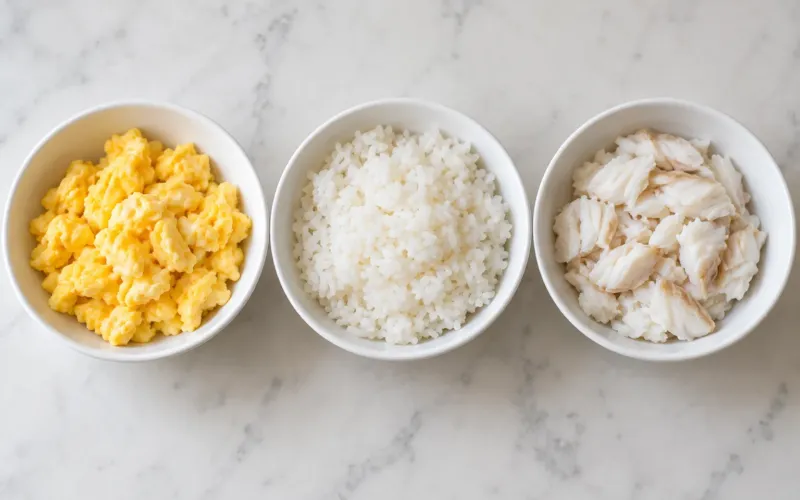
Foods Often Used in Liver Diets
- Proteins: eggs, low-fat cottage cheese, white fish, skinless chicken or turkey. See our eggs and cottage cheese guides.
- Carbohydrates: white rice, oats, potatoes or sweet potatoes, which are easy to digest.
- Vegetables: small amounts of cooked carrots, green beans or zucchini.
These are building blocks, not a complete diet. A homemade liver diet should be designed by a board-certified veterinary nutritionist.
Foods to Avoid
| Food | Why to avoid |
|---|---|
| Liver and organ meats | Very high in copper |
| Shellfish and some nuts | Higher in copper |
| Fatty scraps, bacon, fried food | Hard to digest; pancreatitis risk |
| Salty foods and deli meat | Can worsen fluid buildup |
| Xylitol | Can cause acute liver failure in dogs |
| Raw diets | Bacterial risk for a weakened system |
The FDA warns that xylitol can cause liver failure in dogs. Check peanut butter and sugar-free products carefully.
Supplements Your Vet May Suggest
- SAMe and silybin (from milk thistle): antioxidants commonly used to support liver cells.
- Vitamin E: another antioxidant.
- Zinc: sometimes used in copper-related disease.
Only give these with your vet's guidance; doses and products vary, and some liver diseases need specific treatment.
Feeding Tips
- Feed 3 to 4 small meals a day.
- Keep treats low-fat and low-copper, such as small pieces of cooked egg white or green beans.
- Switch to a prescription or new diet slowly; see how to transition dog food.
- Weigh weekly at first, since appetite can be poor.
Get veterinary care quickly if your dog has yellow gums, skin or eyes (jaundice), a swollen belly, confusion, circling or seizures, vomiting, dark urine, pale stools or stops eating. These can signal worsening liver disease. Diet supports treatment but doesn't replace it. See our veterinary disclaimer.
Do dogs with liver disease need a low-protein diet? Most don't. They need good-quality, digestible protein to heal. We only reduce it if signs like confusion appear.
Can I make homemade food for a dog with liver disease? Yes, but it should be designed by a veterinary nutritionist, because copper, zinc and other nutrients need careful balancing.
— Dr. Sarah Miller, DVM
Liver Diet: Quick Guide
✓ What helps
- Follow your vet's diet plan
- Feed small, frequent meals
- Choose eggs, fish and lean poultry
- Weigh your dog weekly at first
✕ Don't
- Feed liver or organ meats
- Share fatty or salty scraps
- Use products with xylitol
- Start supplements without your vet
Jaundice, confusion or a swollen belly need urgent veterinary care.
Frequently Asked Questions
What should I feed a dog with high liver enzymes?
Follow your vet's plan, since high enzymes have many causes. Often a digestible, moderate-fat diet with adequate protein is used while testing continues.
Is chicken good for dogs with liver problems?
Plain, skinless chicken is a common, digestible protein in liver diets.
Are eggs good for a dog's liver?
Eggs are a high-quality protein used in many liver diets. Cook them plain.
Should dogs with liver disease eat less protein?
Usually not. Protein is only reduced when signs like confusion appear, and only on vet advice.
Can liver disease in dogs be reversed?
The liver can regenerate, and some conditions improve with treatment and diet. Outcomes depend on the cause.
For more health topics, see our dog nutrition and health guide.
The Bottom Line
What to feed a dog with liver problems comes down to your vet's diagnosis: usually digestible, good-quality protein, moderate fat, low copper and small, frequent meals, often through a prescription diet. Avoid organ meats, fatty scraps, salty foods and xylitol, and get help fast for jaundice or confusion. More in our Nutrition & Health section.
References & Sources
Written by CPD Nutrition Desk using the sources below. We are not affiliated with these organizations, and this guide is not a substitute for advice from your veterinarian.
- Merck Veterinary Manual — Disorders of the liver and gallbladder in dogs
- vetnutrition.tufts.edu — Tufts Cummings School
- U.S. Food and Drug Administration — Paws xylitol its dangerous dogs