


A raw food diet for dogs uses uncooked meat, organs and often bone. Fans report shinier coats and smaller stools, but those benefits rest mostly on owner reports. The risks are better documented: Salmonella, Listeria and E. coli, plus unbalanced home recipes. Here’s how to feed raw as safely as possible, how much, and safer alternatives.
Raw feeding has more proven risks than proven benefits. The AVMA and FDA discourage it. If you go raw, use a complete, HPP-treated commercial food or a nutritionist-designed recipe with strict hygiene. Avoid it for puppies, sick dogs and homes with vulnerable people.

Table of Contents
What Is a Raw Food Diet for Dogs?
- BARF (“biologically appropriate raw food” or “bones and raw food”): raw meat, bones and organs plus some vegetables and fruit.
- Prey model: mostly meat, bone and organ, aiming to mimic whole prey, with little or no plant food.
- Commercial raw: frozen or freeze-dried products, some formulated to be complete and balanced, some sold as toppers only.
Raw Feeding Claims vs. the Evidence
| Common claim | What we know |
|---|---|
| Shinier coat | Often reported; likely linked to higher fat content, which can also be achieved with cooked diets or omega-3s |
| Smaller, firmer stools | Commonly seen; raw diets are often highly digestible and low in fiber |
| Cleaner teeth | Chewing can help some plaque, but bones also break teeth; dental care is still needed |
| Stronger immune system, longer life | No good evidence in dogs |
| Fewer allergies | Not proven; some dogs simply do better on a new protein (see dog food allergies) |
| “It’s what wolves eat” | Dogs have adapted alongside people for thousands of years, including better starch digestion than wolves |
The Risks of Raw Feeding
1. Bacteria that affect dogs and people
Raw meat can carry Salmonella, Listeria, E. coli and Campylobacter. Dogs often look healthy while shedding these bacteria in saliva and stool, putting children, older adults and immunocompromised people at risk. The FDA and AVMA discourage raw feeding for this reason.
2. Nutritional imbalance
Balancing calcium, phosphorus, vitamins and trace minerals at home is hard, and studies find many published recipes fall short. Puppies are especially sensitive to calcium errors.
3. Bones
Raw bones can fracture teeth, get stuck in the mouth, throat or gut, and cause constipation (see dog constipation). Cooked bones are more dangerous still and should never be fed.
4. Cost and time
Raw feeding usually costs more than quality kibble and takes freezer space, prep time and careful cleaning.
Raw vs. Other Diet Types: A Safety Comparison
| Diet type | Pathogen risk | Balance | Notes |
|---|---|---|---|
| Complete commercial kibble or canned | Low | Complete if labelled for life stage | Most studied and convenient |
| Fresh, gently cooked commercial food | Low | Complete if labelled | Many of raw’s appeal factors, without raw meat |
| Homemade cooked, nutritionist-designed | Low | Complete if recipe followed | Needs a board-certified veterinary nutritionist recipe |
| Commercial raw with high-pressure processing (HPP) | Reduced, not zero | Complete if labelled | The safer way to feed raw |
| Freeze-dried raw | Moderate | Varies | Freeze-drying alone doesn’t reliably kill bacteria |
| Homemade raw | Highest | Often unbalanced | Highest risk on both fronts |
Who Should Not Feed Raw
- Puppies, which need precise growth nutrition and are more vulnerable to infection
- Dogs with cancer, on chemotherapy or immune-suppressing medication, or with chronic illness
- Dogs with pancreatitis or a history of it, since many raw diets are high in fat
- Homes with babies, young children, pregnant people, older adults or immunocompromised people
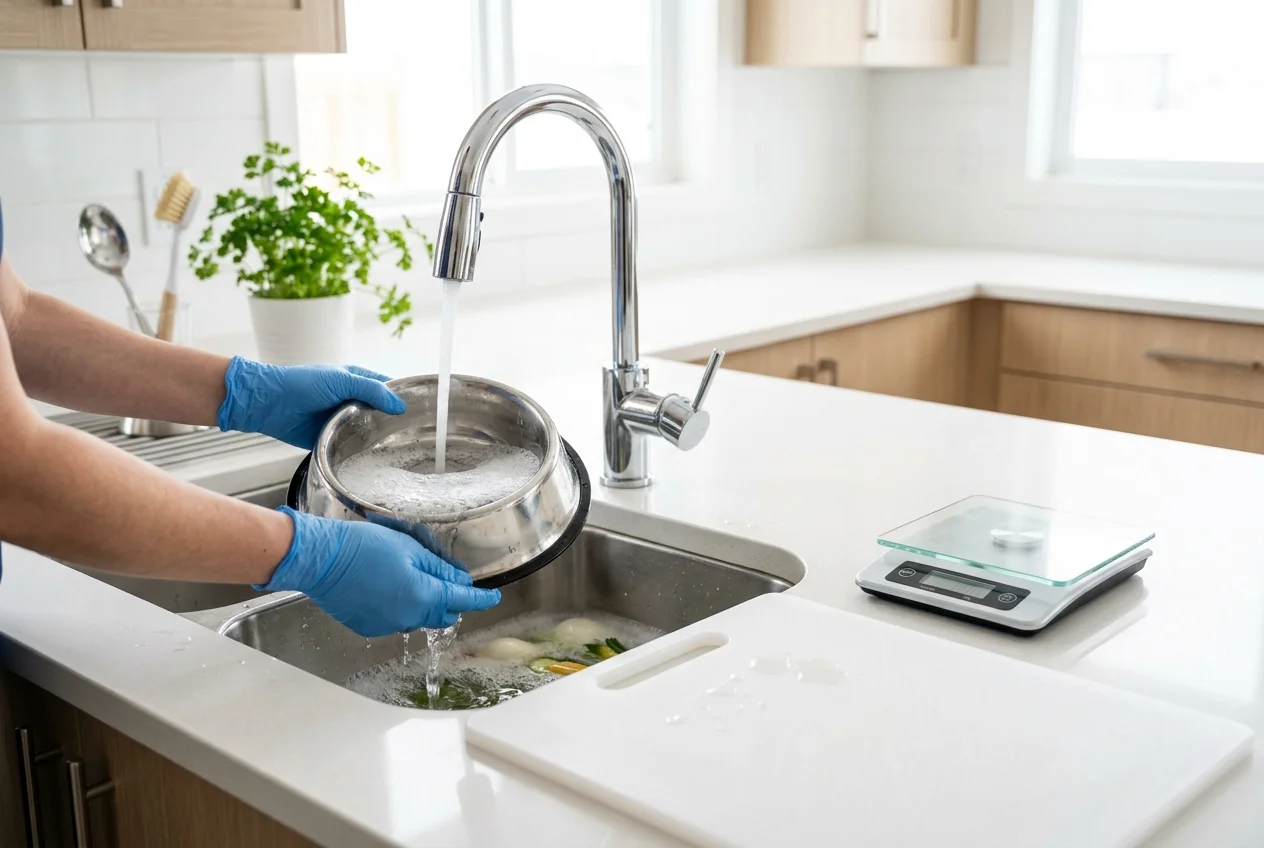
If You Choose Raw: Safe Handling Checklist
- Choose a complete and balanced commercial raw food, ideally treated with high-pressure processing.
- Thaw in the fridge, never on the counter. Keep raw food separate from human food.
- Use dedicated cutting boards and utensils; wash surfaces, bowls and hands with hot soapy water after every meal.
- Pick up uneaten food within about 20 to 30 minutes and discard it.
- Avoid face-licking right after meals and pick up stools promptly.
- Watch for recalls and keep packaging so you can check lot numbers.
- Tell your vet you feed raw; it matters when interpreting signs like diarrhea or fever.
What About the 80/10/10 Rule?
Prey-model guides suggest about 80% muscle meat, 10% edible bone and 10% organ (half liver). It gives structure but not balance: such recipes often fall short on vitamin E, vitamin D, zinc or iodine. Use a commercial raw food meeting AAFCO profiles, or a recipe from a board-certified nutritionist (find one via the ACVIM).
Signs a Raw Diet Isn’t Working for Your Dog
- Ongoing soft stool, diarrhea or vomiting after the transition period
- Hard, white, crumbly stools or straining, often from too much bone
- Weight loss or gain, or loss of muscle
- Dull coat, flaky skin or itchiness that’s getting worse
- Fever, lethargy or bloody diarrhea, which can signal a bacterial infection
- Broken or worn teeth from chewing bones
If you see any of these, talk to your vet. An annual blood panel can catch imbalances early.
How Much Raw Food to Feed a Dog
Start with the product’s feeding guide. Roughly, adult dogs eat 2 to 3% of ideal body weight daily:
| Ideal body weight | Daily amount at 2% | Daily amount at 3% |
|---|---|---|
| 10 lb | about 3 oz | about 5 oz |
| 25 lb | about 8 oz | about 12 oz |
| 50 lb | about 1 lb | about 1 1/2 lb |
| 75 lb | about 1 1/2 lb | about 2 1/4 lb |
| 100 lb | about 2 lb | about 3 lb |
Lower end for less active dogs, higher for active ones. Weigh every 2 to 4 weeks and adjust.
How to Transition to (or Away From) Raw
Switch gradually over 7 to 10 days, mixing more new food with the old each day. If diarrhea or vomiting starts, slow down (see dog upset stomach) and check with your vet.
Frequently Asked Questions
Do vets recommend raw food for dogs?
Most veterinary organizations, including the AVMA, advise against raw diets. Some vets support complete commercial raw for owners committed to safe handling.
Is freeze-dried raw food safer than frozen raw?
Not necessarily. Freeze-drying removes water but doesn’t reliably kill bacteria. Look for products that also use high-pressure processing or another validated pathogen-reduction step.
Can dogs get Salmonella from raw food?
Yes. Dogs can shed Salmonella without symptoms or become ill, and people at home can be infected too.
Is a raw diet good for puppies?
It’s not recommended. Puppies need precise calcium and phosphorus levels for bone growth and are more vulnerable to infections. Use a complete puppy food.
Can I feed my dog raw chicken?
Raw chicken is one of the meats most often contaminated with Salmonella and Campylobacter. If you want to share chicken, plain cooked, boneless chicken is the safer option.
Explore more in the complete dog food guide.
The Bottom Line
A raw food diet for dogs has mostly anecdotal benefits and well-documented risks. For fresh food without them, consider a complete gently cooked diet. If you feed raw, choose a complete HPP-treated product and strict hygiene. Explore our Dog Food guides. This is general information, not veterinary advice; see our Veterinary Disclaimer.
References & Sources
Written by CPD Nutrition Desk using the sources below. We are not affiliated with these organizations, and this guide is not a substitute for advice from your veterinarian.
- U.S. Food and Drug Administration — Get facts raw pet food diets can be dangerous you and your pet
- AVMA — Raw or undercooked animal source protein cat and dog diets
- ACVIM — View source