


Small breed dog food is made for dogs that weigh up to about 20–25 pounds as adults. It has smaller kibble that’s easier to chew and usually packs more calories into each bite, because small dogs burn more energy per pound than big ones. Any complete and balanced food can work, but size, calories and feeding frequency matter more for little dogs than most owners expect.
Small dogs need small portions of the right food, not just less food. Choose a complete and balanced food with kibble your dog can chew comfortably, measure portions carefully, keep treats tiny, and feed toy-breed puppies several times a day to avoid low blood sugar.
Table of Contents
What Counts as a Small Breed?
There’s no official cutoff, but most brands design small breed formulas for dogs expected to weigh under about 20–25 pounds as adults. Toy breeds like Chihuahuas, Yorkies and Pomeranians are at the small end; Beagles and Cocker Spaniels sit near the top. Your dog’s expected adult weight, not its age, decides whether small breed food makes sense.

How Is Small Breed Dog Food Different?
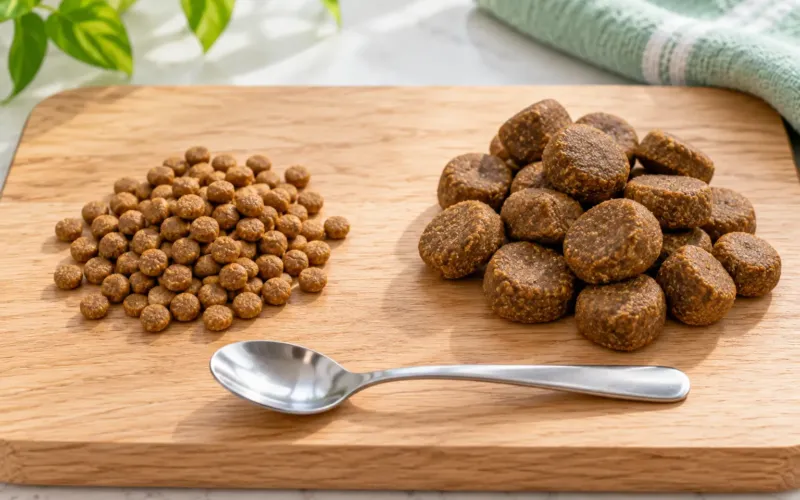
Small breed dog food follows the same AAFCO nutrient standards as other foods, since there’s no separate “small breed” profile. The differences are in the design:
- Smaller kibble that fits little mouths and encourages chewing.
- More calories per cup, so a small stomach can take in enough energy.
- Often higher fat and protein to fuel a faster metabolism.
- Sometimes dental features, since small breeds are prone to tartar and gum disease.
Why small dogs need more calories per pound
Energy needs don’t rise in a straight line with body weight. Using the standard veterinary formula, a typical neutered 8-lb dog needs about 37 calories per pound per day, while a 70-lb dog needs about 21. That’s why small dogs do better with calorie-dense food in small portions, and why a single big treat can blow their daily budget.
Small Breed vs. Regular vs. Large Breed Dog Food
| Feature | Small Breed | Regular Adult | Large Breed |
|---|---|---|---|
| Designed for | Adults under ~20–25 lb | Most medium dogs | Adults over ~50–70 lb |
| Kibble size | Small | Medium | Large |
| Calorie density | Usually higher | Moderate | Often lower, to control weight |
| Puppy versions | Support fast growth and frequent meals | Standard growth | Controlled calcium and calories for slower, safer bone growth |
| Common extras | Dental-friendly shapes | Varies | Joint-support ingredients |
Can a small dog eat regular dog food? Yes, if it’s complete and balanced for its life stage and the kibble is small enough to chew. Many small dogs do fine on it with careful portions.
Can a small dog eat large breed dog food? It isn’t harmful nutritionally, but the big pieces can be hard to chew, and the lower calorie density means bigger portions. Large breed puppies are the opposite case: they should eat a food whose AAFCO statement covers “growth of large size dogs (70 lb or more as an adult),” not small breed puppy food, because calcium and calorie levels affect their bone development.
How Much to Feed a Small Dog
Here’s a starting point for typical neutered adult small dogs, with about a tenth of calories set aside for treats:
| Adult Weight | Est. Daily Calories | Calories per Pound | Food at 400 kcal/cup | Treat Allowance |
|---|---|---|---|---|
| 4 lb | ~175 kcal | ~44 | ~⅜ cup | ~18 kcal |
| 6 lb | ~235 kcal | ~40 | ~½ cup | ~24 kcal |
| 8 lb | ~295 kcal | ~37 | ~⅝ cup | ~30 kcal |
| 10 lb | ~350 kcal | ~35 | ~¾ cup | ~35 kcal |
| 15 lb | ~470 kcal | ~32 | ~1 cup | ~47 kcal |
| 20 lb | ~585 kcal | ~29 | ~1⅓ cups | ~59 kcal |
| 25 lb | ~690 kcal | ~28 | ~1⅝ cups | ~69 kcal |
Our estimates: 70 × body weight in kg0.75 × 1.6. Use the calories on your own food’s label; small breed kibble often ranges from about 350 to over 450 kcal per cup. Active or intact dogs need more; less active dogs often need less.
At these sizes, a tablespoon here or there is a big share of the day, so use a proper measuring cup or, better, a kitchen scale. Our dog calorie calculator works it out for your dog and food.
How often to feed a small dog
- Toy and small breed puppies: three to four meals a day. Their small bodies store little energy, and toy puppies can develop low blood sugar (hypoglycemia) if they go too long without food.
- Adults: at least two meals a day. Some toy breeds do better on three small meals.
- Seniors: two or more small meals; softer food if teeth are a problem.
How to Choose the Best Small Breed Dog Food
Front-of-bag words like “dog food small breed” or “mini bites” tell you little on their own. Check these points instead:
- Check the AAFCO statement for your dog’s life stage: growth, adult maintenance or all life stages.
- Look at kibble size. Your dog should crunch it, not swallow it whole or struggle to pick it up.
- Compare kcal per cup. Higher-calorie food means even smaller portions, which is easy to overdo.
- Think about teeth. Small breeds are prone to dental disease. Food alone won’t prevent it, but products with the VOHC seal can help; see our guide to dog bad breath.
- Consider special needs: a sensitive stomach, food allergies, or a tendency to gain weight. Our weight control dog food guide helps if your little dog is getting round.
- Wet and fresh foods work well for picky small dogs; see dog food for picky eaters.
Treats and Small Dogs: The Hidden Calorie Trap
For an 8-lb dog eating about 295 calories a day, a single 30-calorie biscuit is roughly a tenth of its whole day. Break treats into pea-size pieces, use pieces of the daily kibble as rewards, and choose very low-calorie extras like a blueberry or a slice of cucumber. Most homemade recipes, like our banana dog treats, can be cut smaller for toy breeds.
Does every small dog need small breed food? No. Any complete food works if the kibble size is right and portions are measured.
What about toy puppies? Feed them 3 to 4 times a day. Weakness or trembling after a missed meal is an emergency.
What is the most common mistake? Big treats. One biscuit can be a tenth of a tiny dog's day.
— Dr. Sarah Miller, DVM
Small Breed Dog Food: Quick Guide
✓ Do
- Pick kibble your dog can chew comfortably
- Measure portions with a scale or level cup
- Feed toy puppies three to four times a day
- Break treats into tiny pieces
✕ Don’t
- Eyeball portions for a tiny dog
- Give full-size biscuits made for big dogs
- Let toy puppies skip meals
- Feed small breed puppy food to large breed puppies
Every dog is different. Puppies and dogs with health conditions should follow a feeding plan from their vet.
Frequently Asked Questions
Does my small dog need small breed dog food?
Not necessarily. Any complete and balanced food for your dog’s life stage can work if the kibble is a comfortable size and portions are measured. Small breed formulas just make that easier.
What is the difference between small breed and regular dog food?
Mainly kibble size and calorie density. Small dog food usually has smaller pieces and more calories per cup, so little dogs get enough energy from small meals.
Can a large dog eat dog food for small dogs?
An adult large dog can eat it without harm, but the calorie-dense food makes overfeeding easy and the tiny kibble may be gulped. Large breed puppies should eat a food made for large-breed growth.
Is wet food better for small dogs?
Not necessarily. Wet food is tasty and hydrating, and good for picky or older dogs, but dry food is fine too. Many owners mix the two, adjusting portions so calories stay the same.
When should a small breed puppy switch to adult food?
Small breeds mature quickly, often around 9 to 12 months. Ask your vet when to switch, and change over gradually across 7 to 10 days.
How much does it cost to feed a small dog?
Small dogs eat little, so even premium foods cost less per day than for big dogs. Compare foods by cost per 100 calories rather than bag price.
Explore more in the complete dog food guide.
The Bottom Line
Small breed dog food gives little dogs calorie-dense nutrition in bite-size pieces, but the real keys are measured portions, tiny treats and frequent meals for toy puppies. Choose a complete and balanced food your dog can chew comfortably, and recheck portions as your dog’s weight and activity change. For more feeding guides, browse our Dog Food section. This article is general information, not veterinary advice; see our Veterinary Disclaimer.
References & Sources
Written by CPD Nutrition Desk using the sources below. We are not affiliated with these organizations, and this guide is not a substitute for advice from your veterinarian.
- AAFCO — Reading labels
- American Kennel Club (AKC) — Hypoglycemia in dogs