


Dog bad breath is most often caused by dental disease: plaque bacteria building up along the gumline. Mild “doggy breath” is common, but a strong, rotten smell isn’t normal, and certain odors, like sweet or ammonia-like breath, can point to diabetes or kidney disease. Here’s what different smells may mean, how to check your dog’s mouth, which remedies actually work and when to see a vet.
Bad breath in dogs usually means plaque, tartar or gum disease, and daily tooth brushing is the most effective fix. Breath sprays and mints only mask the smell. A sudden change, a sweet or urine-like odor, drooling, bleeding gums or trouble eating all need a vet visit.
Table of Contents
What Causes Bad Breath in Dogs?
The American Veterinary Medical Association describes periodontal disease as one of the most common problems vets see in dogs. When plaque isn’t removed, it hardens into tartar, bacteria spread under the gums, and the byproducts they release smell bad. Other common causes include:
- Broken or infected teeth, including tooth root abscesses.
- Something stuck in the mouth, like a stick splinter or a piece of bone between the teeth.
- Diet and habits: eating poop, garbage or dead animals, or a fishy food or treat.
- Puppy teething, which can cause a temporary odd smell.
- Mouth growths, especially in older dogs.
- Body-wide illness, such as kidney disease, diabetes or liver disease.
Small breeds are especially prone because their teeth are often crowded in a small mouth, which traps more plaque.

What Your Dog’s Breath Smell Might Mean
The type of odor can offer a clue. Use this as a guide for what to tell your vet, not as a diagnosis:
| If the Breath Smells Like | Possible Cause | How Soon to See a Vet |
|---|---|---|
| Rotten, sour or “garbage” | Plaque, tartar, gum disease, infected tooth | Book a dental check in the next few weeks |
| Fish | Dental disease, fishy food, or licking after anal gland problems | Routine visit; sooner if your dog scoots |
| Poop | Eating stool, or occasionally a digestive problem | Routine visit; see our guide on why dogs eat poop |
| Metal or blood | Bleeding gums, mouth injury | Within a few days |
| Ammonia or urine | Possible kidney disease | Soon, especially with more thirst or weight loss |
| Sweet or fruity | Possible diabetes | Promptly, especially with more drinking and peeing |
| Very foul, with vomiting or yellow gums or eyes | Possible liver disease | Same day |
Odor descriptions are subjective. Any lasting change in your dog’s breath is worth a vet check.
How to Check Your Dog’s Mouth at Home
A quick weekly look helps you catch the causes of dog bad breath early. Pick a calm moment, ideally after a walk, and take about a minute:
- Lift the lips on each side and look at the back teeth, where tartar builds up first.
- Check the gums: healthy gums are pink (or naturally pigmented). A red line along the teeth, swelling or bleeding means gingivitis.
- Look for tartar: yellow or brown crust on the teeth.
- Spot problems: broken or loose teeth, lumps, sores, or anything stuck between teeth.
- Notice behavior: chewing on one side, dropping food, pawing at the face or drooling.
If your dog pulls away in pain, stop and book a vet visit. Mouth pain is easy to miss because dogs often keep eating.
How to Fix Bad Breath in Dogs
1. Brush your dog’s teeth
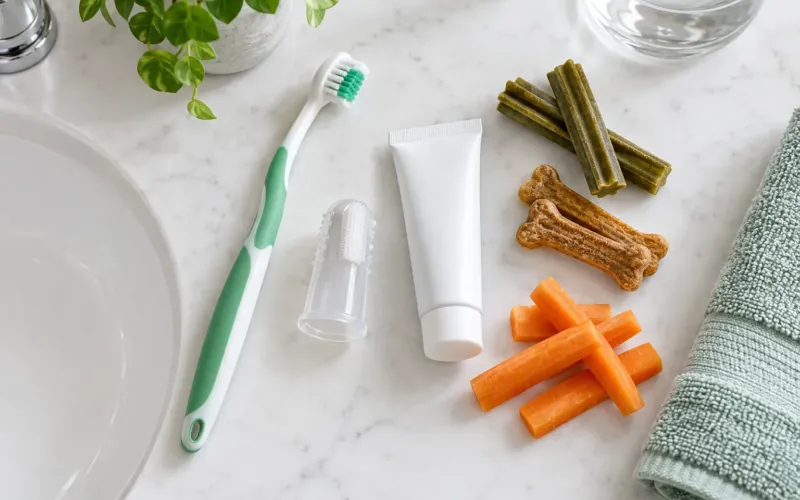
Daily brushing is the most effective way to remove plaque before it hardens. Use a soft dog toothbrush or finger brush and a toothpaste made for dogs. Never use human toothpaste: some contain xylitol, which is toxic to dogs, and dogs swallow the paste. Start with a few seconds on the outer surfaces of the back teeth and build up over a couple of weeks, with praise and a treat afterward.

2. Choose dental products that have proof
The Veterinary Oral Health Council (VOHC) reviews chews, diets, water additives and other products and awards a seal to those that meet its standards for controlling plaque or tartar. Look for that seal rather than marketing claims.
3. Look at diet and habits
Regular kibble does little to clean teeth on its own. A VOHC-accepted dental diet can help. Keep your dog out of the trash and the cat litter box, and pick up the yard promptly if your dog eats poop.
Here’s how common remedies stack up:
| Remedy | Does It Help Breath? | Notes |
|---|---|---|
| Daily brushing with dog toothpaste | Yes, the most effective | Needs to be frequent to work |
| VOHC-sealed chews, diets or water additives | Yes, for the product tested | Count chews in the daily calories |
| Professional cleaning under anesthesia | Yes, for existing tartar and gum disease | Includes cleaning below the gumline |
| Raw carrots or apple slices | A little | Fine low-calorie treats; not a substitute for brushing (see our carrot guide) |
| Coconut oil, parsley, yogurt | No good evidence | Coconut oil adds a lot of calories |
| Breath sprays and mints | Masks odor only | Doesn’t treat the cause |
Professional Dental Cleaning
Once tartar and gum disease have set in, brushing can’t remove them, and a cleaning is often what finally fixes long-standing dog bad breath. A professional cleaning under general anesthesia lets your vet clean below the gumline, take dental X-rays and treat painful teeth. The American Veterinary Dental College advises against “anesthesia-free” cleanings, because scraping visible teeth doesn’t treat disease under the gums and can give a false sense of a healthy mouth.
Your vet will check your dog’s health before anesthesia, which is especially important for seniors.
Bad Breath in Puppies, Young Dogs and Seniors
Puppies often have a distinct “puppy breath,” and teething between about 3 and 6 months can bring a temporary odor. Foul breath, bleeding or baby teeth that don’t fall out need a vet check.
Young dogs with persistent bad breath, especially small breeds, may already have early gum disease, so start brushing early.
Senior dogs are more likely to have advanced dental disease, mouth tumors or illnesses like kidney disease. A new smell in an older dog deserves a full checkup. If your vet finds kidney disease, our guide to a kidney diet for dogs explains the next steps.
What is the most common cause of bad breath? Dental disease by far. Plaque and tartar under the gumline cause most bad breath I see.
When is bad breath a sign of illness? When it smells sweet or like urine, or comes with drinking more, weight loss or vomiting. That needs bloodwork.
Brushing or dental chews? Daily brushing works best. Chews with the VOHC seal help, but they don't replace brushing.
— Dr. Sarah Miller, DVM
Dog Bad Breath: Quick Guide
✓ What helps
- Brush with dog toothpaste daily
- Choose products with the VOHC seal
- Check your dog’s mouth once a week
- Book dental checkups with your vet
✕ Don’t
- Use human toothpaste
- Rely on sprays or mints
- Ignore a sudden change in smell
- Choose anesthesia-free cleanings
Every dog is different. Dogs with heart, kidney or other health conditions should have a vet check before dental procedures.
Frequently Asked Questions
Why does my dog have bad breath all of a sudden?
A sudden change can mean a broken or infected tooth, something stuck in the mouth, eating something gross, or an illness elsewhere in the body. If it doesn’t clear within a day or two, see your vet.
My dog breath stinks, but the teeth look clean. Why?
Gum disease often hides below the gumline, where you can’t see it. Breath can also smell from diet, eating poop, or medical problems, so a vet exam with dental X-rays may be needed.
Can bad breath mean kidney disease?
It can. Breath that smells like ammonia or urine may be a sign of kidney disease, especially with increased thirst, weight loss or a poor appetite. A blood and urine test can check.
Do dental chews fix dog smelly breath?
Some help, but only for the product that was tested. Look for the VOHC seal, count the calories, and keep brushing, which remains the most effective step.
Can I give my dog yogurt or coconut oil for bad breath?
There’s no good evidence either one fixes bad breath. Small amounts of plain yogurt are fine as a treat, but they won’t remove plaque.
How often should my dog’s teeth be cleaned by a vet?
It depends on the dog. Many need a professional cleaning every year or two, and small breeds may need it more often. Your vet will recommend a schedule at checkups.
For more health topics, see our dog nutrition and health guide.
The Bottom Line
When a dog has bad breath, the mouth is the first place to look. Most cases come from plaque and gum disease, and daily brushing plus regular dental checkups make the biggest difference. Pay attention to unusual smells and other symptoms, because they can be early clues to problems like diabetes or kidney disease. For more health guides, browse our Nutrition & Health section. This article is general information, not veterinary advice; see our Veterinary Disclaimer.
References & Sources
Written by CPD Nutrition Desk using the sources below. We are not affiliated with these organizations, and this guide is not a substitute for advice from your veterinarian.
- AVMA — American Veterinary Medical Association
- vohc.org — Veterinary Oral Health Council (VOHC)
- avdc.org — American Veterinary Dental College