


How much water should a dog drink? A healthy dog typically drinks about 40 to 60 milliliters per kilogram of body weight a day, which works out to roughly 1 ounce per pound. So a 50 lb dog usually drinks around 4 to 6 cups a day. Heat, exercise and diet change that number, but drinking more than about 100 ml per kilogram is a reason to see your vet.
Use “about 1 ounce per pound per day” as a quick guide. Dogs on wet food drink less; active dogs and dogs in hot weather drink more. Keep fresh water available all day. A sudden, lasting increase in thirst, or a dog that won’t drink for a day, both deserve a call to your vet.
Table of Contents
How Much Water Does a Dog Need a Day? Chart by Weight
According to the AKC, dogs normally drink around 40 to 60 ml of water per kilogram of body weight daily, and drinking more than 100 ml/kg is generally considered excessive (the medical term is polydipsia). Here’s what that means in cups:
| Dog’s Weight | Typical Daily Water | In Cups (approx.) | Talk to Your Vet If Over |
|---|---|---|---|
| 10 lb (4.5 kg) | 180-270 ml | 3/4 – 1 cup | ~450 ml (2 cups) |
| 25 lb (11 kg) | 450-680 ml | 2 – 3 cups | ~1.1 L (4 3/4 cups) |
| 50 lb (23 kg) | 0.9-1.4 L | 4 – 6 cups | ~2.3 L (9 1/2 cups) |
| 75 lb (34 kg) | 1.4-2.0 L | 6 – 8 1/2 cups | ~3.4 L (14 cups) |
| 100 lb (45 kg) | 1.8-2.7 L | 7 1/2 – 11 1/2 cups | ~4.5 L (19 cups) |
Our calculations from the 40-60 ml/kg normal range and the 100 ml/kg threshold. 1 cup = about 240 ml. These are totals for 24 hours at rest in mild weather; a single hot day or a long hike can push intake well above the typical range.
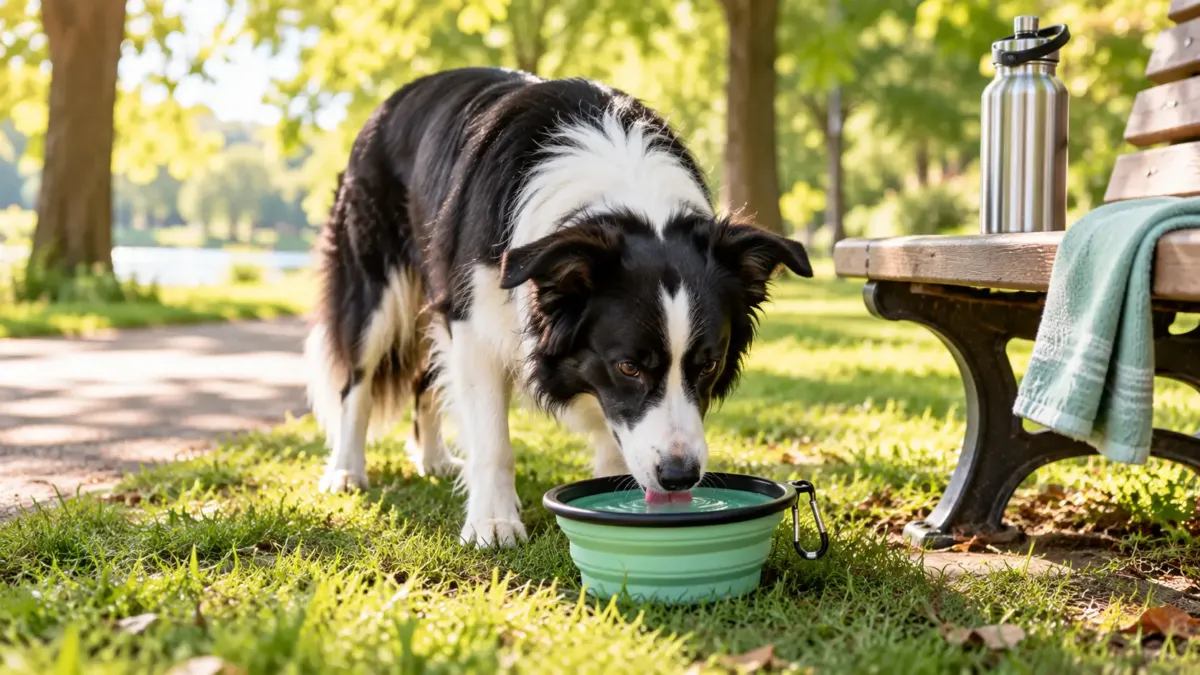
What Changes How Much Water a Dog Should Drink?
- Diet: canned food is about 75-80% water, while kibble is about 10%. A dog on wet food may drink half as much from the bowl and still be well hydrated.
- Activity: working dogs, runners and dogs that play hard drink more.
- Weather: dogs cool themselves by panting, which loses water. Hot, dry days raise intake.
- Age: puppies drink often in small amounts; senior dogs sometimes drink less and need encouragement.
- Pregnancy and nursing: both increase water needs considerably.
- Medications: steroids such as prednisone, and some diuretics and seizure medicines, can make dogs very thirsty.
How to Measure Your Dog’s Water Intake
Guessing is hard, especially in multi-pet homes. This simple check takes 24 hours:
- Fill the bowl with a measured amount, for example 4 cups, using a measuring jug.
- Top up only with measured amounts, and note each addition.
- After 24 hours, measure what’s left and subtract it from the total you added.
- Repeat for 2-3 days and take the average. Note the weather and how active your dog was.
Write the numbers down and bring them to your vet visit. They’re far more useful than “drinking a lot.”

Why Is My Dog Drinking a Lot of Water?
Extra thirst after exercise or on a hot day is normal. A dog drinking a lot of water day after day, especially with more peeing or accidents in the house, may have a medical problem. Common causes include:
| Possible Cause | Other Signs to Watch For |
|---|---|
| Diabetes mellitus | Peeing more, weight loss despite a good appetite |
| Kidney disease | Peeing more, poor appetite, vomiting, weight loss |
| Cushing’s disease | Pot belly, hair loss, panting, increased hunger |
| Pyometra (uterine infection) | Unspayed female, lethargy, vaginal discharge; an emergency |
| Liver disease | Yellow gums or eyes, vomiting, poor appetite |
| Medications | Started after a new drug, especially steroids |
Only your vet can tell these apart, usually with blood and urine tests; VCA Animal Hospitals explains what that testing involves. If kidney disease is diagnosed, our kidney diet for dogs guide explains the next steps.
What If My Dog Isn’t Drinking Enough?
A dog that drinks little for a day but is eating wet food and acting normal is usually fine. A dog that won’t drink at all, or is also vomiting, having diarrhea or not eating, can become dehydrated quickly. Check for dry, sticky gums, sunken eyes and skin that’s slow to spring back when gently lifted. Our dehydration in dogs guide covers the signs and what to do.
Ways to encourage drinking
- Wash bowls daily and refresh the water at least twice a day.
- Put bowls in several spots, including near where your dog sleeps.
- Try a pet fountain; some dogs prefer moving water.
- Add water or low-sodium bone broth to meals, or offer ice cubes and frozen treats on hot days.
- Carry water on walks and offer it every 15-30 minutes in warm weather.

Puppies and Senior Dogs
How much water should a puppy drink?
Puppies need roughly the same per-kilogram amount as adults, but they drink in small, frequent sips and get dehydrated faster. Keep water available during the day. During house training, many trainers pick up the bowl a couple of hours before bedtime, but never limit water for long periods or in hot weather.
Senior dogs
Older dogs may drink less because of a weaker thirst drive or sore joints that make getting to the bowl harder. Others start drinking more because of kidney or hormone problems. Either change is worth mentioning at the next checkup.
A simple rule for normal water intake? About an ounce per pound a day, more in heat or after exercise.
When does drinking a lot become a concern? If it's a lasting change, especially with more peeing or weight loss. Bring measured numbers to your vet.
Should owners limit water at night? For puppies in house training, briefly before bed is okay, but never restrict water for long periods.
— Dr. Sarah Miller, DVM
Water for Dogs: Quick Guide
✓ What helps
- Keep fresh water available all day
- Wash bowls daily
- Carry water on walks and hot days
- Measure intake if thirst changes
✕ Don’t
- Limit water to stop accidents
- Ignore a sudden rise in thirst
- Let a dog gulp lake water for hours
- Wait days if your dog won’t drink
Every dog is different. Changes in thirst can be an early sign of illness, so mention them to your vet.
Frequently Asked Questions
How much water should my dog drink in one sitting?
There’s no set amount. After exercise, offer water in smaller amounts a few minutes apart rather than letting your dog gulp a full bowl, which can cause vomiting.
Should I leave water out for my dog all day?
Yes, for most dogs. Fresh water should always be available, except when your vet tells you to withhold it, such as before surgery.
Why is my dog drinking a lot of water at night?
A warm room, a salty treat or a busy evening can explain one night. If it happens regularly, or your dog needs to go out more at night, ask your vet to check for medical causes.
Is it normal for a dog to drink more after vomiting?
Dogs often feel thirsty after vomiting, but gulping water can trigger more vomiting. Offer small amounts at a time, and call your vet if vomiting continues.
How long can a dog go without water?
Not long. Dehydration can start within a day, faster in heat or with vomiting and diarrhea. Call your vet if your dog hasn’t drunk anything in 24 hours.
Does wet food count toward water intake?
Yes. Moisture in food counts, which is why dogs on canned or fresh food often drink less from the bowl.
Browse every topic, from tummy trouble to supplements, in our dog nutrition and health guide.
The Bottom Line
How much water should a dog drink? Roughly 1 ounce per pound of body weight a day, more in heat or after exercise and less on wet food. Keep clean water available, measure intake if you notice a change, and see your vet for a lasting increase in thirst or a dog that stops drinking. Find more health guides in our Nutrition & Health section. This article is general information, not veterinary advice; see our Veterinary Disclaimer.
References & Sources
Written by CPD Nutrition Desk using the sources below. We are not affiliated with these organizations, and this guide is not a substitute for advice from your veterinarian.
- American Kennel Club (AKC) — Why is my dog drinking so much water
- VCA Animal Hospitals — Testing for increased thirst and urination