
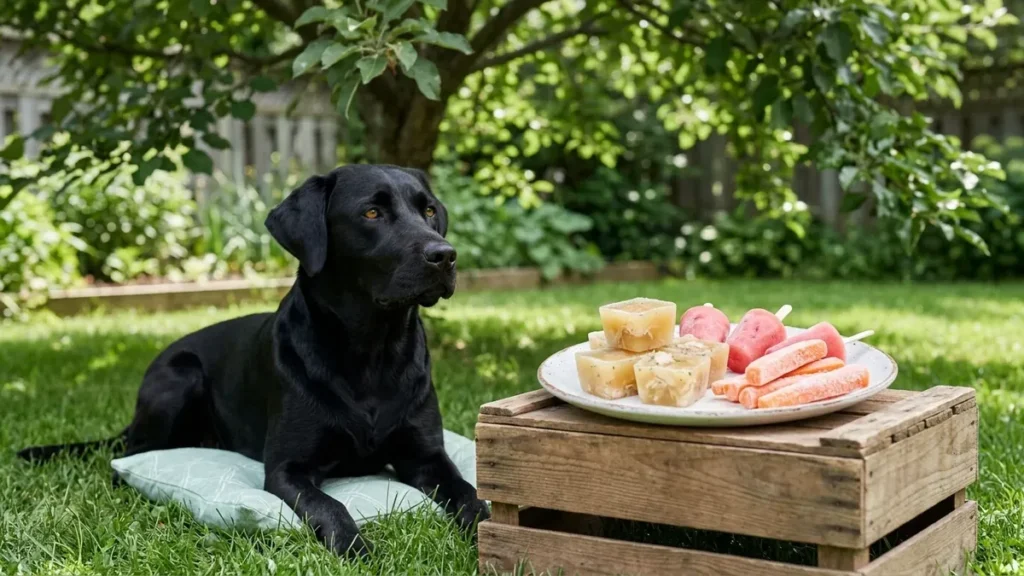

An ice cube tray, a few dog-safe foods and some freezer space are all you need. Frozen dog treats give a hot or bored dog something cool to lick and chew, and most of the ones below take five minutes to prep and come in at under 15 calories a piece. You’ll find five simple recipes (savory, fruity, crunchy and two that keep a dog busy), a calorie comparison, tips for protecting teeth and tummies, and which ingredients to leave out.
Prep: 5–10 minutes per recipe • Freeze: 3–4 hours, or overnight • Equipment: ice cube tray or silicone mold, a rubber chew toy, a lick mat • Storage: sealed freezer bag for 1–2 months
Let any frozen treat sit out for a few minutes before serving so it’s cold, not rock-hard.
Table of Contents
Are Frozen Treats Good for Dogs?
For most healthy dogs, yes. A frozen treat is simply a familiar dog-safe food served cold, and it brings a few extra perks:
- Slower eating: licking a frozen cube takes longer than crunching a biscuit, which makes a small treat last.
- Enrichment: frozen chew toys and lick mats give a dog a job, handy when you need half an hour of calm.
- Teething relief: cold, soft-textured treats can feel good on a puppy’s sore gums.
They aren’t a cooling device, though. On hot days, shade and fresh water matter far more than any treat.
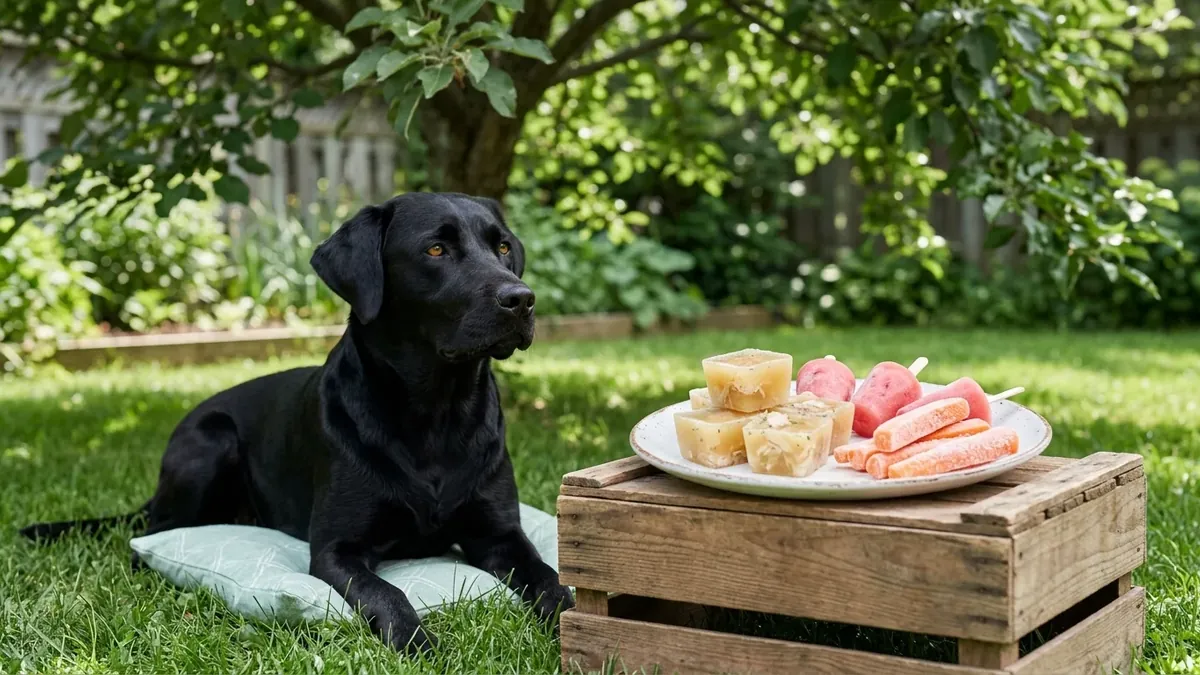
5 Easy Frozen Dog Treats to Make at Home
1. Savory Chicken Broth Cubes
Simmer a plain, boneless chicken breast in water with nothing added, then let it cool. Shred a little of the meat into each cavity of an ice cube tray, top up with the cooking liquid, and freeze. This homemade broth avoids the onion, garlic and salt found in many store-bought cartons. Skim off any fat before pouring for a low-fat treat.
Frozen Chicken Broth Cubes for Dogs
Ingredients
Method
- Simmer the chicken breast in plain water until cooked through, then let it cool.
- Skim off any fat from the cooking liquid.
- Shred a little chicken into each cavity of an ice cube tray.
- Top up with the cooled cooking liquid and freeze 3 to 4 hours or overnight.
- Let cubes sit out a few minutes before serving.
Notes
2. Watermelon Pupsicles
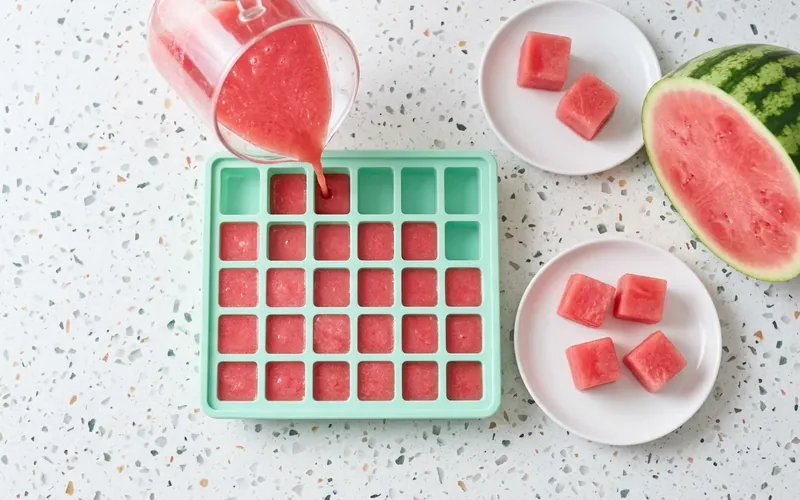
Blend seedless watermelon flesh until smooth, pour it into a silicone mold, and freeze. Remove every seed and keep the rind for the compost bin, since it’s tough to digest. Watermelon is mostly water, which makes these about as light as a treat gets.
3. Frozen Carrot Sticks
Peel a carrot, cut it into sticks sized for your dog’s mouth, and freeze them in a bag. According to the American Kennel Club, some vets suggest cold or frozen carrots for teething puppies. Supervise and pick thinner sticks for small dogs. Our carrot guide has more on safe sizes.
4. Stuffed Frozen Chew Toy
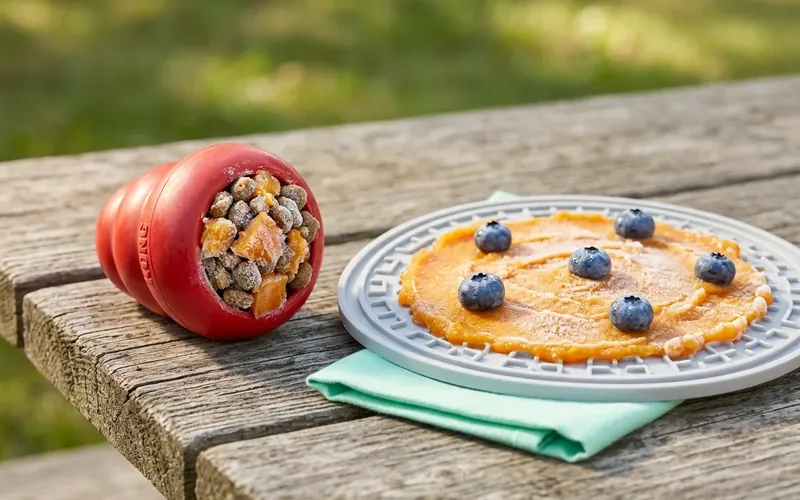
Soak a portion of your dog’s regular kibble in warm water until soft, mix it with a spoonful of plain canned pumpkin, and pack it into a hollow rubber toy. Freeze overnight. Because it’s made from your dog’s own food, simply take that portion out of their next meal.
5. Frozen Lick Mat
Spread a thin layer of plain pumpkin, mashed banana or plain unsweetened yogurt across a lick mat, press in a few blueberries, and freeze for two hours. Thin is the key: it lasts longer and keeps calories low. For a creamier option, try our dog ice cream recipe.
Calories at a Glance
Here’s roughly what each treat adds, based on USDA FoodData Central values for the main ingredient:
| Treat | Best For | Approx. Calories |
|---|---|---|
| Broth cube with chicken | Savory lovers, low-fat diets | ~10 kcal per cube |
| Watermelon pupsicle | Hot days, weight watchers | ~9 kcal per 2-tablespoon cube |
| Frozen carrot stick | Teething puppies, chewers | ~12 kcal per half carrot |
| Stuffed chew toy | Alone time, crate breaks | Part of the daily meal |
| Lick mat (2 tbsp pumpkin) | Calming, grooming, vet visits | ~10 kcal |
Estimates. Yogurt and banana lick mats run higher than pumpkin.
The WSAVA suggests all treats stay under about 10% of daily calories. As a rough guide, that leaves room for one or two cubes for a toy breed and three or four for a large dog, alongside the rest of the day’s treats.
Safety Tips for Frozen Treats
- Soften first: let cubes and toys sit for 5–10 minutes. Very hard frozen chunks are tough on teeth, especially for dogs who chomp instead of lick.
- Size it right: a cube that’s easy to swallow whole is a choking risk. Use mini molds for small dogs.
- Supervise: stay nearby, at least the first few times.
- Go slow with new foods: introduce one new ingredient at a time and watch for loose stool.
Keep these out of the freezer tray: onion and garlic (including powders in store-bought broth), grapes and raisins, chocolate, and anything sweetened with xylitol. The ASPCA lists all of these as foods to avoid. If your dog eats something risky, call your vet or the ASPCA Animal Poison Control Center at (888) 426-4435.
Frozen Dog Treats: Quick Serving Guide
Do
- Soften treats for a few minutes
- Match the size to your dog
- Supervise, especially at first
- Count them as daily treats
Don't
- Store-bought broth with onion
- Watermelon seeds or rind
- Rock-hard chunks for chompers
- Rely on treats to beat the heat
Every dog is different. Check with your veterinarian before adding new treats if your dog has a health condition or dental problems.
Frequently Asked Questions
Should I give my dog frozen treats?
Frozen treats made from dog-safe ingredients are fine for most healthy dogs. Serve them slightly softened, keep them small, and count them toward your dog’s daily treat allowance.
What is the best frozen treat for dogs?
It depends on your goal. Watermelon pupsicles are lightest, broth cubes suit savory fans, and a stuffed chew toy is best for keeping a dog busy. Many owners rotate a few.
What are some homemade low-fat dog treats?
Skimmed homemade chicken broth cubes, watermelon pupsicles, frozen carrot sticks and plain pumpkin on a lick mat are all very low in fat. They’re good options for dogs on a vet-recommended low-fat diet, but check with your vet first.
What frozen treats are best for puppies?
Soft, small options work best: a thin smear of pumpkin on a lick mat or a slim frozen carrot stick under supervision. Keep portions tiny so they don’t crowd out puppy food.
What dog treats should you stay away from?
Skip anything with xylitol, chocolate, grapes or raisins, onion or garlic, and very hard items that could crack teeth. Heavily salted or fatty human snacks are poor choices too.
Find your next bake in our homemade dog treats guide, sorted into baked, frozen, meaty and holiday recipes.
The Bottom Line
The best frozen dog treats are simple: one or two dog-safe ingredients, a mold, and a few hours in the freezer. Rotate broth cubes, watermelon pupsicles and a stuffed toy, soften them before serving, and keep portions small. For more freezer-friendly ideas, see our pumpkin dog treats or browse all Homemade Treats. This article is general information, not veterinary advice; see our Veterinary Disclaimer.
References & Sources
Written by CPD Nutrition Desk using the sources below. We are not affiliated with these organizations, and this guide is not a substitute for advice from your veterinarian.