
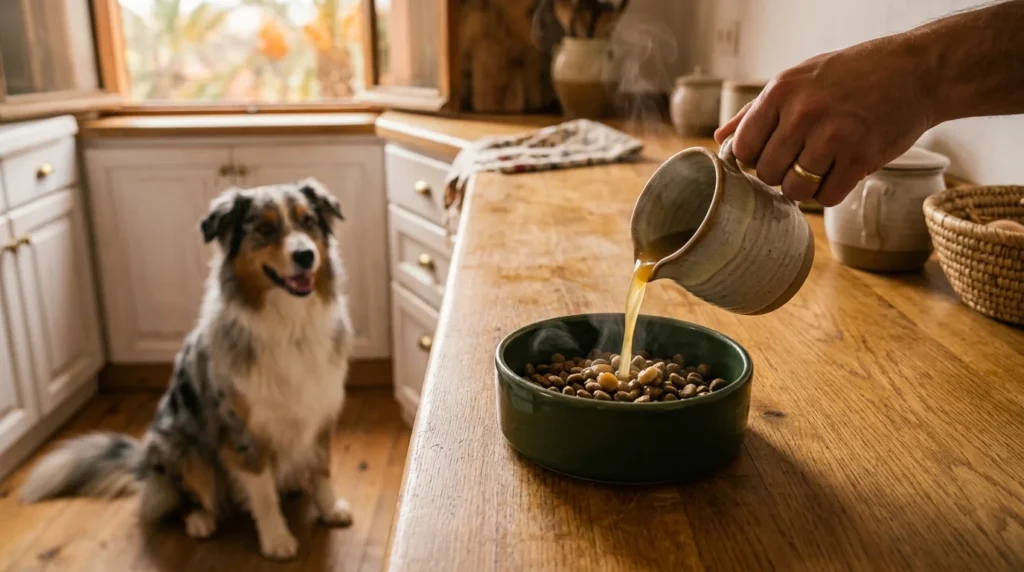

Bone broth for dogs is safe and genuinely useful: it tempts picky or recovering dogs to eat, adds water to the diet and makes plain kibble more appealing. Make it without onion, garlic or salt, and strain out every bone. Claims about detox, immunity and joint repair have thin evidence.
Plain, unseasoned bone broth is a safe topper for most dogs. Its best-supported benefits are hydration and appetite. Serve about 1 ounce per 10 pounds of body weight daily, within the treat allowance. Ask your vet first if your dog has kidney disease or pancreatitis.
Prep: 15 minutes · Cook: 12 to 24 hours (slow cooker) · Yield: about 8 to 10 cups · Difficulty: easy · Storage: fridge 3 to 4 days, freezer up to 3 months
Table of Contents
Is Bone Broth Safe for Dogs?
Yes, when it’s made for dogs. The risks come from seasonings (onion and garlic are toxic; salt adds up), bones (cooked bones splinter, so strain every piece) and fat (rich broth can upset the stomach or trigger pancreatitis). Chill the broth and lift off the fat before serving.
Benefits of Bone Broth for Dogs: What the Evidence Says
| Claimed benefit | What we know | Our verdict |
|---|---|---|
| Hydration | Broth is mostly water and many dogs lap it up eagerly | Real and useful |
| Appetite and palatability | The smell and flavor encourage picky, sick or senior dogs to eat | Real and useful |
| Gentle on upset stomachs | Low-fat broth is a mild way to add fluid and flavor to a bland diet | Helpful as a support, not a treatment |
| Joint health (collagen, gelatin) | Broth contains gelatin and small, variable amounts of glucosamine-related compounds; good studies in dogs are lacking | Possible small effect; not a substitute for joint care |
| Skin and coat | Little direct evidence | Unproven |
| Liver “detox” and immune boosting | No good evidence in dogs | Marketing claim |
Nutrient levels vary with the bones and cooking time. For joint problems, see glucosamine for dogs.
How Much Bone Broth Can I Give My Dog?
A common guideline is about 1 ounce (2 tablespoons) per 10 pounds of body weight per day. Start with half for a few days.
| Dog weight | Daily amount (typical) | Starter amount |
|---|---|---|
| 10 lb | about 2 tablespoons (1 oz) | 1 tablespoon |
| 25 lb | about 1/3 cup (2 1/2 oz) | 2 to 3 tablespoons |
| 50 lb | about 2/3 cup (5 oz) | 1/3 cup |
| 75 lb | about 1 cup (7 1/2 oz) | 1/2 cup |
| 100 lb | about 1 1/4 cups (10 oz) | 2/3 cup |
General guidance for healthy adults. Count broth within the daily treat allowance.
How to Make Bone Broth for Dogs (Slow-Cooker Recipe)
Ingredients
- 2 to 3 lb of bones: chicken feet, necks and backs, or beef knuckle and marrow bones (raw or leftover from unseasoned cooking)
- Water to cover the bones by about an inch
- 1 to 2 tablespoons apple cider vinegar (optional, commonly used to help draw minerals and gelatin from the bones)
- Optional dog-safe vegetables: a chopped carrot, a celery stalk, a handful of parsley (see our guides to carrots and celery)
- Do not add: onion, garlic, leeks, chives, salt, spice blends or bouillon cubes
Method
Slow-Cooker Bone Broth for Dogs
Ingredients
Method
- Add the bones to the slow cooker, cover with water and stir in the vinegar.
- Cook on low about 12 to 24 hours for chicken, or 24 hours or more for beef bones, topping up water if needed.
- Add any vegetables for the last 2 to 3 hours.
- Strain carefully through a fine sieve and check again so no bone fragments remain.
- Discard all bones. Never give cooked bones to dogs.
- Chill overnight and lift off the hardened fat layer.
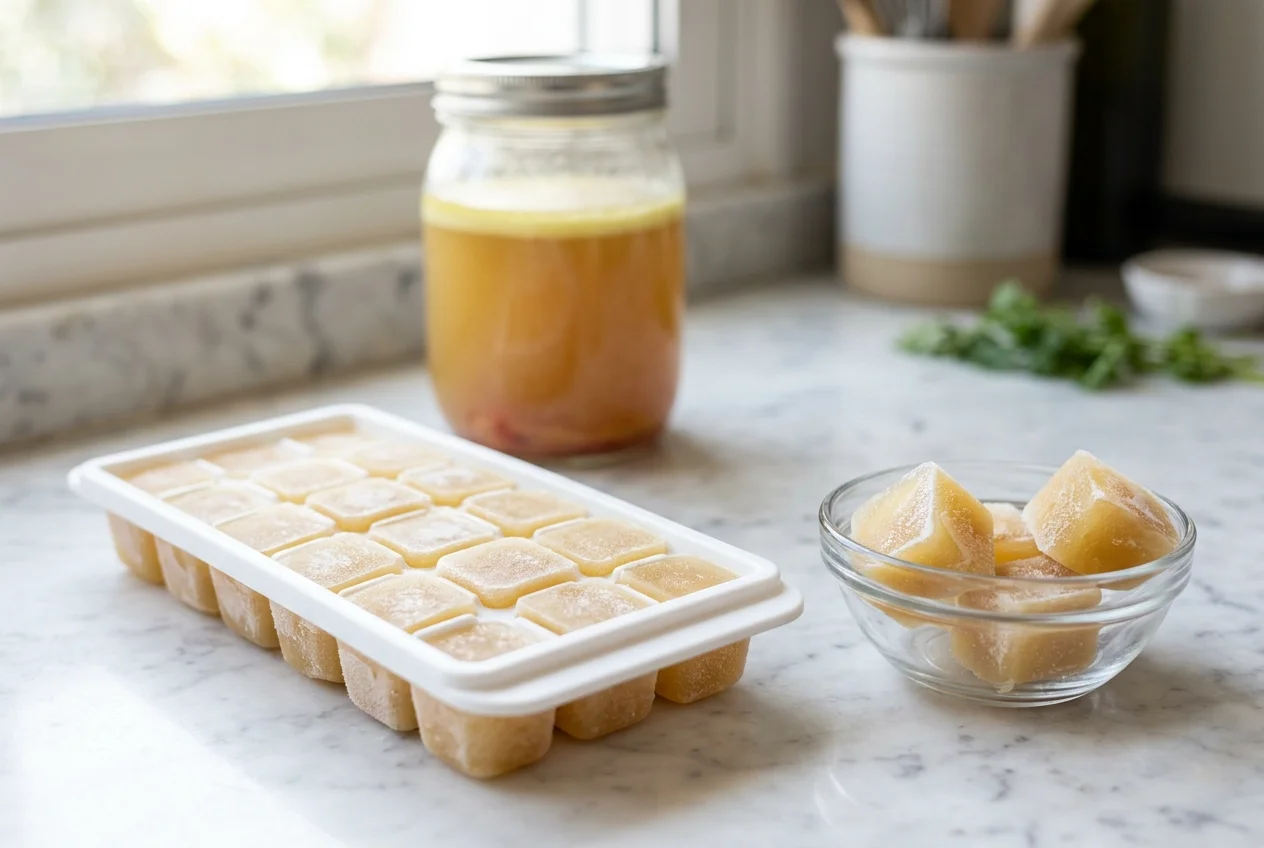
- Portion and store. A good broth sets into a jelly when cold.
Notes
Storage and Serving Ideas
- Fridge: 3 to 4 days in a sealed container.
- Freezer: up to 3 months. Ice cube trays give ready-made portions (one standard cube is about 2 tablespoons).
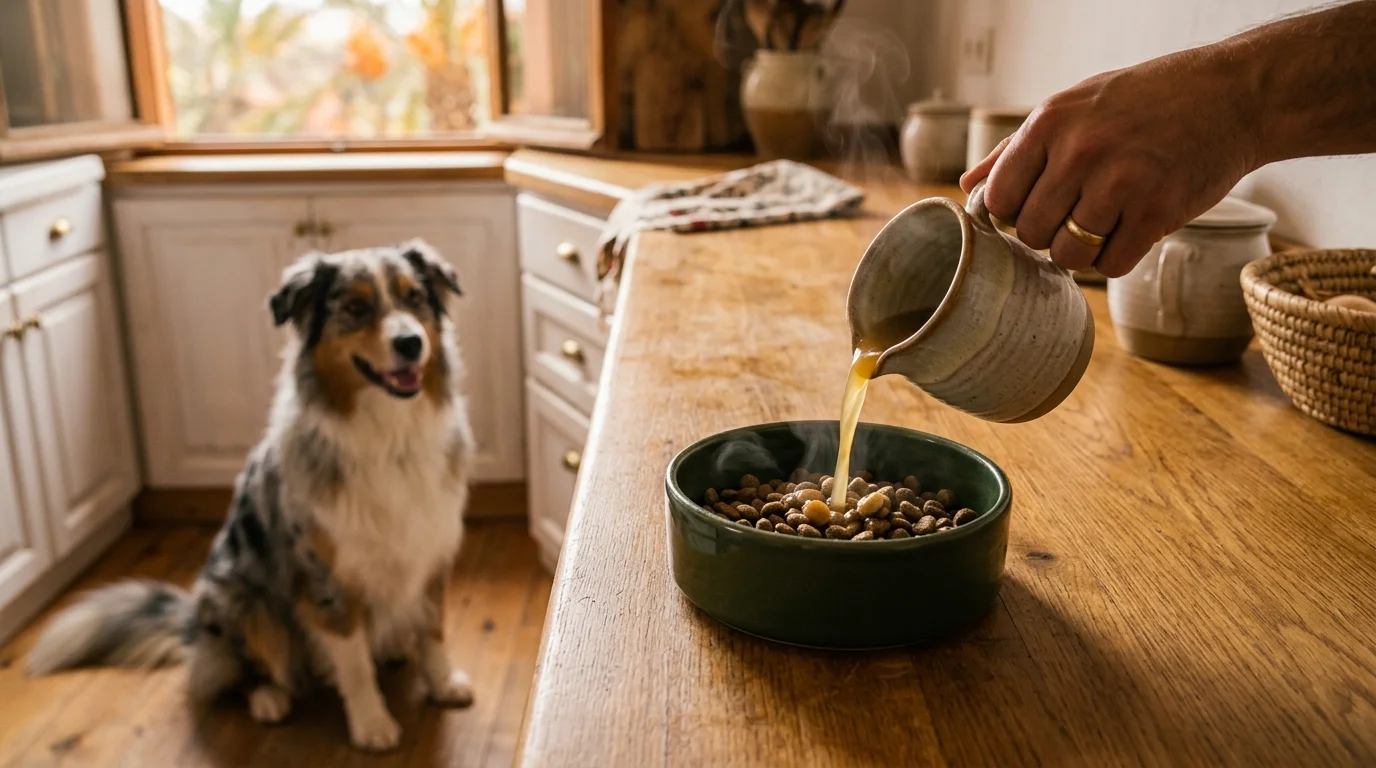
- As a topper: warm slightly and pour over kibble.
- As a summer treat: freeze into cubes or pupsicles; see our frozen dog treats.
- For sick or recovering dogs: a little warm broth over a bland meal can encourage eating; see dog not eating and what to feed a dog with diarrhea.
Store-Bought Bone Broth: How to Choose a Safe One
Grocery-store broths usually contain onion, garlic and lots of salt. Choose a dog-specific broth and check the label for:

- A short ingredient list: bones, water, and dog-safe vegetables or herbs
- No onion, garlic, leek or chive in any form (including powders)
- No added salt, or very low sodium
- No xylitol or artificial sweeteners
- Labelled as a complementary food or topper (it isn’t a complete diet; the WSAVA nutrition guidelines explain how to choose a complete main food)
When to skip bone broth or ask your vet first
- Kidney disease: dogs on kidney diets have controlled protein, phosphorus and sodium, so any addition should be vet-approved.
- Pancreatitis or fat sensitivity: use only well-skimmed, low-fat broth with your vet’s okay.
- Food allergies: chicken and beef are common triggers; choose a protein your dog tolerates (see dog food allergies).
- Heart disease or other sodium-restricted diets: avoid store-bought broths unless your vet approves the brand.
If your dog accidentally drinks broth made with onion or garlic, contact your vet or the ASPCA Animal Poison Control Center for advice.
Frequently Asked Questions
Can dogs have bone broth every day?
Yes, many healthy dogs can have a small amount daily as a topper, as long as it’s unseasoned, low in fat and counted within their treat calories.
Can I give my dog human bone broth?
Only if the label shows no onion, garlic or added salt, which is rare. Most human broths aren’t suitable. Choose a dog-specific broth or make your own.
Is chicken or beef bone broth better for dogs?
Both work. Chicken broth is usually lighter and quicker to make; beef broth is richer and needs more fat skimming. Pick the protein your dog tolerates best.
Is bone broth good for dogs with diarrhea?
A little low-fat, unseasoned broth can help keep a dog hydrated and interested in a bland diet. It doesn’t treat the cause, so call your vet if diarrhea lasts more than a day or two.
Can puppies have bone broth?
A small amount of plain, low-fat broth is generally fine for puppies eating solid food, but their main diet should be a complete puppy food. Ask your vet if you’re unsure.
Want the bigger picture? Our dog food guide covers choosing a food, portions and homemade meals.
The Bottom Line
Bone broth for dogs is a simple, safe way to add moisture and flavor, especially for picky or recovering dogs. Skip onion, garlic and salt, strain every bone, skim the fat and keep portions modest. Browse our Dog Food guides and homemade treats. This is general information, not veterinary advice; see our Veterinary Disclaimer.
References & Sources
Written by CPD Nutrition Desk using the sources below. We are not affiliated with these organizations, and this guide is not a substitute for advice from your veterinarian.
- WSAVA — WSAVA nutrition guidelines
- ASPCA — ASPCA Animal Poison Control Center