


Can dogs eat turkey? Yes, plain cooked turkey meat with no skin, bones or seasoning is safe for dogs and is a common ingredient in dog food. What makes holiday turkey risky is everything around the meat: fatty skin and drippings, cooked bones that splinter, and stuffing or gravy made with onion and garlic. This guide shows which parts of the bird are OK, how much to share, and what to do if your dog grabbed a turkey bone.
Safe in moderation: plain, lean meat only. A few bites of skinless, boneless, unseasoned cooked turkey are fine. Skip the skin, fat, bones, gravy, stuffing and deli or smoked turkey. If your dog swallowed a cooked bone or ate a large amount of fatty leftovers, call your vet.
Table of Contents
Is Turkey Good for Dogs?
Plain turkey breast is a lean, easy-to-digest protein. Roasted skinless breast has roughly 140 calories and 30 grams of protein per 100 grams, according to USDA FoodData Central, along with B vitamins, phosphorus, selenium and zinc. That’s why turkey shows up in so many dog foods and why vets sometimes suggest it in place of chicken in bland diets.
So can dogs have turkey? Yes. The American Kennel Club considers plain, cooked turkey safe in small amounts. The key word is plain. Holiday turkey is usually brined, buttered, rubbed with herbs and garlic, and served with rich sides, which changes the picture completely.

Which Parts of the Turkey Can Dogs Eat?
| Part or Food | OK for Dogs? | Why |
|---|---|---|
| Plain white meat (breast) | Yes | Lean, high-protein |
| Plain dark meat | Small amounts | Higher in fat than breast |
| Skin | No | Very fatty and usually seasoned; can trigger pancreatitis |
| Cooked bones (legs, wings, wishbone) | No | Splinter; choking, cuts, blockages |
| Giblets (heart, liver, gizzard), cooked plain | Small amounts | Nutritious but rich; liver is very high in vitamin A |
| Neck | Not recommended | Cooked neck bones splinter |
| Gravy and drippings | No | Fat, salt, often onion and garlic |
| Stuffing | No | Onion, garlic, butter, sometimes raisins or nuts |
| Deli, smoked turkey, turkey bacon or sausage | No | High in salt and preservatives |
| Raw turkey | Not recommended | Risk of Salmonella for dogs and people |
Can dogs eat turkey skin? It’s the most common question after bones, and the answer is no. Skin holds most of the bird’s fat, plus butter, oil and spices from cooking. A big helping of fatty leftovers is a classic cause of pancreatitis after holidays. If your dog has had pancreatitis before, read our low-fat foods for dogs with pancreatitis guide.
How Much Turkey Can a Dog Eat?
Treat turkey like any other treat: keep it near 10% of the day’s calories. Plain skinless breast portions:
| Dog Weight | Plain Turkey Breast | Approx. Calories |
|---|---|---|
| 10 lb (4.5 kg) | ½ oz (about 1 thin slice, diced) | ~20 kcal |
| 25 lb (11 kg) | 1 oz | ~40 kcal |
| 50 lb (23 kg) | 2 oz | ~80 kcal |
| 75 lb (34 kg) | 3 oz | ~120 kcal |
Our estimates for healthy adult dogs, based on about 140 kcal per 100 g of roasted skinless breast. On days your dog gets turkey, cut back on other treats.
Can Dogs Eat Turkey Bones?
No. Cooked poultry bones are brittle. When a dog crunches them, they break into sharp shards that can injure the mouth and throat, get stuck, or tear the stomach or intestines. Wishbones, wing tips and drumstick bones are the usual culprits, often pulled from the trash or snatched off a plate. The AVMA’s holiday safety advice specifically warns owners to keep turkey bones and carcasses away from pets.
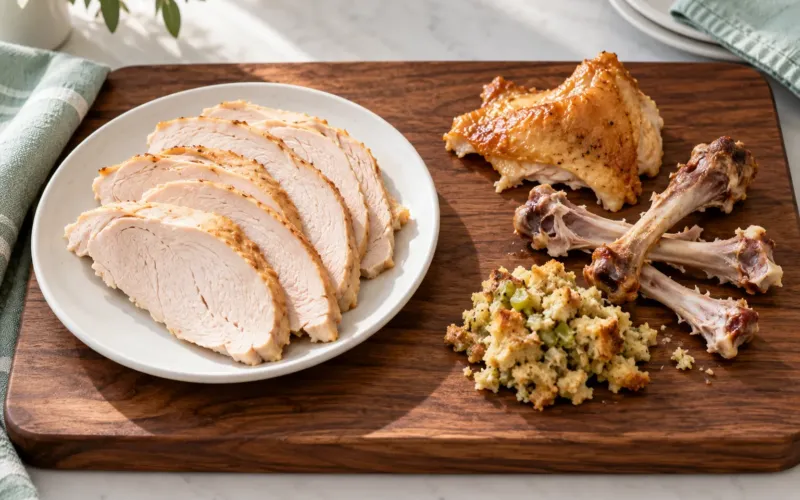
How to Serve Turkey Safely
- Set some aside early. Before you season the bird, or from the plainest part of the breast, cut a small piece for your dog.
- Remove skin, fat and every bone. Check carefully for small rib and wing bones.
- Cut it small. Dice into pea-size pieces for small dogs to prevent gulping.
- Serve it as a topper. Mix a little into the usual meal instead of handing over a big plate of leftovers.
- Secure the carcass. Bag bones and the carcass right away and take them to an outdoor bin.
If you’d like to use turkey all year, plain cooked ground turkey is an easy option. Our ground turkey for dogs guide covers cooking and portions.
Thanksgiving Turkey: Sharing the Holiday Plate
Most turkey problems happen when a dog gets a mixed plate of holiday food. A safer “dog plate” might hold a little plain turkey breast, a spoonful of plain mashed sweet potato and a few plain green beans. Keep these off it:
- Stuffing and gravy: onion and garlic damage red blood cells.
- Glazed ham: very salty and fatty.
- Buttery mashed potatoes and casseroles: fat, dairy and seasoning.
- Desserts: chocolate, xylitol, raisins and nuts.
Ask guests not to feed the dog, and give your dog a long-lasting chew in another room during the meal.
Puppies, Allergies and Sensitive Stomachs
Can puppies eat turkey?
Yes, a few small bites of plain cooked breast are fine for puppies on solid food. Keep them far from bones, which puppies are especially likely to swallow.
Turkey allergies
Dogs can be allergic to any protein, including turkey, though it’s less common than beef or chicken. Itchy skin, ear problems or digestive upset after eating turkey are worth discussing with your vet.
Upset stomach
Plain boiled turkey with white rice is sometimes used as a bland meal. If your dog already has vomiting or diarrhea, start with our dog upset stomach guide and call your vet if signs last.
What should owners do in the first hour after a dog eats a cooked turkey bone? Call your vet, don't induce vomiting, and watch closely for 72 hours for vomiting, belly pain or bloody stool.
How much fatty holiday food is enough to risk pancreatitis? There's no safe fixed amount. One large fatty meal can trigger it in some dogs, especially small or overweight ones.
— Dr. Sarah Miller, DVM
Turkey for Dogs: Quick Serving Guide
✓ Do
- Share plain, skinless breast meat
- Remove every bone before serving
- Cut it into small pieces
- Bin the carcass right away
✕ Don’t
- Give skin, fat or drippings
- Offer cooked bones or the neck
- Share stuffing or gravy
- Feed deli or smoked turkey
Call your vet if your dog swallowed a turkey bone. Dogs with pancreatitis or allergies need a vet’s OK first.
Frequently Asked Questions
Can dogs eat turkey skin?
No. Turkey skin is high in fat and usually seasoned, which can cause vomiting, diarrhea or pancreatitis.
Can dogs eat raw turkey bones?
Raw bones are less likely to splinter than cooked ones, but they still carry risks of choking, broken teeth, blockages and bacteria. Talk to your vet before feeding any bones.
Can dogs eat turkey giblets?
Plain cooked heart and gizzard are fine in small amounts. Give liver sparingly because it’s very rich in vitamin A. Never feed giblets cooked in gravy.
Can dogs eat turkey lunch meat?
It’s best to skip it. Deli turkey is high in sodium and often contains preservatives and seasonings.
Can dogs eat stuffing?
No. Stuffing usually contains onion, garlic, butter and sometimes raisins or nuts, all poor choices for dogs.
Does turkey make dogs sleepy?
Turkey contains tryptophan, but no more than other meats. A sleepy dog after a holiday is more likely tired from the excitement.
Checking another food? See our What Can Dogs Eat? A-Z list of safe and unsafe foods.
The Bottom Line
Can dogs eat turkey? Yes, plain, skinless, boneless turkey breast is a safe, lean treat in small amounts. Keep skin, bones, gravy, stuffing and deli turkey away from your dog, and secure the carcass after the meal. If your dog eats a cooked bone or a pile of fatty leftovers, call your vet. Browse more holiday food answers in our Can Dogs Eat? guides. This article is general information, not veterinary advice; see our Veterinary Disclaimer.
References & Sources
Written by CPD Nutrition Desk using the sources below. We are not affiliated with these organizations, and this guide is not a substitute for advice from your veterinarian.
- USDA — USDA FoodData Central
- American Kennel Club (AKC) — Can dogs eat turkey
- AVMA — AVMA's holiday safety advice