
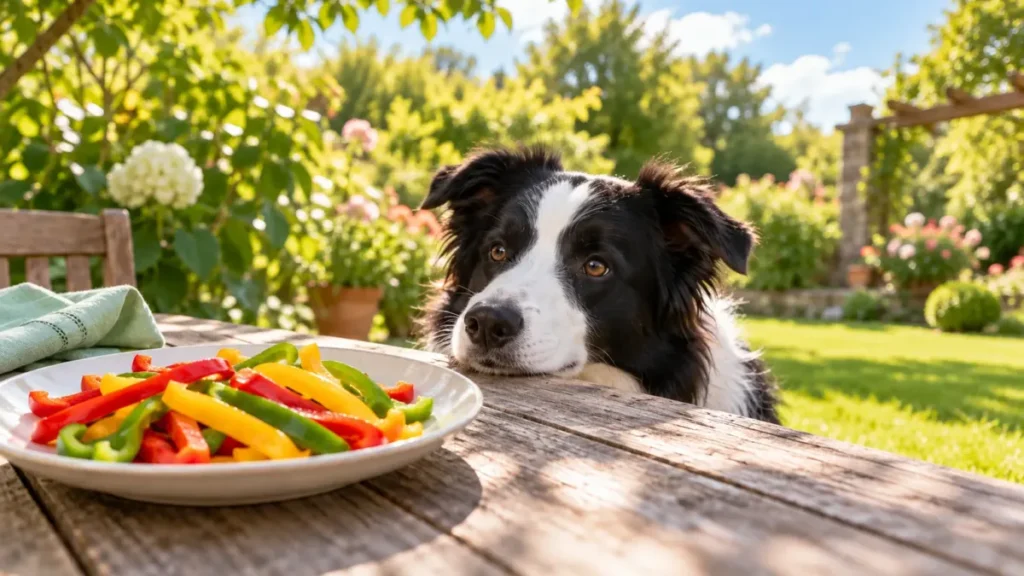

Can dogs eat bell peppers? Yes. Plain bell peppers of any color are safe for dogs, and the crunchy strips make a low-calorie snack. Red peppers carry the most nutrients, while green ones are less sweet. Keep them plain, remove the stem and seeds, and never swap in hot peppers like jalapeños, which can burn your dog's mouth and stomach.
Yes, plain and in small pieces. Bell peppers are non-toxic and very low in calories. Serve them raw or lightly steamed with no oil, salt, onion or garlic. Start small, since some dogs get gas from new vegetables.

Table of Contents
Red, Yellow or Green: Which Is Best?
All bell peppers are the same plant picked at different stages. Green peppers are harvested early, while red ones ripen longest and build up more vitamins and natural sugar. Here's the difference per 100 g raw, from USDA FoodData Central:
| Per 100 g (raw) | Green | Yellow | Red |
|---|---|---|---|
| Calories | ~20 kcal | ~27 kcal | ~31 kcal |
| Vitamin C | ~80 mg | ~184 mg | ~128 mg |
| Natural sugar | ~2.4 g | ~1 g | ~4.2 g |
| Taste for dogs | Slightly bitter | Mild, sweet | Sweetest |
Approximate USDA values. Orange peppers fall between yellow and red.
Red peppers also bring beta-carotene, which the body turns into vitamin A. That said, a dog on a complete diet already gets the vitamins it needs, so pick whichever color your dog enjoys. Many dogs ignore the slightly bitter green ones.
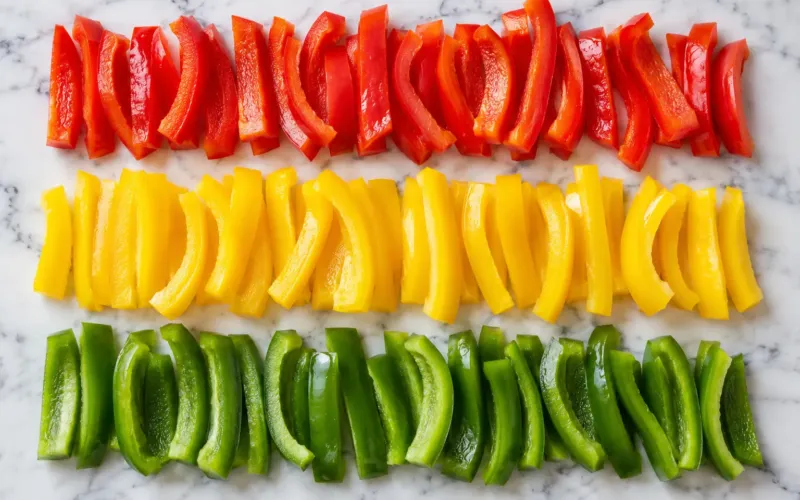
Raw or Cooked Bell Peppers?
Both work. Raw strips give a satisfying crunch and keep the most vitamin C. Lightly steamed pieces are softer and easier on the stomach, which suits seniors and dogs with dental issues. Avoid peppers cooked in oil, butter or seasoning.
- Raw: wash, remove the stem, seeds and white ribs, then cut thin strips or small dice.
- Steamed: steam 3 to 5 minutes until just soft, cool, then chop.
- Frozen: freeze small cubes for a chewy summer snack.
Seeds aren't toxic, but they're bitter and add nothing, so it's easier to cut them out.
How Much Bell Pepper Can a Dog Have?
Bell peppers are so light that calories rarely matter. The limit is digestion: too much fiber can bring gas or loose stool. These amounts work well for most dogs as a treat:
| Dog's weight | Suggested amount | Rough calories |
|---|---|---|
| Under 15 lb | 1 to 2 thin strips | ~2 to 4 kcal |
| 15 to 40 lb | 3 to 4 strips | ~6 to 8 kcal |
| 40 to 70 lb | ¼ pepper | ~8 to 10 kcal |
| Over 70 lb | Up to ½ pepper | ~15 to 18 kcal |
Our estimates. A strip is about 1 cm wide, and a medium pepper weighs about 120 g. All treats together should stay under about 10% of daily calories, a guideline from WSAVA.
Introduce peppers slowly, a strip or two at first, then build up over a few days.
Peppers and Pepper Dishes to Keep Away
Hot peppers are a different story. Jalapeños, chili peppers and cayenne contain capsaicin, which can cause drooling, vomiting, diarrhea and a painful mouth. Pepper dishes also tend to hide onion and garlic, both of which damage a dog's red blood cells according to the ASPCA.
- Stuffed peppers: usually filled with seasoned meat, rice, cheese, onion and garlic.
- Fajita peppers: cooked with onions, oil and spice mixes.
- Pickled or jarred peppers: high in salt and vinegar.
- Pepper-flavored chips or dips: salt, fat and seasoning.

If your dog ate peppers cooked with onions, see our onion guide for what to do next.
Dogs That Should Skip Them
- Sensitive stomachs: start with steamed pieces or skip peppers if gas follows. Our sensitive stomach diet guide has gentler ideas.
- Small puppies: stick mostly to puppy food; one tiny steamed piece is enough to test.
- Dogs with food allergies: add one new food at a time so you can spot reactions.
Raw or cooked peppers? Either is fine. Raw keeps more vitamin C, while lightly steamed pieces are gentler for seniors and sensitive stomachs.
What if my dog ate a hot pepper? Most dogs just drool and drink a lot of water. Call your vet if vomiting or diarrhea continues, or if the pepper was cooked with onion or garlic.
— Dr. Sarah Miller, DVM
Bell Peppers for Dogs: Quick Serving Guide
✓ Do
- Wash and remove stem and seeds
- Cut thin strips or small dice
- Serve raw or lightly steamed
- Start with a strip or two
✕ Don't
- Share hot or spicy peppers
- Give stuffed or fajita peppers
- Offer jarred or pickled peppers
- Cook them with onion or garlic
Dogs with a sensitive stomach or allergies should get a vet OK first.
Frequently Asked Questions
Can dogs eat bell pepper seeds?
The seeds aren't toxic, but they're bitter and can upset a sensitive stomach. Cut them out with the white ribs.
Can dogs eat bell peppers every day?
A few strips a day is fine for many healthy dogs, as long as stools stay normal and treats stay within the daily budget.
Can dogs eat bell peppers and onions cooked together?
No. Onions are toxic to dogs even when cooked, and the peppers soak up their juices. Pick plain peppers only.
Are bell peppers a nightshade? Is that a problem?
Yes, they're in the nightshade family with tomatoes and potatoes, but the ripe flesh is safe for dogs. Avoid the leaves and stems of the plant.
Can dogs eat roasted red peppers from a jar?
It's best not to. Jarred peppers are usually packed in oil, salt or vinegar and sometimes garlic.
Checking another food? See our What Can Dogs Eat? A-Z list of safe and unsafe foods.
The Bottom Line
Can dogs eat bell peppers? Yes. Plain red, yellow or green peppers, raw or lightly steamed and cut small, make a crunchy, low-calorie treat. Keep hot peppers, seasoned dishes and anything cooked with onion or garlic off the menu. For more veggie snacks, see our carrots guide or browse the Can Dogs Eat…? library.
References & Sources
Written by CPD Nutrition Desk using the sources below. We are not affiliated with these organizations, and this guide is not a substitute for advice from your veterinarian.
- USDA — USDA FoodData Central
- WSAVA — WSAVA guidetotreats dogs 251107
- ASPCA — People foods avoid feeding your pets