


Can dogs eat plums? It's best to skip them. The juicy flesh of a ripe plum isn't toxic, and a small piece without the pit won't hurt most dogs. But the pit, stem and leaves contain compounds that release cyanide, and the pit is the perfect size to block a dog's intestines. Given the safer fruits out there, plums aren't worth the risk.
Better avoided. A small, pitted piece of ripe plum is unlikely to harm a healthy dog, but plums offer nothing special and come with real hazards: pits, stems, leaves, sugary prunes and fallen fruit in the yard. If your dog swallowed a pit or chewed one open, call your vet.

Table of Contents
Why Plums Are Risky for Dogs
The ASPCA lists the plum tree as toxic to dogs because its stems, leaves and seeds contain cyanogenic glycosides, which release cyanide when chewed and digested. The ripe flesh is the safe part, but it's attached to the risky part, and dogs rarely eat plums neatly.
| Part of the plum | Risk | Why |
|---|---|---|
| Ripe flesh, no pit | Low | Sugar and fiber; can cause loose stool |
| Pit | High | Cyanide compounds inside, choking and blockage |
| Stems and leaves | High | Cyanide compounds |
| Unripe or fallen, rotting fruit | Moderate | Stomach upset; mold |
| Prunes (dried plums) | Moderate | Concentrated sugar, sorbitol and fiber |
A single swallowed pit is unlikely to release much cyanide because it usually stays intact. The bigger, more common problem is mechanical: plum pits are hard, slippery and can lodge in the throat or intestines, especially in small and medium dogs.
My Dog Ate a Plum Pit. What Now?
Call your vet if your dog swallowed a pit, chewed one open, or ate stems or leaves. Share your dog's weight and how much was eaten. Don't try to make your dog vomit unless your vet says to. Cyanide signs listed by the ASPCA include brick-red gums, dilated pupils, difficulty breathing, panting and shock. Blockage signs include repeated vomiting, a painful belly, straining and not eating, sometimes a day or more later.
While you wait, keep your dog calm, remove any remaining fruit and pits, and note the time it happened.
Plum Flesh: Not Toxic, Not Special
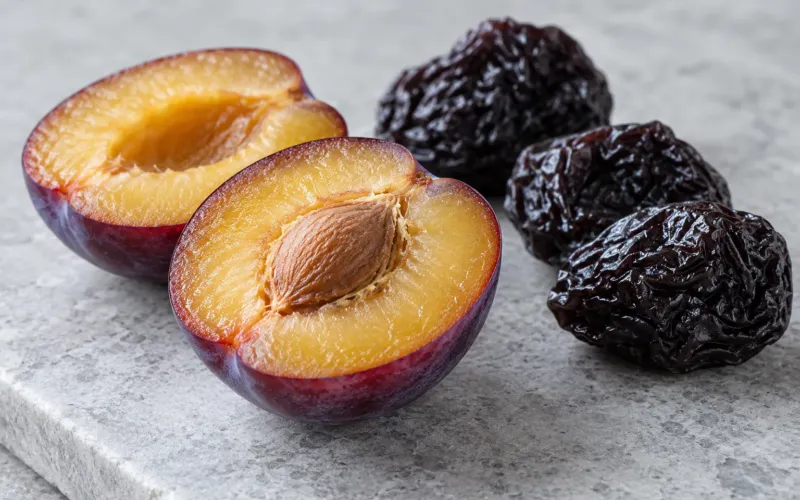
If your dog gets a small, pitted bite, you don't need to panic. Here's what a medium plum brings, using USDA FoodData Central values:
| Per medium plum (~66 g) | Fresh plum | 3 prunes (~30 g) |
|---|---|---|
| Calories | ~30 kcal | ~72 kcal |
| Natural sugar | ~6.5 g | ~11 g |
| Fiber | ~0.9 g | ~2 g |
| Sorbitol | Low | High (natural laxative) |
Approximate USDA values. Prunes vary by size and moisture.
That sugar and fiber are why plums, and especially prunes, often cause diarrhea in dogs. Prune juice is even more concentrated, so skip it too.
Plum Trees in the Yard
If you have a plum tree, fallen fruit is the bigger everyday risk. Dogs gulp whole plums, pits and all, and rotting fruit can grow mold that upsets the stomach. During the fruiting season, pick up fallen fruit daily and supervise your dog in that part of the yard. The same caution applies to other stone fruit trees like cherries, peaches and apricots. See our cherries and peaches guides.
If You Still Want to Share a Bite
A tiny bit of ripe plum flesh is OK for a healthy adult dog as a one-off:
- Wash the plum and remove the pit, stem and any leaves.
- Cut a thin slice into small pieces.
- Offer one or two pieces at most, and only once in a while.
- Throw the pit away in a lidded bin.
Dogs with diabetes, a sensitive stomach or a history of pancreatitis should skip plums entirely.
Safer Fruit Swaps
These give the same juicy, sweet hit without pits:
- Blueberries, whole or halved for small dogs
- Watermelon, seedless and rind removed
- Apple slices without seeds or core
- Banana slices
Is one plum pit an emergency? Call your vet when it happens. In a large dog it may pass, but small dogs are at real risk of a blockage, and a chewed pit raises cyanide concerns.
What should I do about a plum tree in the yard? Pick up fallen fruit every day in season and supervise your dog in that area. Most problems come from dogs gulping whole fallen plums.
— Dr. Sarah Miller, DVM
Plums and Dogs: Quick Safety Guide
✕ Risky
- Plum pits, whole or chewed
- Stems and leaves
- Fallen or rotting fruit in the yard
- Prunes and prune juice
✓ Better swaps
- Blueberries
- Seedless watermelon
- Apple slices without seeds
- Banana slices
Call your vet if your dog swallowed a pit or chewed leaves or stems.
Frequently Asked Questions
Are plums toxic to dogs?
The ripe flesh isn't toxic, but the pit, stems and leaves contain cyanide compounds. That's why plums are better skipped.
Can dogs eat prunes?
It's best not to. Prunes are concentrated sugar and natural laxatives, so they often cause diarrhea.
Can dogs eat plums without the pit?
A small, pitted piece of ripe plum is unlikely to cause harm. Keep it rare and tiny.
Can dogs eat plums and apricots?
Both have the same risky pits and leaves. Pitted flesh in small amounts is the only part that's OK.
How long after eating a plum pit would a dog show symptoms?
Cyanide signs, if any, appear quickly, often within hours. Blockage signs can take a day or more. Call your vet as soon as you know a pit was swallowed.
Wondering about other foods? Our A-Z guide to what dogs can eat sorts them into safe, moderation and avoid.
The Bottom Line
Can dogs eat plums? The flesh isn't toxic, but pits, stems, leaves and prunes make plums a poor choice. If your dog swallowed a pit or chewed plant parts, call your vet. Reach for pit-free fruit instead. More answers in our Can Dogs Eat…? library and the toxic foods list.
References & Sources
Written by CPD Nutrition Desk using the sources below. We are not affiliated with these organizations, and this guide is not a substitute for advice from your veterinarian.
- ASPCA — View source
- USDA — USDA FoodData Central