


Slice a watermelon in summer and a wet nose appears at your elbow. So, can dogs eat watermelon? Yes. The pink flesh is one of the safest fruits to share and mostly water. The catch is the rind, the seeds and watermelon-flavored products. Below: portions by weight, rind accidents and health conditions.
Yes, dogs can have watermelon in moderation. Serve plain, seedless flesh in small cubes, with no rind. One cup has about 46 calories and 9 grams of natural sugar, so keep it an occasional treat. Skip watermelon candy, juice and flavored snacks, which can hide sugar or xylitol.

Table of Contents
Is Watermelon Good for Dogs?
For most healthy dogs, yes: low in calories, nearly fat-free and hydrating. Compared with other melons:
| Per 100 g (raw) | Watermelon | Cantaloupe | Honeydew |
|---|---|---|---|
| Calories | 30 kcal | 34 kcal | 36 kcal |
| Water | 91% | 90% | 90% |
| Natural sugars | 6.2 g | 7.9 g | 8.1 g |
| Fat | 0.2 g | 0.2 g | 0.1 g |
| Safe to share? | Yes, flesh only | Yes, flesh only | Yes, flesh only |
Approximate values from USDA FoodData Central. One cup of diced watermelon (about 152 g) has roughly 46 kcal and 9.4 g of sugar.
- Hydration: a few cubes add water to your dog’s day, which helps on hot days or after a walk.
- Vitamins A and C, plus potassium: small but useful amounts in a low-calorie package.
- Lycopene: the antioxidant pigment that gives watermelon its red color.
Think of it as a refreshing extra, not a supplement.
How Much Watermelon Can a Dog Eat?
Keep treats under about 10% of daily calories. The suggested serving sits well under that limit:
| Dog weight | Approx. daily calories | 10% treat budget | Suggested watermelon serving | Calories / sugar |
|---|---|---|---|---|
| 10 lb | ~350 kcal | ~35 kcal | 2 to 4 one-inch cubes (about 1/4 cup) | ~12 kcal / ~2 g |
| 25 lb | ~690 kcal | ~70 kcal | 1/3 to 1/2 cup | ~15 to 23 kcal / 3 to 5 g |
| 50 lb | ~1,160 kcal | ~115 kcal | 1/2 to 3/4 cup | ~23 to 35 kcal / 5 to 7 g |
| 75 lb | ~1,580 kcal | ~160 kcal | 3/4 to 1 cup | ~35 to 46 kcal / 7 to 9 g |
| 100 lb | ~1,960 kcal | ~195 kcal | About 1 cup | ~46 kcal / ~9 g |
Estimates for a typical neutered adult; ask your vet for your dog’s number.
Two or three times a week works well. First time? Start with one or two small cubes.
What Parts of Watermelon Can Dogs Eat?
Can dogs eat watermelon rind?
No. It isn’t toxic, but it’s tough and fibrous. Swallowed chunks can upset the stomach or cause a blockage, especially in small dogs and fast eaters.
Can dogs eat watermelon seeds?
A seed or two usually passes in a large dog, but hard black seeds can add up to a blockage, especially in small dogs. The soft white seeds in seedless melons are much less of a concern.
Can dogs eat watermelon skin?
The dark green skin is the outer layer of the rind, so the same answer applies: leave it off.
My dog ate watermelon rind or seeds: what now?
- Estimate the amount relative to your dog’s size.
- Don’t make your dog vomit unless a veterinarian tells you to.
- Watch for 1 to 3 days for vomiting, refusing food, belly pain or straining.
- Call your vet right away if your dog is small and swallowed a large piece, or if any of those signs appear. A blockage can become an emergency.

Does Watermelon Cause Diarrhea in Dogs?
It can, in large amounts: water, sugar and fiber loosen stools. Stick to the servings above, and skip watermelon if your dog already has diarrhea.
Watermelon for Dogs With Diabetes, Kidney Disease or Pancreatitis
- Diabetes: its sugar is absorbed quickly, though a small portion has a low glycemic load. With vet approval, give one or two cubes at a consistent time with meals.
- Kidney disease: watermelon is low in protein and phosphorus and high in water, which is why some vets allow small amounts. Dogs on prescription kidney diets have tightly controlled nutrients, though, so check before adding anything.
- Pancreatitis: watermelon is virtually fat-free, which makes it gentler than most table foods. Still, dogs recovering from a flare-up should only get treats their vet has approved.
How to Serve Watermelon to Your Dog
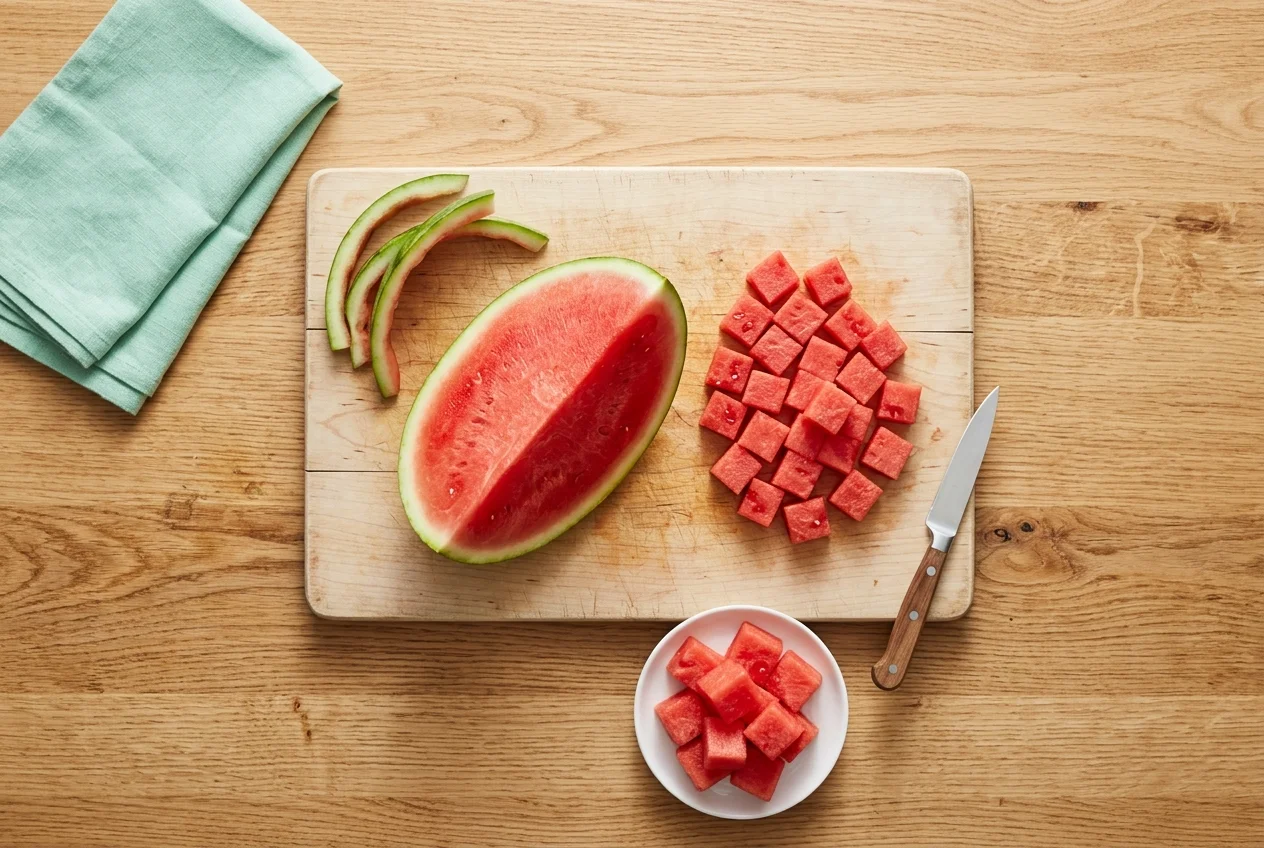
- Cut away all rind and remove dark seeds.
- Dice into cubes sized for your dog: about half an inch for small breeds, one inch for larger dogs.
- Serve fresh or frozen. Frozen cubes make a cooling summer treat. For small dogs, let them soften for a minute so they aren’t rock-hard.
Try watermelon pupsicles from our frozen dog treats, or mix with blueberries, strawberries and cucumber.
Watermelon Products to Keep Away From Dogs
- Watermelon candy, gum and sugar-free sweets: these can contain xylitol, a sweetener that can cause a dangerous drop in blood sugar in dogs. The FDA warns pet owners to keep xylitol products out of reach.
- Watermelon juice and drinks: concentrated sugar without the fiber, and sometimes added sweeteners.
- Fruit salads and summer desserts: often mixed with grapes, which are dangerous for dogs, or topped with sugar, yogurt or alcohol.
- Salted or spiced watermelon: tajin, chili-lime or salted slices are meant for people, not dogs.
If your dog eats something containing xylitol, contact your veterinarian or the ASPCA Animal Poison Control Center right away.
Frequently Asked Questions
Can puppies eat watermelon?
Yes, one or two tiny seedless cubes once they eat solid food well.
Can dogs eat watermelon every day?
A small cube within treat calories is fine, but two or three times a week keeps sugar in check.
Can dogs be allergic to watermelon?
It’s uncommon, but any food can trigger a reaction. Stop feeding it and call your vet if you notice itching, hives, facial swelling, vomiting or diarrhea after a first taste.
Is frozen watermelon good for dogs?
Frozen cubes are a great hot-weather treat. Cut them small, and for small dogs or dogs with sensitive teeth let them thaw slightly first.
Wondering about other foods? Our A-Z guide to what dogs can eat sorts them into safe, moderation and avoid.
The Bottom Line
Can dogs eat watermelon? Yes: stick to the flesh, remove rind and seeds and keep portions small. Dogs with diabetes or other conditions need vet approval. Browse our Can Dogs Eat…? library or foods dogs should never eat. This is general information, not veterinary advice; see our Veterinary Disclaimer.
References & Sources
Written by CPD Nutrition Desk using the sources below. We are not affiliated with these organizations, and this guide is not a substitute for advice from your veterinarian.
- USDA — USDA FoodData Central
- U.S. Food and Drug Administration — Paws xylitol its dangerous dogs
- ASPCA — ASPCA Animal Poison Control Center