
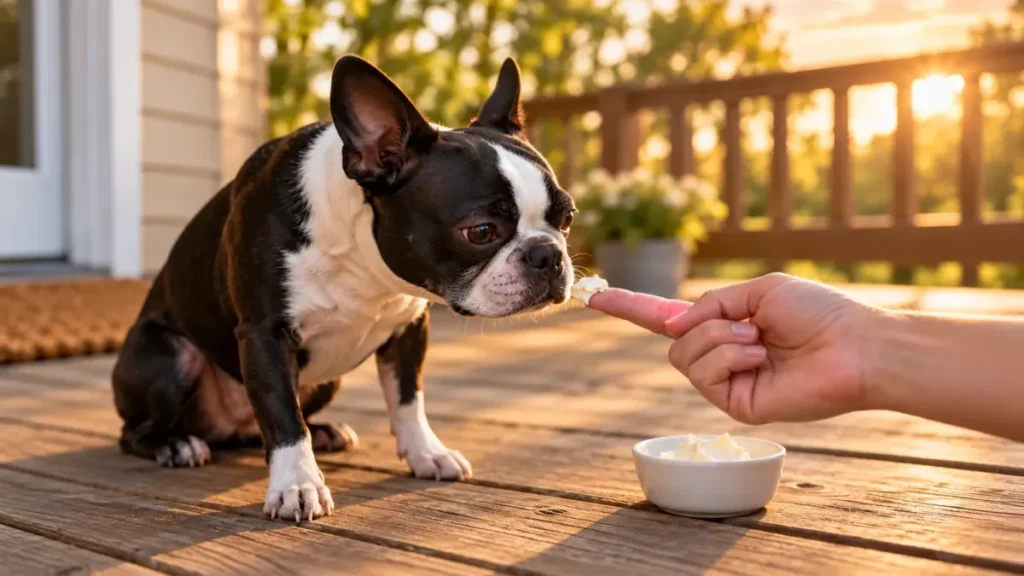

Can dogs have cream cheese? Yes, a small dab of plain cream cheese is safe for most dogs. It's soft, tasty and great for hiding a pill. It's also rich: about half of its weight is fat, so too much can upset the stomach or add weight. Flavored spreads are where the danger lies, since chive, onion and garlic varieties are toxic to dogs.
Plain cream cheese is OK in small amounts. A fingertip to a teaspoon, depending on size, is plenty. Pick plain or light cream cheese, read the label, and skip chive, onion, garlic and sweetened flavors, frosting and anything fried like crab rangoon.
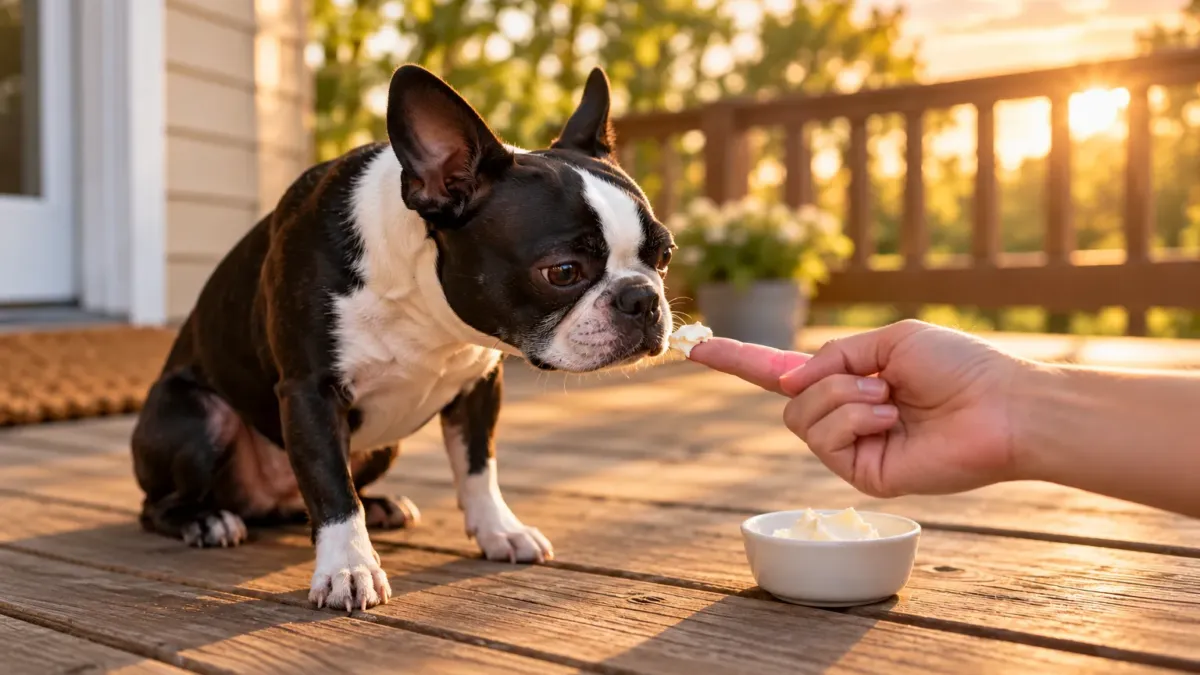
Table of Contents
What's in Cream Cheese?
Cream cheese is a fresh, unaged cheese made from milk and cream. It's lower in lactose than milk but much higher in fat. Per tablespoon, using USDA FoodData Central values:
| Per tablespoon (~14 g) | Regular | Light (Neufchâtel style) | Whipped (~10 g) |
|---|---|---|---|
| Calories | ~50 kcal | ~36 kcal | ~35 kcal |
| Fat | ~5 g | ~3.3 g | ~3.4 g |
| Sodium | ~45 mg | ~55 mg | ~35 mg |
| Lactose | Low | Low | Low |
Approximate values; brands vary.
One tablespoon of regular cream cheese is more than the whole daily treat budget of a 10 lb dog, so think fingertip, not spoonful.
Flavors and Dishes to Avoid
Chive, onion and garlic cream cheese are toxic. Onions, chives and garlic damage a dog's red blood cells, even in powdered or dried form, according to the ASPCA. If your dog licked up a bagel's worth of chive or garlic spread, call your vet with the amount and your dog's weight.
| Product | Verdict | Why |
|---|---|---|
| Plain or light cream cheese | Small amounts | Fat |
| Chive and onion, garlic and herb | Avoid | Toxic alliums |
| Strawberry, honey or cinnamon spreads | Avoid | Added sugar |
| Cream cheese frosting | Avoid | Sugar, butter |
| Everything bagel with cream cheese | Avoid | Garlic, onion, salt |
| Crab rangoon, cream cheese wontons | Avoid | Fried, often with onion |
| Cheesecake | Avoid | Sugar, fat; check for chocolate |
Also check sugar-free or “light” sweet spreads for xylitol, which the FDA warns is dangerous for dogs.
How Much Cream Cheese Can a Dog Have?
| Dog's weight | Plain cream cheese | Rough calories (regular) |
|---|---|---|
| Under 15 lb | A fingertip (about ¼ tsp) | ~5 kcal |
| 15 to 40 lb | ½ teaspoon | ~8 kcal |
| 40 to 70 lb | 1 teaspoon | ~17 kcal |
| Over 70 lb | 1 to 2 teaspoons | ~17 to 34 kcal |
Our estimates for healthy adults. Treats should stay under about 10% of daily calories, a guideline from WSAVA.
The first time, offer a little and watch for gas or soft stool over the next day.
Using Cream Cheese to Give Pills
Cream cheese is a favorite pill wrapper because it's sticky and strong-smelling. A few tips:
- Use the smallest amount that covers the pill.
- Offer a plain “test” dab first, then the one with the pill, then another plain dab.
- Ask your vet first if the pill is an antibiotic. Dairy calcium can reduce how well some, such as tetracyclines, are absorbed.
- If your dog takes daily medicine, count those dabs in the treat budget.
Other pill-hiding ideas include a small piece of plain cooked chicken or a dab of xylitol-free peanut butter.
Dogs That Should Skip It
- Dogs with pancreatitis or on low-fat diets: the fat can trigger flare-ups. See low-fat foods for dogs with pancreatitis.
- Overweight dogs: small dabs add up.
- Lactose-sensitive dogs: cream cheese is low in lactose, but some dogs still react.
- Dogs with a dairy allergy: see dog food allergies.
Lighter Dairy Options
If your dog loves creamy treats, these are lighter per spoonful:
- Plain, low-fat cottage cheese
- Plain, unsweetened Greek yogurt
- A small cube of mild cheese for training
Cream Cheese vs Other Cheeses
| Per tablespoon | Calories | Fat | Lactose |
|---|---|---|---|
| Cream cheese | ~50 kcal | ~5 g | Low |
| Low-fat cottage cheese | ~10 kcal | ~0.3 g | Moderate |
| Shredded mozzarella | ~20 kcal | ~1.5 g | Low |
| Shredded cheddar | ~28 kcal | ~2.3 g | Very low |
Approximate values from USDA FoodData Central.
Per spoonful, cream cheese is the richest of the group, which is why it works best as a tiny pill wrapper rather than a topper.
Is cream cheese OK for giving pills? Usually, yes, in a small dab. Ask first if the medicine is an antibiotic, since dairy can affect absorption of some.
Which cream cheese flavors are dangerous? Anything with chives, onion or garlic. Sweet spreads aren't toxic unless they contain xylitol, but they add sugar.
— Dr. Sarah Miller, DVM
Cream Cheese for Dogs: Quick Serving Guide
✓ Do
- Pick plain or light cream cheese
- Use a fingertip-size dab
- Use it to wrap pills
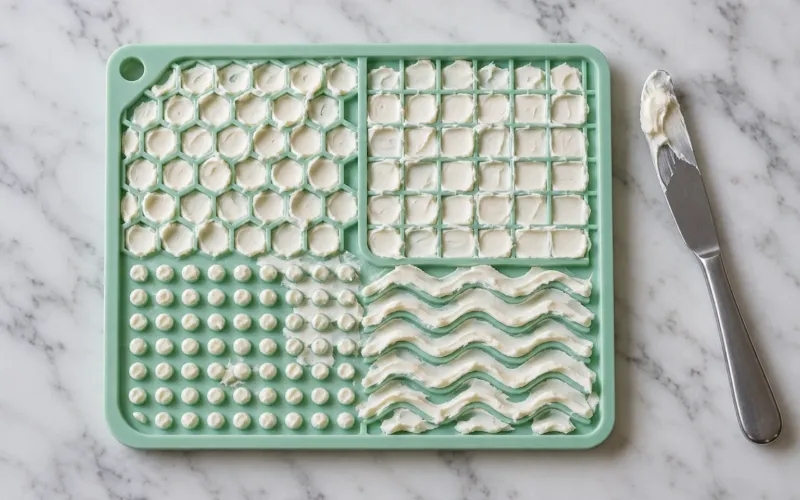
- Spread a thin layer on a lick mat
✕ Don't
- Share chive, onion or garlic spreads
- Give cream cheese frosting
- Offer crab rangoon or cheesecake
- Serve it to dogs with pancreatitis
Ask your vet before hiding antibiotics in cream cheese or if your dog is on a low-fat diet.
Frequently Asked Questions
Can dogs eat cream cheese every day?
A tiny dab for pills is usually fine if it fits the treat budget. Larger daily portions add fat and calories.
Can dogs have cream cheese on a bagel?
A bite of plain bagel with plain cream cheese is OK. Skip everything, onion and garlic bagels.
Can dogs have cream cheese frosting?
No. It's mostly sugar and butter, and the cake underneath may contain chocolate or raisins.
Is light cream cheese better for dogs?
Yes, slightly. It has less fat, but it's still rich, so portions stay small.
Can puppies have cream cheese?
A tiny lick is fine for pill-giving, but puppies' stomachs are sensitive, so keep it minimal.
Checking another food? See our What Can Dogs Eat? A-Z list of safe and unsafe foods.
The Bottom Line
Can dogs have cream cheese? Yes, a small dab of plain or light cream cheese is fine for most dogs and handy for pills. Its fat means small portions, and chive, onion, garlic and sweet flavors are off the list. More answers in our Can Dogs Eat…? library.
References & Sources
Written by CPD Nutrition Desk using the sources below. We are not affiliated with these organizations, and this guide is not a substitute for advice from your veterinarian.
- USDA — USDA FoodData Central
- ASPCA — People foods avoid feeding your pets
- U.S. Food and Drug Administration — Paws xylitol its dangerous dogs
- WSAVA — WSAVA guidetotreats dogs 251107