


Cheese dog treats are a sure hit with most dogs, and they're easy to make at home. This guide gives you two recipes: crunchy baked cheddar biscuits and soft frozen cottage cheese bites with blueberries. You'll also see which cheeses are best for dogs, which to skip, calories per treat and how many your dog can have.
Cheddar biscuits: 15 min prep, 20 to 25 min bake at 350°F (175°C), about 50 small biscuits, ~23 kcal each. Cottage cheese bites: 10 min prep, 3 hours freeze, 20 bites, ~11 kcal each. Difficulty: Easy. Storage: biscuits 1 week in the fridge or 3 months frozen; bites 2 months frozen.

Table of Contents
The Best Cheese for Dogs
Not all cheeses are equal. Lower-fat, lower-salt cheeses are the better picks for treats. Our cheese guide covers the basics; here's a quick comparison using USDA FoodData Central values:
| Cheese (per 28 g / 1 oz) | Calories | Fat | Sodium | For treats |
|---|---|---|---|---|
| Low-fat cottage cheese | ~23 kcal | ~0.6 g | ~130 mg | Great choice |
| Part-skim mozzarella | ~72 kcal | ~4.5 g | ~175 mg | Good choice |
| Mild cheddar | ~115 kcal | ~9.5 g | ~180 mg | Small amounts |
| Parmesan | ~110 kcal | ~7 g | ~430 mg | Too salty |
| Blue cheese | ~100 kcal | ~8 g | ~395 mg | Avoid |
Approximate values. Brands vary.
Skip blue cheeses and any cheese mixed with garlic, onion, chives or herbs. Cheddar works in biscuits because a little goes a long way for flavor.
Recipe 1: Baked Cheddar Dog Biscuits
Baked Cheddar Dog Biscuits
Ingredients
Method
- Heat the oven to 350°F (175°C) and line a baking sheet with parchment.
- Mix the flour and shredded cheddar in a bowl.
- Add the egg and enough water to form a firm dough.
- Roll 1/4 inch thick and cut small shapes, about 1 1/2 inches.
- Bake 20 to 25 minutes until golden and firm.
- Cool completely before serving.
Notes
Ingredient notes
- Cheddar: shred your own from a plain block, or buy plain shredded cheddar. Avoid “seasoned” or “Mexican blend” mixes.
- Whole wheat flour: use oat flour or chickpea flour for a wheat-free version.
- No salt: cheese brings plenty already.
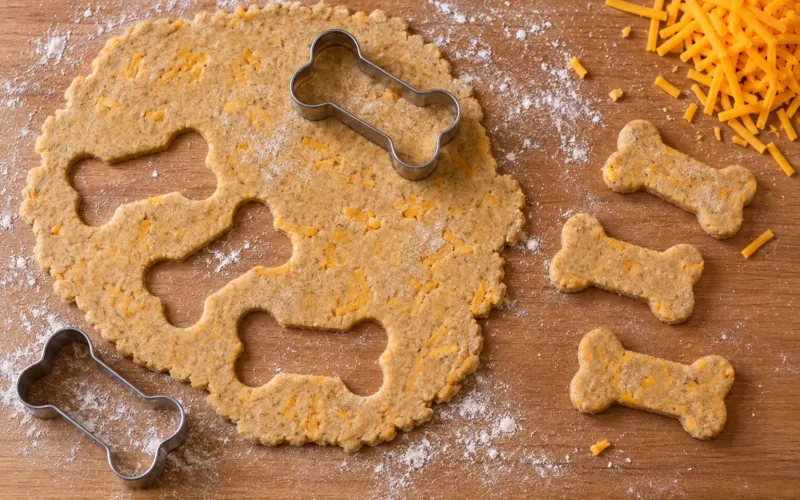
Recipe 2: Frozen Cottage Cheese and Blueberry Bites

Frozen Cottage Cheese Blueberry Dog Bites
Ingredients
Method
- Blend the cottage cheese until smooth.
- Spoon into a silicone mini mold or ice cube tray.
- Press one or two blueberries into each cup.
- Freeze at least 3 hours, then store in a sealed freezer bag.
Notes
Low-fat cottage cheese gives you a creamy, high-protein treat with far fewer calories than cheddar. Our cottage cheese guide has more serving ideas.
How Many Cheese Treats per Day?
| Dog's weight | Treat budget (~10%) | Cheddar biscuits | Or cottage cheese bites |
|---|---|---|---|
| 10 lb (4.5 kg) | ~35 kcal | 1 | 3 |
| 30 lb (13.6 kg) | ~80 kcal | 3 | 7 |
| 50 lb (23 kg) | ~115 kcal | 5 | 10 |
| 80 lb (36 kg) | ~165 kcal | 7 | 14 |
Our estimates for typical neutered adults (70 × kg0.75 × 1.6). Maximums if no other treats are given. The 10% guideline is from WSAVA.
For training, break biscuits into pea-size pieces. One biscuit can become eight rewards.
What About Freeze-Dried Cheese Treats?
Store-bought freeze-dried cheese treats are usually just cheese with the water removed. That makes them light and crunchy but calorie-dense by weight, so a small handful can add up. Read the ingredient list for salt, garlic or flavorings, and count them like any other cheese. Hard yak or Himalayan chews are a different product: very hard and long-lasting, but they can break teeth on aggressive chewers.
Dogs That Should Skip Cheese Treats
Cheese isn't right for every dog. Skip or ask your vet first if your dog has pancreatitis or is on a low-fat diet, has kidney or heart disease (sodium), is overweight, or reacts to dairy with gas or diarrhea. Some antibiotics don't absorb well with dairy, so ask before hiding pills in cheese. See our veterinary disclaimer.
Storage
- Cheddar biscuits: cool fully, then store airtight in the fridge up to 1 week, or freeze up to 3 months. Cheese makes them spoil faster than plain biscuits.
- Cottage cheese bites: keep frozen in a sealed bag up to 2 months.
What's the best cheese for dog treats? Low-fat cottage cheese or part-skim mozzarella. They have less fat and salt than aged cheeses, and most dogs love them just as much.
Which dogs should skip cheese treats? Dogs with pancreatitis, kidney or heart disease, or a sensitive stomach. Ask your vet before using cheese for pills if your dog is on antibiotics.
— Dr. Sarah Miller, DVM
Cheese Dog Treats: Quick Guide
✓ Do
- Pick mild, plain cheeses
- Use low-fat cottage cheese for lighter bites
- Break biscuits small for training
- Keep cheese treats in the fridge
✕ Don't
- Use blue cheese or flavored cheese
- Add salt or garlic powder
- Give big chunks of cheese
- Feed them to dogs with pancreatitis
Dogs with pancreatitis, kidney disease or dairy sensitivity should get a vet OK first.
Frequently Asked Questions
Can dogs have cheddar cheese?
Yes, in small amounts. Mild cheddar is low in lactose but fairly high in fat, so keep pieces small.
What cheese is bad for dogs?
Blue cheeses, cheese with garlic, onion or chives, and very salty cheeses like feta and parmesan are poor choices.
Can I use these as training treats?
Yes. Cut biscuits into tiny pieces, or freeze cottage cheese in a mini mold.
Can puppies have cheese dog treats?
A small piece is fine for most puppies on solid food. Watch for loose stool.
Can I use vegan cheese?
It's best not to. Many contain garlic, onion powder, coconut oil and salt.
Want more ideas? See the full collection of homemade dog treat recipes.
The Bottom Line
Cheese dog treats are easy to love: bake shredded cheddar into crunchy biscuits or freeze low-fat cottage cheese with blueberries for a lighter bite. Pick mild, plain cheeses, keep portions small and skip blue cheese and anything with garlic or onion. More recipes in our Homemade Treats collection.
References & Sources
Written by CPD Nutrition Desk using the sources below. We are not affiliated with these organizations, and this guide is not a substitute for advice from your veterinarian.
- USDA — USDA FoodData Central
- WSAVA — WSAVA guidetotreats dogs 251107