
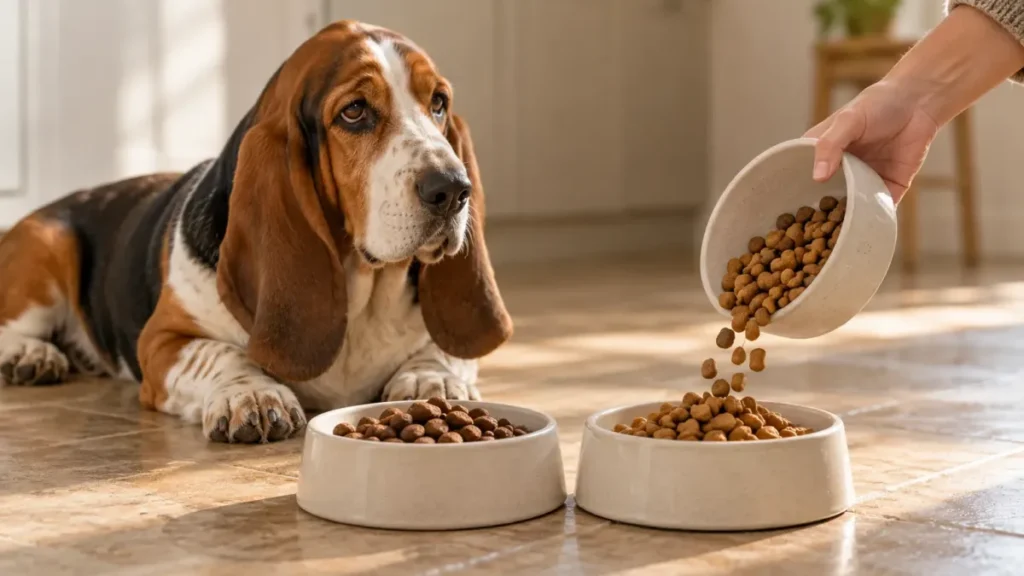

To transition dog food, mix the new food into the old one gradually over 7 to 10 days, raising the new portion about every two to three days. A slow switch gives your dog's gut bacteria time to adjust and usually prevents diarrhea, gas and vomiting. Below you'll find a day-by-day plan, a slower option for sensitive dogs, and when a fast switch is OK.
Switch over 7 to 10 days, or 2 to 3 weeks for sensitive stomachs. Keep total calories the same, not the cup amount. Mild soft stool for a day can be normal; repeated vomiting, bloody stool or diarrhea for more than two days needs a vet.

Table of Contents
Why You Should Switch Slowly
A dog's digestive system adapts to what it eats. A sudden change in protein, fat or fiber can upset the balance of gut bacteria and trigger loose stool, gas or vomiting. Rich foods, like a jump from a low-fat kibble to a high-fat fresh food, cause the most trouble. A gradual mix spreads the change out.
The 7-10 Day Transition Schedule
| Days | Old food | New food |
|---|---|---|
| Days 1 to 2 | 75% | 25% |
| Days 3 to 4 | 50% | 50% |
| Days 5 to 6 | 25% | 75% |
| Day 7 onward | 0% | 100% |
If stool stays firm, you can finish on day 7. If it softens, hold at the current mix for a few extra days before moving on.
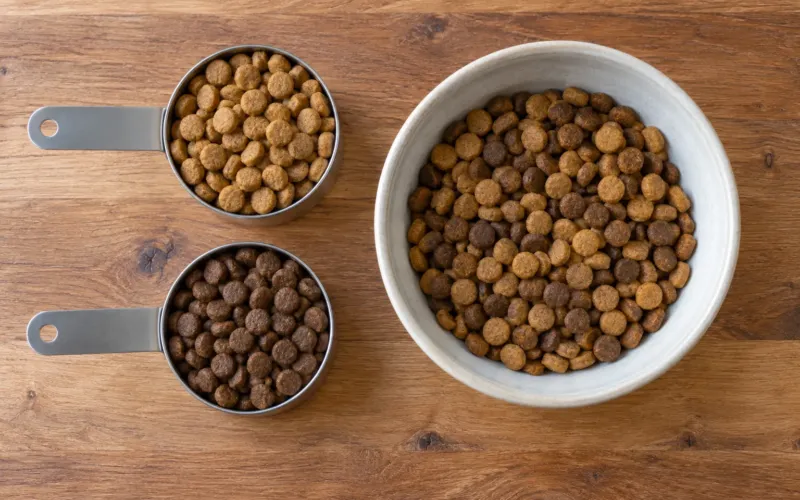
Slower Plan for Sensitive Stomachs
For dogs with a history of stomach upset, seniors or big diet changes (kibble to fresh, wet or homemade), stretch it out:
| Days | Old food | New food |
|---|---|---|
| Days 1 to 4 | 90% | 10% |
| Days 5 to 8 | 75% | 25% |
| Days 9 to 12 | 50% | 50% |
| Days 13 to 16 | 25% | 75% |
| Day 17 onward | 0% | 100% |
A few spoonfuls of plain canned pumpkin can help firm stool for some dogs; see our pumpkin guide. Probiotics made for dogs may also help; see probiotics for dogs.
Match Calories, Not Cups
Foods differ a lot in calories. A cup of one kibble can have 330 calories and another 450. Wet and fresh foods are even more different. Check the calorie statement on each bag or can and work out how much of the new food matches your dog's daily calories. Our dog calorie calculator and dog feeding chart can help, and our dog food nutrition labels guide shows where to find the numbers.
Special Switches
- Puppy to adult food: small breeds often switch around 9 to 12 months, large and giant breeds later, around 12 to 18 months. Ask your vet when your dog is close to adult size.
- Dry to wet or wet to dry: use the slower plan, and adjust portions for the big calorie difference. See wet vs dry dog food.
- To homemade food: go slowly and use a balanced recipe; see how to make homemade dog food.
- Picky eaters: keep mealtimes short and avoid adding lots of toppers. Our dog food for picky eaters guide has more tips.
When a Fast Switch Is OK
Sometimes you can't go slow: a food recall, your old food is out of stock, or your vet prescribes a therapeutic diet. In those cases:
- Feed smaller meals more often for the first few days.
- Choose a new food that's similar in protein and fat if you can.
- Follow your vet's instructions for prescription diets, which often start right away.
- Keep an eye on stool and appetite.
Call your vet if your dog vomits more than once, has diarrhea lasting more than 48 hours, has blood in the stool, seems lethargic, or stops eating. Puppies and small dogs dehydrate faster, so call sooner. See our dog upset stomach guide and veterinary disclaimer.
How fast is too fast to switch foods? For most dogs, anything under about a week. Sensitive dogs often do better with two to three weeks.
When should a switch worry me? Repeated vomiting, bloody stool, diarrhea over two days or a dog that stops eating. Call your vet.
— Dr. Sarah Miller, DVM
Switching Dog Food: Quick Guide
✓ What helps
- Mix new food in over 7 to 10 days
- Slow down for sensitive dogs
- Match calories, not cups
- Keep treats steady during the switch
✕ Don't
- Switch overnight unless your vet says so
- Add many new toppers at once
- Ignore diarrhea that lasts
- Change foods again mid-switch
Puppies, seniors and dogs with health conditions should switch with a vet's guidance.
Frequently Asked Questions
Can I switch dog food without mixing?
You can, but many dogs get loose stool. A gradual mix is gentler unless your vet says to switch immediately.
How long does it take for a dog to adjust to new food?
Most dogs adjust within 7 to 10 days. Sensitive dogs may need 2 to 3 weeks.
Is it OK to switch between flavors of the same brand?
Usually it's easier, but recipes can differ a lot. A shorter 3 to 5 day mix is a good idea.
Should I rotate my dog's food?
Some owners rotate proteins for variety. If you do, transition each time, and stick with foods labeled complete and balanced.
Why does my dog have diarrhea after switching food?
The change was probably too fast or the new food is richer. Go back to the last mix that worked and slow down.
Want the bigger picture? Our dog food guide covers choosing a food, portions and homemade meals.
The Bottom Line
Knowing how to transition dog food saves you a lot of mess: mix the new food in over 7 to 10 days, slow down for sensitive dogs, match calories rather than cups, and call your vet if vomiting or diarrhea doesn't settle. More guides in our Dog Food section.