

Yes, dogs can eat squash. Cooked butternut, acorn, spaghetti, yellow and zucchini squash are all safe when served plain, peeled and seed-free. Squash is low in calories and high in fiber and vitamin A, which makes it a handy topper. Skip butter, sugar, onion and spice, and cook winter squash until soft.
Safe. Plain cooked squash is a healthy, low calorie extra for most dogs. Remove the hard skin and seeds of winter squash, and avoid seasoned squash dishes and soups.

Table of Contents
Can Dogs Eat Squash? The Short Answer
Squash is not toxic to dogs. The same plant family gives us pumpkin and zucchini, which many owners already share. What makes squash risky is how people cook it: holiday squash often comes with butter, brown sugar, maple syrup, nutmeg, garlic or onion.
Think of squash in two groups. Summer squash (zucchini, yellow squash, pattypan) has soft skin and tiny seeds and can be served raw in small pieces. Winter squash (butternut, acorn, spaghetti, kabocha) has hard skin and big seeds and should be cooked, peeled and seeded.
Which Types of Squash Can Dogs Eat?
All common kitchen squash are fine. Here is how they compare, per 100 g cooked, from USDA FoodData Central.
| Squash (cooked, 100 g) | Calories | Fiber | How to serve |
|---|---|---|---|
| Butternut | about 40 kcal | 3.2 g | Baked or steamed, mashed |
| Acorn | about 56 kcal | 4.4 g | Baked, skin removed |
| Spaghetti | about 27 kcal | 1.4 g | Baked, strands without seasoning |
| Yellow summer squash | about 20 kcal | 1.4 g | Raw or steamed, small pieces |
| Zucchini | about 17 kcal | 1.0 g | Raw or cooked, sliced |
Rounded USDA values. Ornamental gourds are not food; keep decorative gourds away from dogs.
Can dogs eat butternut squash?
Yes. It is the most popular choice because it mashes smoothly, tastes mildly sweet and is rich in beta-carotene. See also our guides to zucchini and pumpkin.
Can dogs eat spaghetti squash?
Yes, plain baked strands are fine. Don't share it once sauce, cheese or garlic butter is on it.
Why Squash Is Good for Dogs
- Fiber helps regular, well-formed stools.
- Beta-carotene (vitamin A) supports eyes, skin and immune health.
- Potassium and vitamin C in useful amounts.
- Low calories, so it can bulk up meals for dogs trying to lose weight.
That last point makes squash a smart swap for higher calorie treats. A quarter cup of mashed butternut has only about 25 calories.

Squash Skin, Seeds and Other Risks
Can dogs eat squash skin?
Thin zucchini and yellow squash skin is fine. The thick skin of butternut, acorn and kabocha is hard to chew and digest, and big pieces can cause choking or a blockage. Peel it or scoop the flesh out after baking.
Can dogs eat squash seeds?
Winter squash seeds are like pumpkin seeds: not toxic, but the shells are tough. Remove them, or roast, hull and grind them as we explain in can dogs have pumpkin seeds.
Can dogs eat raw squash?
Raw summer squash is fine in thin slices. Raw winter squash is very hard and difficult to digest, so cook it first.
Avoid: squash casseroles, soups and roasted squash with garlic, onion, chives, brown sugar, maple syrup, marshmallows, nutmeg or lots of butter. Garlic and onion damage dogs' red blood cells; see the ASPCA foods to avoid list.
How Much Squash Can Dogs Eat?
Start small, because sudden extra fiber can cause gas or loose stool.
| Dog weight | Approx. daily calories | Cooked mashed squash | Calories added |
|---|---|---|---|
| Under 15 lb | about 350 | 1 to 2 tbsp | 5 to 10 kcal |
| 15 to 30 lb | about 690 | 2 to 3 tbsp | 10 to 15 kcal |
| 30 to 60 lb | about 1,075 | 1/4 cup | about 25 kcal |
| Over 60 lb | about 1,580 | 1/3 to 1/2 cup | 35 to 50 kcal |
Estimates based on butternut squash for a typical neutered adult (70 x kg^0.75 x 1.6).
How to Prepare Squash for Dogs
- Cut winter squash in half and scoop out the seeds.
- Bake cut side down at 400 F for 40 to 50 minutes, or steam peeled cubes for 15 minutes.
- Scoop or peel off the skin and mash the flesh plain.
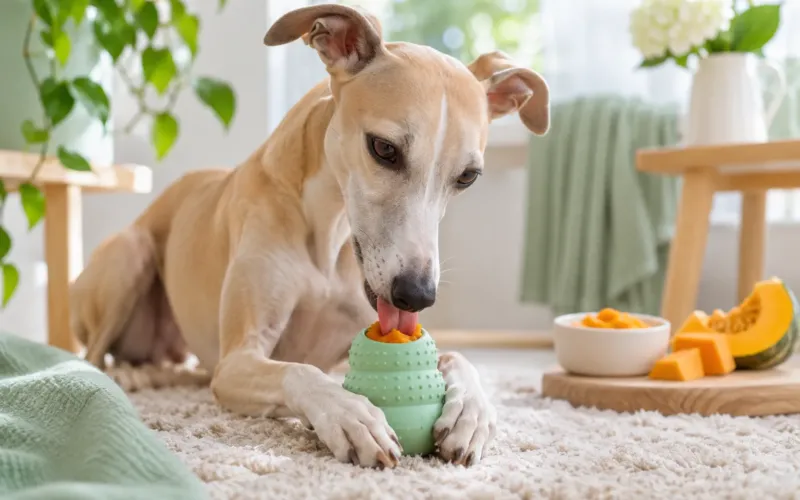
- Cool and serve over food, freeze in ice cube trays, or stuff into a chew toy.
- For summer squash, wash, slice thin and serve raw or lightly steamed.
Is squash good for dogs with diarrhea?
A spoonful of plain mashed squash may help firm stool for some dogs, the same way canned pumpkin does. It is not a treatment. If diarrhea lasts more than a day or two, or your dog seems unwell, call your vet and see what to feed a dog with diarrhea.
Which squash do you suggest most often as a low calorie topper? Plain cooked butternut squash or canned plain pumpkin (not pie filling). A tablespoon or two mixed into meals adds fiber with few calories.
Have you seen problems from squash skin or seeds? The hard skin and large seeds can cause vomiting or, in small dogs, a blockage. Peel it, scoop out the seeds and cook it soft.
— Dr. Sarah Miller, DVM
Squash for dogs
✓ Do
- Cook winter squash soft
- Peel and remove seeds
- Mash plain
- Start with a spoonful
✕ Don't
- Butter and brown sugar
- Garlic or onion
- Squash soup
- Thick raw skin
Estimate: keep extras under about 10% of daily calories.
Frequently Asked Questions
Can puppies eat squash?
Yes, a teaspoon or two of plain cooked squash is fine for weaned puppies. Keep it small so it doesn't replace their complete puppy food.
Can dogs eat squash soup?
Usually not. Most squash soups contain onion, garlic, salt or cream. Make plain squash puree instead.
Can dogs eat acorn squash?
Yes, baked and peeled. Acorn squash skin is thick and ridged, so remove it before serving.
Can dogs eat squash every day?
A small portion daily is fine for most dogs if you count it as part of their extras. Cut back if stools get loose or gassy.
Can dogs eat squash leaves or plants?
Squash vines and leaves are not known to be toxic, but their prickly hairs can irritate the mouth and stomach. Keep dogs out of the vegetable patch.
The Bottom Line
Can dogs eat squash? Yes. Plain cooked butternut, acorn, spaghetti and summer squash are healthy, low calorie extras. Peel and seed winter squash, skip the butter and seasoning, and keep portions modest.
References & Sources
Written by CPD Nutrition Desk using the sources below. We are not affiliated with these organizations, and this guide is not a substitute for advice from your veterinarian.
- USDA — USDA FoodData Central
- ASPCA — ASPCA foods to avoid list