
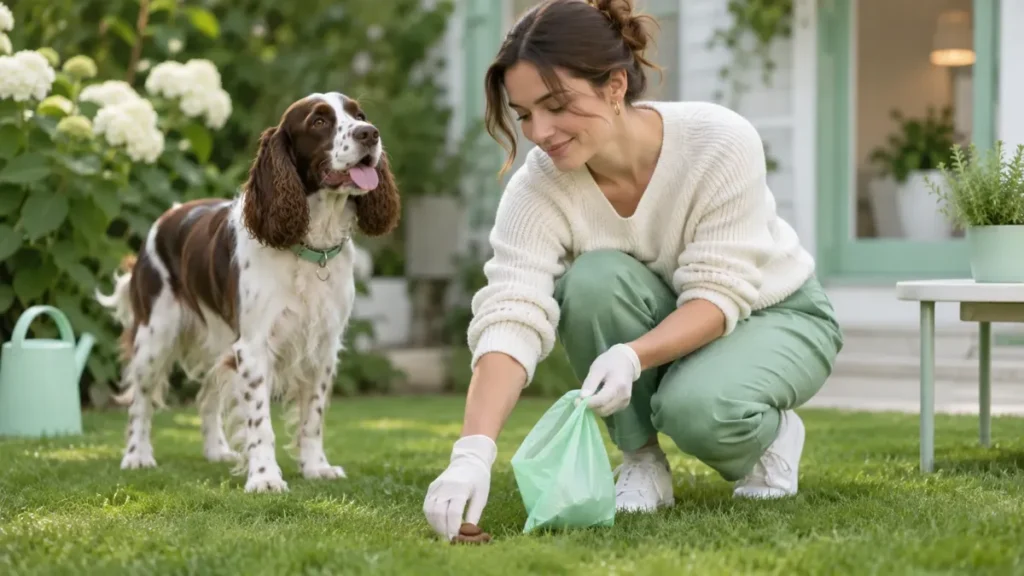

Worms in dog poop are usually roundworms, which look like spaghetti, or tapeworm segments, which look like grains of rice. Both are common and treatable, but they need the right dewormer from your vet, and some worms can spread to people. Bag a sample, wash your hands, and call your vet to book a fecal test.
Spaghetti-like worms are usually roundworms. Rice-like moving segments are tapeworms, often linked to fleas. Hookworms and whipworms are too small to see, so a fecal test is still needed. Home remedies like pumpkin seeds or garlic don't reliably clear worms.
Table of Contents
What Do Worms in Dog Poop Look Like?
Use this as a guide only; your vet confirms the type with a microscope.
| What you see | Likely worm | Notes |
|---|---|---|
| Long, round, white or tan worms, like cooked spaghetti, often coiled | Roundworms | Very common in puppies; also seen in vomit |
| Small flat white segments like rice grains, may wiggle | Tapeworm segments | Also stuck to fur near the tail; dry segments look like sesame seeds |
| Nothing visible, but soft stool, weight loss or anemia | Hookworms or whipworms | Too small to see easily; found by fecal test |
| Tiny white moving larvae on poop left outside for hours | Fly maggots, not dog worms | Flies lay eggs on old poop; check a fresh sample |
Pictures online can mislead. A fresh sample is the most useful thing you can bring.
Worms in dog poop that look like rice
Those are almost always tapeworm segments. The common dog tapeworm comes from swallowing infected fleas while grooming, so flea control is part of the treatment. See VCA on tapeworms in dogs.
Worms in dog poop that look like spaghetti
These are roundworms. Puppies often get them from their mother before birth or through milk, which is why puppies are dewormed several times. Read VCA on roundworms.
Other Signs Your Dog Has Worms
- Diarrhea or soft stool, sometimes with mucus or blood.
- A pot-bellied look, especially in puppies.
- Weight loss despite a good appetite.
- Scooting or licking under the tail.
- Vomiting, sometimes with worms in it.
- Dull coat, low energy or pale gums (hookworms can cause anemia).
Many adult dogs show no signs at all, which is why routine fecal tests matter.

What to Do If You See Worms
- Put on gloves or use a bag, collect a fresh sample, and seal it.
- Call your vet and describe what you saw; a photo can help.
- Clean up the yard daily until treatment is done.
- Wash hands well, and keep young children away from the area.
- Start or update flea control if you saw rice-like segments.
- Give only the dewormer your vet recommends, at the dose for your dog's weight.
Why not just buy any dewormer?
Different drugs target different worms. A product that kills roundworms may not touch tapeworms or whipworms. Your vet can choose one that covers what your dog actually has and repeat it at the right interval.
Are Worms Contagious to Other Dogs and People?
Yes, several are. Roundworm and hookworm eggs or larvae live in contaminated soil and poop, and other dogs can pick them up. People, especially children, can also be infected by accidentally swallowing roundworm eggs or through skin contact with hookworm larvae. The Companion Animal Parasite Council has guidance for pet owners and vets.
Good hygiene breaks the cycle: pick up poop right away, wash hands after yard work, and keep sandboxes covered.
Worms in Dog Poop After Deworming
It is normal to see dead or dying worms in the poop for a few days after a dewormer. If you still see live worms after a week, or your dog seems unwell, call your vet; a second dose is often part of the plan anyway.
How to Prevent Worms
- Follow your vet's deworming schedule for puppies.
- Use a year-round monthly preventive; many also cover intestinal worms.
- Keep flea control up to date.
- Get a fecal test once or twice a year for adults.
- Don't let your dog eat poop, raw wildlife or carcasses; see why dogs eat poop.

Can diet or pumpkin seeds get rid of worms?
No home food reliably removes worms. Pumpkin seeds are a safe snack in small amounts, but the deworming claim isn't backed by good evidence in dogs; read can dogs have pumpkin seeds. Garlic is unsafe for dogs.
How often should an adult dog have a fecal test? The Companion Animal Parasite Council suggests at least once or twice a year for adult dogs, and more often for puppies.
What do you tell owners worried about catching worms from their dog? Some dog worms, like roundworms and hookworms, can infect people, especially children. Pick up poop promptly, wash hands, and keep your dog on year-round parasite prevention.
— Dr. Sarah Miller, DVM
Worms: what to do
✓ What helps
- Bag a fresh sample
- Call your vet
- Keep up flea control
- Pick up poop daily
✕ Don't
- Guess the dewormer
- Rely on pumpkin seeds
- Give garlic
- Let kids play near poop
Ask your vet which dewormer fits your dog.
Frequently Asked Questions
Can my dog give me worms?
Some can, mainly roundworms and hookworms. Good hygiene and regular deworming make it rare. Talk to your doctor if you have concerns.
Are worms in dog poop an emergency?
Usually not, but call your vet within a day or two. Go sooner if a puppy is weak, has bloody diarrhea, pale gums or keeps vomiting.
What are the white worms in dog poop?
Long white worms are usually roundworms; small rice-like white bits are tapeworm segments. Your vet can confirm.
How long does it take to get rid of worms in dogs?
Most dewormers act within a day or two, but a repeat dose is often needed 2 to 3 weeks later to catch worms that hatch after the first treatment.
Should I clean my house if my dog has worms?
Pick up yard poop, wash bedding in hot water, and vacuum if your dog has tapeworms from fleas. Eggs mostly spread through feces and soil.
The Bottom Line
Worms in dog poop are common and very treatable. Identify what you saw, bring a fresh sample to your vet, use the right dewormer and flea control, and keep up routine prevention to protect your dog and your family.
References & Sources
Written by CPD Nutrition Desk using the sources below. We are not affiliated with these organizations, and this guide is not a substitute for advice from your veterinarian.
- VCA Animal Hospitals — VCA on tapeworms in dogs
- VCA Animal Hospitals — VCA on roundworms
- capcvet.org — Companion Animal Parasite Council