
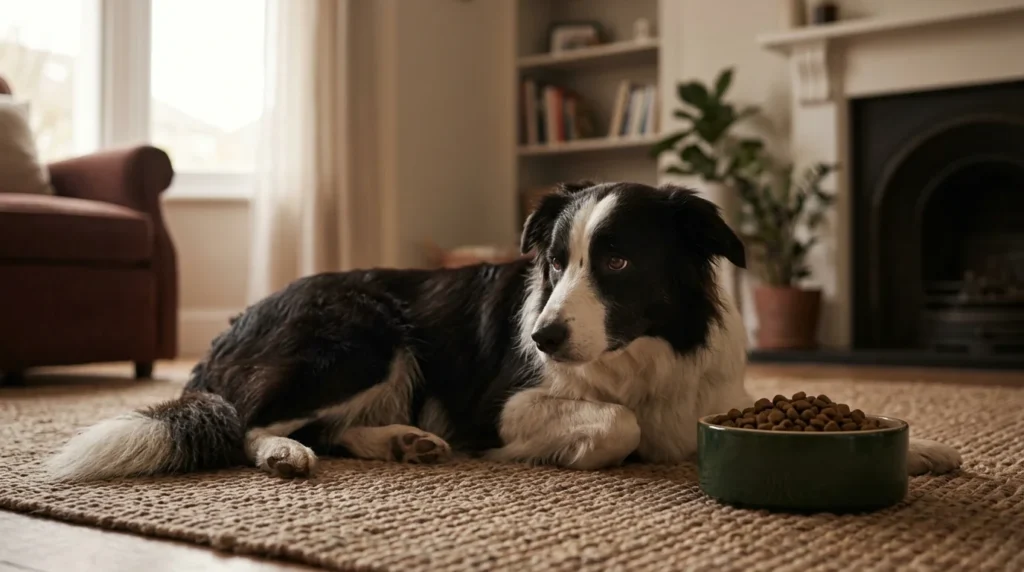

A dog not eating for one meal, while still drinking, playing and pooping normally, is usually not an emergency; heat, stress or extra treats can dull appetite. But refusing food for more than 24 hours, or with vomiting, lethargy or pain, needs a vet. Here’s how long is too long and what each sign can mean.
One skipped meal in a healthy adult acting normally can be watched for a day. Call your vet after 24 to 48 hours, much sooner for puppies, toy breeds, seniors or sick dogs. Go straight in for repeated vomiting, a swollen belly, collapse or pale gums.
Table of Contents
How Long Can a Dog Go Without Eating?
Not eating is a symptom, so the goal is finding why before your dog weakens or dehydrates. A practical guide:
| Your dog | Call the vet if not eating for | Why |
|---|---|---|
| Puppy (especially under 6 months) | More than one missed meal | Puppies can develop low blood sugar and dehydrate quickly |
| Toy or small breed | About 12 to 24 hours | Small bodies have fewer reserves |
| Healthy adult, otherwise acting normal | 24 to 48 hours | Longer gaps make it harder to recover and may hide illness |
| Senior dog | About 24 hours | Appetite loss is a common early sign of dental, kidney or other disease |
| Dog with diabetes, kidney, liver or heart disease | Same day | Missed meals can upset medications and blood sugar |
| Any dog not drinking either | Same day | Dehydration develops fast |
What It Can Mean: Not Eating Plus Other Signs
| Combination | Possible causes | What to do |
|---|---|---|
| Not eating but drinking water, acting normal | Heat, mild stomach upset, stress, food boredom, too many treats | Monitor; call your vet if it lasts beyond 24 to 48 hours |
| Not eating but drinking a lot | Kidney disease, diabetes, infection, some hormone disorders | Call your vet soon |
| Not eating and vomiting | Gastroenteritis, pancreatitis, toxin, blockage | Call your vet today; emergency if repeated or with a swollen belly |
| Not eating and lethargic | Infection, fever, pain, organ disease | Call your vet today |
| Not eating and shaking | Pain, nausea, fever, anxiety, low blood sugar, toxins | Call your vet today |
| Won’t eat food but eats treats | Picky eating, food boredom, or mouth pain with hard kibble | Check teeth; try the routine below; vet if weight drops |
| Wants to eat but drops food or chews oddly | Dental disease, broken tooth, mouth injury | Book a vet visit |
| Not eating after surgery or anesthesia | Normal for up to about 24 hours; pain or nausea | Follow discharge instructions; call if it lasts longer |
Common Reasons a Dog Stops Eating
Medical causes
- Stomach or intestinal upset: eating garbage, a diet change or infection. See our guide to upset stomach in dogs.
- Dental problems: tartar, gum disease, broken teeth or mouth sores make chewing painful.
- Pain anywhere in the body: arthritis, injury or back pain can reduce appetite.
- Organ disease: kidney, liver, pancreatic or heart disease, and cancer.
- Blockage: a swallowed object can stop food passing through.
- Medications and vaccines: some cause temporary nausea or a short dip in appetite.
Behavioral and environmental causes
- Stress from moving, boarding, a new pet or baby, loud noises or a change in routine
- Hot weather, which naturally reduces appetite
- Too many treats or table scraps, so the dog simply isn’t hungry
Problems with the food
Stale kibble, a formula change or warm storage can put dogs off. Check the date and smell.
Vets distinguish a dog that doesn’t want to eat (often illness) from one that wants to but can’t (often mouth pain).
See a vet urgently if your dog isn’t eating and has any of these
- Repeated vomiting, or retching with nothing coming up
- A swollen or painful belly
- Pale, white, yellow or very dark red gums
- Weakness, collapse, trouble breathing or a fast heartbeat
- Not drinking, or vomiting up water
- Blood in vomit or stool
- Possible poisoning or a swallowed object; you can also contact the ASPCA Animal Poison Control Center
How to Get a Dog to Eat (When They’re Otherwise Well)
Once illness is ruled out:
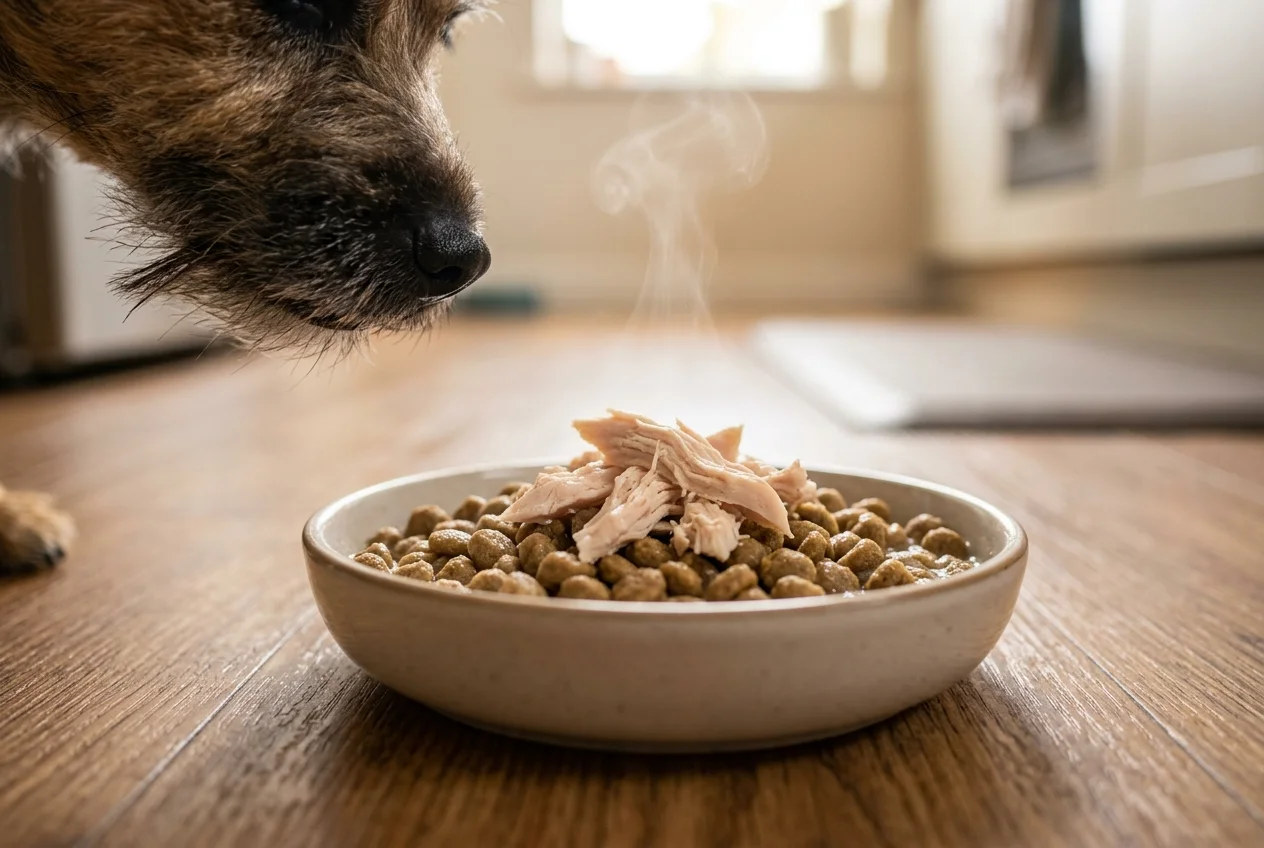
- Warm the food slightly (wet food or kibble moistened with warm water) to boost smell.
- Add a topper such as a spoonful of plain boiled chicken or a splash of low-sodium, onion-free broth. Our bone broth for dogs guide explains what’s safe.
- Hand-feed a few bites to restart interest, especially for anxious or recovering dogs.
- Try a quiet spot away from other pets and busy areas.
- Don’t force-feed. It can cause choking and food aversion. If your dog needs nutrition support, your vet will guide you.
A 7-Day Routine for Picky Eaters
Many picky dogs learned that refusing brings something tastier. Fix it within a week:
- Set fixed meal times, usually twice a day.
- Put the bowl down for 15 to 20 minutes, then pick it up, even if it’s untouched.
- Offer nothing else until the next meal: no treats, chews or scraps.
- Cut daily treats back to no more than about a tenth of your dog’s calories.
- Add exercise before meals; a walk often improves appetite.
- Reassess after 7 days. If your dog is still refusing food or losing weight, see your vet.
For healthy adults only, not puppies, seniors or sick dogs.
What Your Vet Will Check
Your vet will ask about duration, drinking, vomiting, weight and anything new; bring a list of foods and medications. They may run blood, urine or fecal tests and imaging. See VCA on appetite loss.
Frequently Asked Questions
My dog is not eating but drinking water and acting normal. Should I worry?
After a meal or two in a playful dog, watch for a day. Beyond 24 to 48 hours, or for puppies and seniors, call your vet.
Why is my senior dog not eating?
Dental disease, arthritis, kidney disease or a weaker sense of smell. Call your vet after a day.
Can anxiety make a dog stop eating?
Yes. Moving house, boarding, separation, new pets or loud events can suppress appetite. Keeping routines predictable and feeding in a quiet place helps. If anxiety is ongoing, talk to your vet about support.
For more health topics, see our dog nutrition and health guide.
The Bottom Line
A dog not eating for one meal while acting normal is usually fine, but more than a day or appetite loss with other symptoms needs a vet, sooner for puppies and seniors. Warm food, toppers and a routine help picky eaters. See dog vomiting yellow, dehydration in dogs or Nutrition & Health. This is general information, not veterinary advice; see our Veterinary Disclaimer.
References & Sources
Written by CPD Nutrition Desk using the sources below. We are not affiliated with these organizations, and this guide is not a substitute for advice from your veterinarian.
- ASPCA — ASPCA Animal Poison Control Center
- VCA Animal Hospitals — VCA on appetite loss