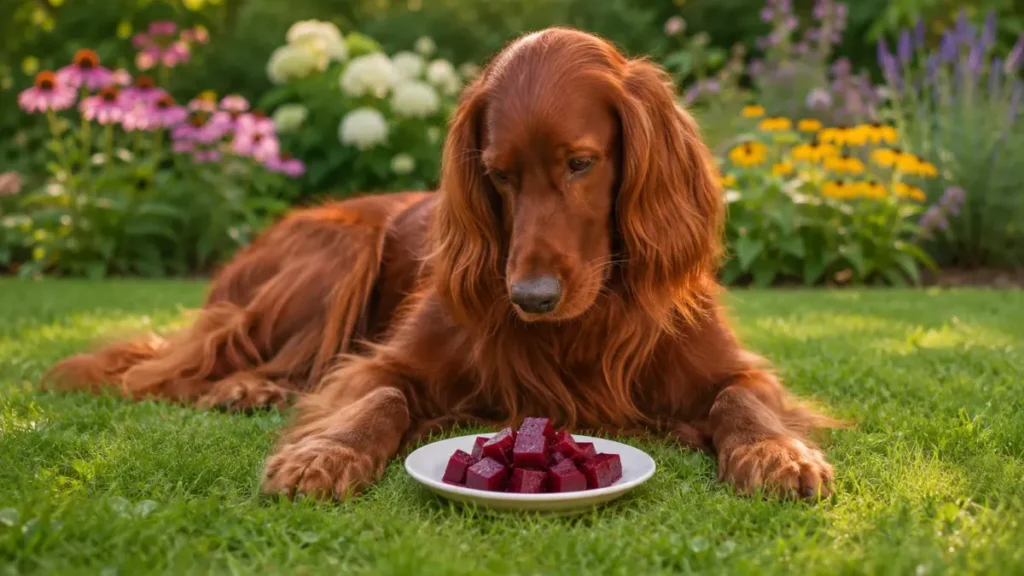

Can dogs eat beets? Yes, in small amounts. Plain beets, cooked or finely grated raw, are safe for most dogs and bring fiber, folate and antioxidants. They're also high in natural sugar and oxalates, so they suit occasional servings rather than daily ones. And don't panic if your dog's pee or poop turns pink or red afterward; that's usually just the beet pigment.
Yes, plain and in moderation. Small pieces of cooked or grated raw beet are fine for healthy dogs. Skip pickled and canned salted beets, borscht and beet dishes cooked with onion or garlic. Dogs with kidney disease or a history of calcium oxalate stones should avoid beets.
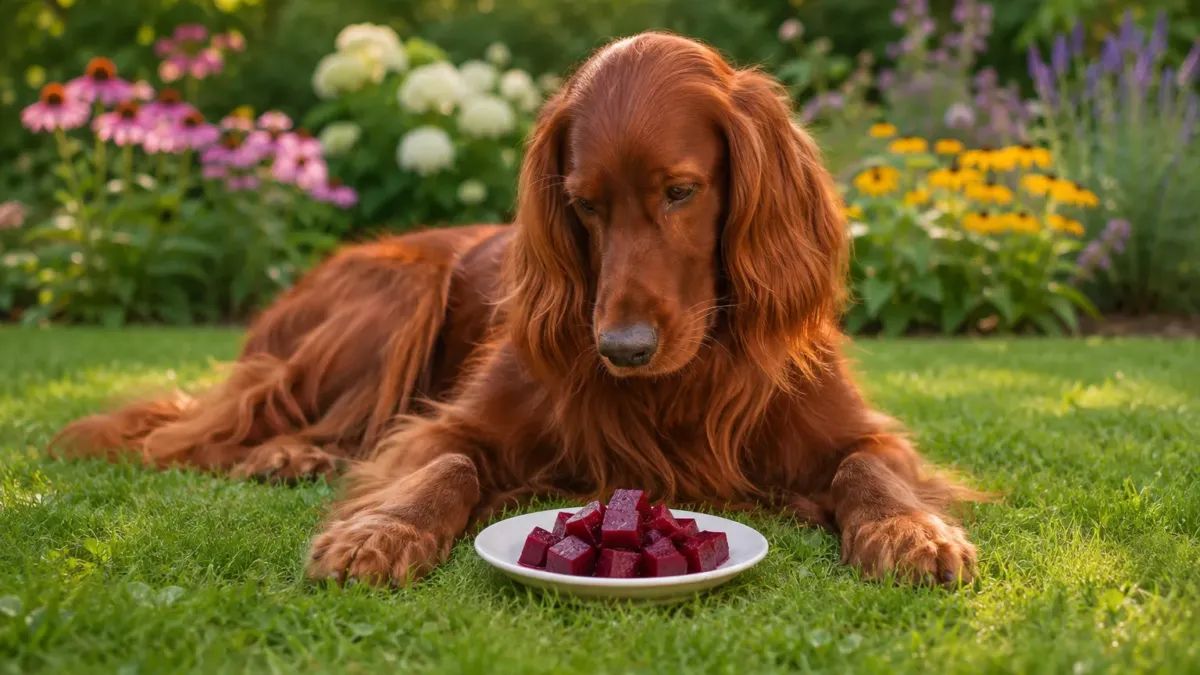
Table of Contents
Beet Nutrition at a Glance
| Per 100 g | Raw beets | Cooked beets |
|---|---|---|
| Calories | ~43 kcal | ~44 kcal |
| Natural sugar | ~6.8 g | ~8 g |
| Fiber | ~2.8 g | ~2 g |
| Folate | High | High |
Approximate values from USDA FoodData Central.
Beets are moderately sweet for a vegetable, a bit like carrots. That's fine in small amounts but worth limiting for dogs with diabetes or weight issues.
Why Did My Dog's Pee Turn Red After Beets?
Beets contain betalain pigments. In some dogs, and people, the pigment passes into the urine or stool and turns it pink or red. It's called beeturia and is harmless. The trick is telling it apart from blood.
If you're not sure it's beets, call your vet. Red urine with straining, frequent peeing, accidents, pain, lethargy or vomiting can mean a urinary infection, stones or other problems. Black, tarry stool is not from beets and needs prompt veterinary attention. See our veterinary disclaimer.
Color from beets usually fades within a day or two once your dog stops eating them.
Raw or Cooked Beets?
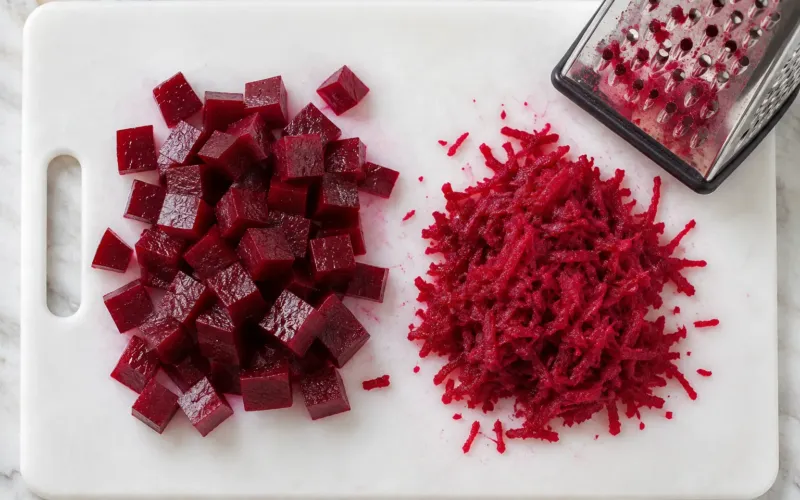
- Cooked: steamed, boiled or roasted plain until soft, then cubed. Easiest to digest.
- Raw: wash, peel and grate finely. Raw chunks are hard and can be a choking risk.
- Beet greens: edible in small, chopped amounts, but they're high in oxalates.
| Beet product | Verdict | Why |
|---|---|---|
| Plain cooked beets | OK | Simple, soft |
| Grated raw beets | OK in small amounts | Grate finely |
| Canned beets (no salt) | OK, rinsed | Check sodium |
| Pickled beets | Avoid | Salt, vinegar, sugar |
| Borscht and beet salads | Avoid | Onion, garlic, dressings |
| Beet chips | Rarely | Often salted and fried |
Beets, Oxalates and Kidney Health
Beets, especially the greens, are high in oxalates, which bind to calcium. In large regular amounts, oxalates can contribute to calcium oxalate bladder stones. Dogs with kidney disease, a history of stones or breeds prone to them (like Miniature Schnauzers and Yorkshire Terriers) should skip beets. See our kidney diet for dogs guide.
What About Beet Pulp in Dog Food?
Beet pulp is the fiber left after sugar is extracted from sugar beets. It's a common, moderately fermentable fiber in dog foods that supports stool quality and gut bacteria. Despite online claims, it's not a filler or a source of sugar. It's a different thing from feeding beets as a snack.
How Much Beet Can a Dog Have?
| Dog's weight | Cooked beet | Rough calories |
|---|---|---|
| Under 15 lb | 1 to 2 small cubes | ~3 kcal |
| 15 to 40 lb | 1 tablespoon | ~7 kcal |
| 40 to 70 lb | 2 tablespoons | ~14 kcal |
| Over 70 lb | 3 tablespoons | ~20 kcal |
Our estimates for healthy adults, once or twice a week. Treats should stay under about 10% of daily calories, a guideline from WSAVA.
Easy Beet Treat Ideas
- Roasted beet cubes: roast plain beets until soft, cube small and cool.
- Natural food coloring: a pinch of beet powder tints our dog icing recipe pink without artificial dyes.
- Veggie mix: a spoonful of grated beet with plain cooked carrot and a little rice as an occasional topper.
Keep beet servings small and occasional, and expect a little pink color in the litter or on walks.
How can I tell beet pee from blood? Beet color shows up soon after eating beets and fades in a day or two, and your dog acts normal. Straining, pain or red urine without beets needs a vet.
Which dogs should skip beets? Dogs with kidney disease or a history of calcium oxalate stones, and dogs with diabetes unless your vet agrees.
— Dr. Sarah Miller, DVM
Beets for Dogs: Quick Serving Guide
✓ Do
- Serve plain cooked beets
- Grate raw beets finely
- Keep portions small
- Expect possible pink pee
✕ Don't
- Share pickled beets or borscht
- Give big raw chunks
- Add salt, onion or garlic
- Feed beets to dogs with kidney issues
Dogs with kidney disease or bladder stones should skip beets. Ask your vet if unsure.
Frequently Asked Questions
Can dogs eat raw beets?
Yes, peeled and finely grated, in small amounts. Big raw chunks can be a choking risk.
Can dogs eat beet greens?
Small chopped amounts are OK for healthy dogs, but they're high in oxalates.
Can dogs eat canned beets?
Plain, no-salt-added canned beets are fine if rinsed. Skip pickled beets.
Can dogs drink beet juice?
It's concentrated sugar and pigment. Small amounts used as natural food coloring are fine; skip it as a drink.
Are beets good for dogs every day?
It's better to keep them occasional because of sugar and oxalates.
The Bottom Line
Can dogs eat beets? Yes, plain cooked or finely grated raw beets are a safe occasional snack. Expect possible pink pee, skip pickled and seasoned beets, and avoid beets for dogs with kidney issues or oxalate stones. More answers in our Can Dogs Eat…? library.
References & Sources
Written by CPD Nutrition Desk using the sources below. We are not affiliated with these organizations, and this guide is not a substitute for advice from your veterinarian.
- USDA — USDA FoodData Central
- WSAVA — WSAVA guidetotreats dogs 251107