


Can dogs eat kiwi? Yes. Peeled kiwi cut into small pieces is a safe, juicy snack for most dogs. It's low in calories and rich in fiber and vitamin C. The two things to watch are the fuzzy skin, which is hard to digest, and the size of the pieces, because a whole kiwi can lodge in a dog's throat.
Yes, peeled and in small pieces. Kiwi isn't toxic to dogs. Offer a few bite-size cubes as an occasional treat, skip the skin for small dogs, and never hand over a whole fruit. Too much fiber can cause loose stool.

Table of Contents
Is Kiwi Good for Dogs?
In small amounts, it can be. Kiwi is mostly water, and the green flesh brings fiber, potassium and a lot of vitamin C. One honest caveat: dogs make their own vitamin C, so they don't need it from fruit the way people do. Think of kiwi as a fresh, low-calorie treat, not a supplement. Here's how it compares with two other popular fruit snacks, using USDA FoodData Central values:
| Per 100 g (raw) | Kiwi (green) | Banana | Apple (with skin) |
|---|---|---|---|
| Calories | ~61 kcal | ~89 kcal | ~52 kcal |
| Fiber | ~3.0 g | ~2.6 g | ~2.4 g |
| Natural sugar | ~9 g | ~12 g | ~10 g |
| Vitamin C | ~93 mg | ~9 mg | ~5 mg |
Approximate USDA values. A medium kiwi weighs about 70 g, or roughly 40 to 45 calories.
Kiwi sits in the middle for calories and sugar, which makes it a reasonable pick next to our banana and apple guides.
Can Dogs Eat Kiwi Skin and Seeds?
Kiwi skin
The skin isn't toxic, but it's fuzzy, tough and very high in insoluble fiber. Small dogs and dogs with sensitive stomachs may vomit or get diarrhea after eating it, and a large piece of peel is a choking risk. Peeling takes ten seconds, so it's the easy choice.
Kiwi seeds
The tiny black seeds are soft and edible. Unlike apple or cherry seeds, they don't contain cyanide compounds, so there's no need to scoop them out.
Golden kiwi
Gold or SunGold kiwis have smooth, hairless skin and sweeter flesh. The same rules apply: peel, cut small and keep portions modest because of the extra sugar.
How Much Kiwi Can a Dog Eat?
A widely used guideline from WSAVA keeps treats under about 10% of daily calories. Kiwi is light, so the real limit is fiber, not calories. These are comfortable starting amounts:
| Dog's weight | Treat budget (10%) | Suggested kiwi | Rough calories |
|---|---|---|---|
| 10 lb (4.5 kg) | ~35 kcal | 2 small cubes | ~5 kcal |
| 25 lb (11 kg) | ~70 kcal | 3 to 4 cubes (about ⅛ kiwi) | ~8 kcal |
| 50 lb (23 kg) | ~115 kcal | ¼ kiwi | ~11 kcal |
| 80 lb (36 kg) | ~165 kcal | ¼ to ½ kiwi | ~11 to 22 kcal |
Our estimates for typical neutered adults (70 × kg0.75 × 1.6). A cube is about 1.5 cm. Start lower the first time and watch stool for a day.
Two or three times a week is plenty. Use our dog calorie calculator if your dog is on a weight plan.
How to Serve Kiwi to Your Dog
- Wash the fruit, then slice off both ends and peel with a knife or spoon.
- Cut the flesh into cubes no bigger than your dog's kibble for toy breeds, or thumb-size for large dogs.
- Serve fresh as a reward, or mix a few cubes into plain yogurt.
- Freeze cubes on a tray for a cool summer treat. Our frozen dog treats guide has more ideas.
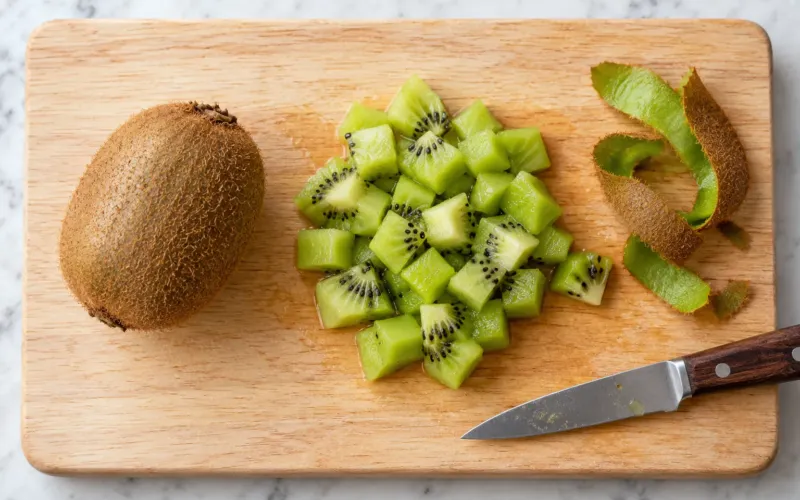
Risks: Choking, Fiber and Allergies
Never give a whole kiwi. A whole or half kiwi is the right size and shape to block a dog's airway or intestines. If your dog swallowed one whole and is gagging, retching, drooling or not keeping food down, call your vet right away.
- Upset stomach: too much fiber or skin can cause gas, vomiting or diarrhea. It usually passes within a day.
- Sugar: dogs with diabetes or weight issues should only have kiwi if your vet agrees.
- Allergy: rare, but stop if you notice itching, hives or face swelling.
- Processed kiwi: skip dried kiwi with added sugar, kiwi juice and kiwi desserts.
What About Kiwi Berries?
Kiwi berries, sometimes called hardy or baby kiwis, are grape-size fruits with smooth, edible skin. They aren't toxic, but their size and round shape make them a choking hazard for small and medium dogs, much like whole cherry tomatoes. Halve or quarter them first, and keep the count low because they're sweeter than green kiwi. Don't confuse them with grapes, which are toxic; see our grapes guide.
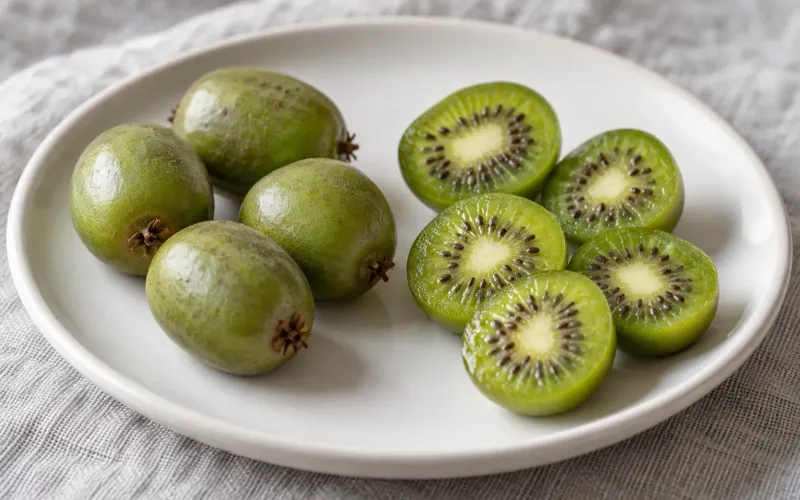
Is kiwi skin really a problem? For most large dogs a bit of skin passes without trouble, but small dogs and sensitive stomachs can react to the fuzz and fiber. Peeling is the simple fix.
When should a kiwi snack worry me? If your dog swallowed a whole kiwi or a large piece and is gagging, retching or not keeping food down, call your vet right away.
— Dr. Sarah Miller, DVM
Kiwi for Dogs: Quick Serving Guide
✓ Do
- Peel the fuzzy skin first
- Cut it into small cubes
- Share a few pieces at a time
- Freeze cubes for a summer treat
✕ Don't
- Give a whole kiwi
- Offer dried kiwi or kiwi juice
- Serve kiwi berries whole to small dogs
- Feed a lot at once
Dogs with diabetes or a sensitive stomach should get a vet OK first.
Frequently Asked Questions
Can dogs have kiwi skin?
The skin isn't poisonous, but it's tough and fuzzy. Peel it, especially for small dogs or dogs with sensitive stomachs.
Are kiwi seeds bad for dogs?
No. Kiwi seeds are tiny and soft, and they don't carry the cyanide risk of apple, cherry or peach pits.
Can puppies eat kiwi?
Weaned puppies can try a tiny cube once they eat solid food well. Keep it rare, since puppies need their complete puppy diet.
Can dogs drink kiwi juice?
Skip it. Juice drops the fiber and concentrates the sugar, and store-bought blends often add more.
Can dogs eat kiwi and pineapple together?
Yes, a few small pieces of each is fine for most dogs. Both are acidic and sugary, so keep the combined amount small. See our pineapple guide.
For more foods, browse the full what can dogs eat list.
The Bottom Line
Can dogs eat kiwi? Yes, when it's peeled, cut into small pieces and offered in modest amounts. It's a light, hydrating treat, but whole fruits, kiwi skin for small dogs and sugary kiwi products are best avoided. Find more answers in our Can Dogs Eat…? library or the Start Here guide.
References & Sources
Written by CPD Nutrition Desk using the sources below. We are not affiliated with these organizations, and this guide is not a substitute for advice from your veterinarian.
- USDA — USDA FoodData Central
- WSAVA — WSAVA guidetotreats dogs 251107